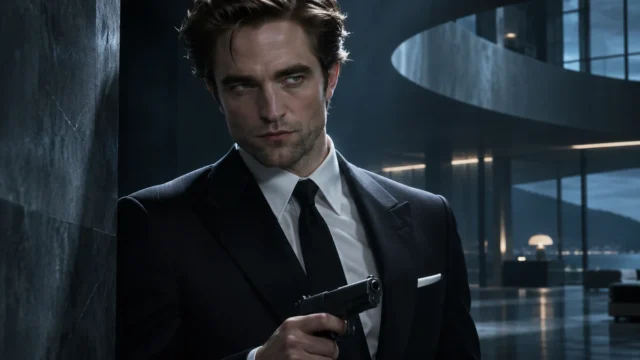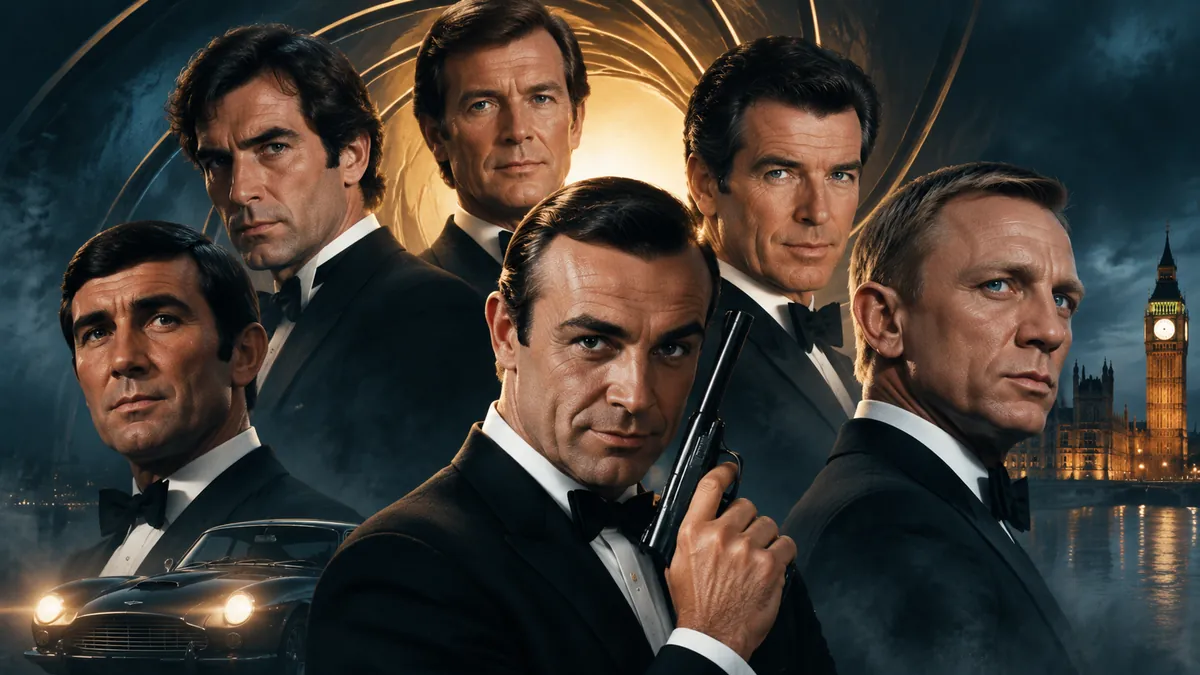
James Bond has entertained movie audiences for more than six decades, producing some of the most memorable action sequences, villains and spy adventures in cinema history. From Sean Connery’s original interpretation to Daniel Craig’s emotionally intense final mission, every era has contributed something different to the legendary 007 franchise. With Robert Pattinson now officially taking over the role, we are revisiting the 10 best James Bond movies of all time, ranked by storytelling, performances, action and their lasting impact on the series.
Our ranking balances the films that established the franchise with the entries that successfully reinvented it. Some are traditional espionage thrillers, while others take Bond into darker territory, introduce unforgettable antagonists or deliver spectacular cinematic experiences. These are the films that best demonstrate why the character has remained relevant across generations.
1. Casino Royale (2006)
Casino Royale is arguably the finest James Bond film ever made because it successfully reinvented the character without abandoning what made him iconic. Directed by Martin Campbell, the film introduces Daniel Craig as a newly promoted 007 who receives his licence to kill and immediately becomes involved in a dangerous mission involving terrorist financier Le Chiffre. Rather than presenting Bond as an already established super-spy, the story explores the experiences that turn him into the emotionally guarded agent audiences recognise.
The poker showdown at Casino Royale provides the film with one of its most memorable sequences, as Bond attempts to defeat Le Chiffre in a high-stakes game that could determine the outcome of an international security operation. Mads Mikkelsen makes an excellent antagonist, while Eva Green’s Vesper Lynd becomes one of the most important characters in Bond’s personal history. Their relationship gives the film an emotional dimension that previous instalments rarely explored with the same intensity.
Craig also brings an extraordinary physical presence to the role. His Bond is vulnerable, aggressive and occasionally reckless, making the character feel considerably more human than some earlier interpretations. Casino Royale established a new direction for the franchise and remains the strongest example of how a long-running film series can successfully reinvent itself.
2. Goldfinger (1964)
Goldfinger is the film that established much of the traditional James Bond formula. Directed by Guy Hamilton and starring Sean Connery, the third official 007 adventure follows Bond as he investigates Auric Goldfinger, a wealthy businessman whose criminal ambitions involve a dangerous plan targeting the United States’ gold reserves. The combination of an extravagant villain, international espionage and inventive gadgets helped define what audiences would expect from future Bond adventures.
Gert Fröbe’s performance as Goldfinger makes the antagonist particularly memorable. His obsession with gold, calculated personality and willingness to eliminate anyone who threatens his operation give the story a distinctive villain. Honor Blackman’s Pussy Galore also became one of the franchise’s most recognisable Bond characters, while the image of Shirley Eaton’s Jill Masterson covered in gold paint remains one of cinema’s most famous visual moments.
The film also introduced the Aston Martin DB5, which became permanently associated with 007’s identity. Its gadgets, including the ejector seat, established the relationship between Bond and his technologically advanced vehicles that continued throughout the series. Connery’s effortless confidence ties everything together, making Goldfinger an essential experience for anyone exploring the franchise.
3. Skyfall (2012)
Sam Mendes delivered one of the most visually impressive and emotionally layered Bond adventures with Skyfall. The film begins with an operation in Istanbul going terribly wrong, leaving Bond presumed dead after being accidentally shot by fellow agent Eve Moneypenny. When a cyberattack exposes the identities of undercover MI6 agents, Bond returns to London and discovers that the threat is connected to former intelligence operative Raoul Silva.
Javier Bardem’s Silva is among the strongest villains in the entire franchise. His personal history with M, played by Judi Dench, creates a conflict that feels considerably more intimate than the usual battle between Bond and an international criminal organisation. The film also gives Dench’s character a central emotional role, examining the consequences of intelligence decisions and the responsibilities of leadership.
Roger Deakins’ cinematography makes Skyfall particularly memorable, with the illuminated skyscrapers of Shanghai and the atmospheric landscapes of Scotland providing some extraordinary visuals. The film also revisits Bond’s childhood home, adding a personal dimension to the character that had rarely received this much attention. Its combination of spectacular action, emotional storytelling and franchise history makes it one of the strongest entries in 007’s filmography.
4. From Russia with Love (1963)
From Russia with Love remains one of the most satisfying espionage thrillers in the entire Bond franchise. Directed by Terence Young, the second official 007 film follows Bond as he attempts to obtain a Soviet decoding machine while dealing with the criminal organisation SPECTRE. The mission takes him through Istanbul and onto the Orient Express, where an apparently straightforward intelligence operation becomes increasingly dangerous.
Sean Connery is particularly effective here because the character relies more on intelligence, observation and calculated decisions than extravagant gadgets. Robert Shaw’s Red Grant is an exceptional opponent, creating a tense relationship with Bond that eventually leads to one of the franchise’s most memorable hand-to-hand confrontations. Daniela Bianchi also makes a strong impression as Tatiana Romanova, whose involvement in the operation complicates Bond’s mission.
What separates this film from several later entries is its emphasis on espionage mechanics. The story develops through surveillance, deception and competing intelligence operations rather than relying on enormous action set pieces. Its more grounded approach gives the film a suspenseful quality that remains effective decades after its release.
5. On Her Majesty’s Secret Service (1969)
On Her Majesty’s Secret Service is one of the most distinctive James Bond films because it gives George Lazenby his only appearance as the secret agent. Directed by Peter R. Hunt, the story follows Bond as he investigates Ernst Stavro Blofeld, who is operating a secret research facility in the Swiss Alps. The mission becomes complicated when Bond develops a relationship with Tracy di Vicenzo, played by Diana Rigg.
Lazenby’s performance was initially controversial because audiences were accustomed to Connery’s interpretation. However, the film has gained considerable appreciation over the years, particularly for its more emotionally developed portrayal of Bond. Lazenby successfully presents a version of the character who can be vulnerable and romantic without losing his ability to handle dangerous situations.
Telly Savalas also delivers a memorable performance as Blofeld, giving the villain a more physical and intimidating presence. The ski sequences, mountain locations and action choreography make the film visually impressive, while its conclusion takes Bond into territory that few franchise instalments have explored. Its willingness to challenge the traditional Bond formula makes it one of the series’ most important entries.
6. GoldenEye (1995)
GoldenEye brought James Bond back to cinemas after a six-year gap and introduced Pierce Brosnan as the new 007. Directed by Martin Campbell, the film follows Bond as he investigates the theft of a powerful satellite weapon capable of generating an electromagnetic pulse. The investigation becomes personal when he discovers that the operation is connected to former MI6 agent Alec Trevelyan, played by Sean Bean.
Brosnan’s interpretation combines the sophistication associated with Connery and Moore with the physical intensity that later became central to Craig’s version. He looks comfortable in the tuxedo, handles the action sequences convincingly and brings a sense of humour that makes the character immediately appealing. Sean Bean also provides a compelling opponent because Trevelyan understands Bond’s training, instincts and weaknesses.
The film benefits from an excellent supporting cast, including Judi Dench as the new M, Famke Janssen as the dangerous Xenia Onatopp and Izabella Scorupco as Natalya Simonova. GoldenEye successfully updated Bond for the post-Cold War world without losing the franchise’s familiar identity. It also gave Brosnan a memorable introduction and remains his strongest 007 adventure.
7. The Spy Who Loved Me (1977)
Roger Moore’s era produced several entertaining Bond adventures, but The Spy Who Loved Me is arguably its finest achievement. Directed by Lewis Gilbert, the film follows Bond as he investigates the disappearance of British and Soviet nuclear submarines. His mission eventually brings him together with Soviet agent Anya Amasova, played by Barbara Bach, as they attempt to stop shipping magnate Karl Stromberg from triggering a nuclear conflict.
Richard Kiel’s Jaws is one of the most recognisable villains in the entire franchise. His enormous physical presence and metal teeth make him an unusual opponent, but the character’s popularity comes from more than his appearance. Jaws becomes a memorable recurring threat because he can survive situations that would defeat almost anyone else.
The film also features one of the franchise’s most iconic opening sequences, with Bond skiing down a mountain before deploying a Union Jack parachute. Its underwater sequences, elaborate sets and ambitious action scenes give the adventure a spectacular scale. Moore’s relaxed interpretation works particularly well because the film balances humour and danger without taking itself too seriously.
8. Dr. No (1962)
Every great franchise needs an origin point, and Dr. No introduced audiences to the cinematic version of James Bond. Directed by Terence Young, the film follows Sean Connery’s 007 as he travels to Jamaica to investigate the disappearance of a British intelligence operative. His investigation leads him to the mysterious Dr. Julius No, whose organisation is interfering with American space launches.
Connery establishes the character’s personality almost immediately. His confidence, sharp dialogue and controlled physical presence make Bond feel different from the traditional action heroes of the period. Ursula Andress also became an important part of cinema history through her appearance as Honey Ryder, while Joseph Wiseman gives Dr. No an appropriately unsettling personality.
Although its production scale is smaller than that of later instalments, Dr. No contains many elements that became central to the series. The exotic locations, espionage plot, memorable villain and distinctive musical identity helped establish the franchise’s visual and storytelling language. It may not have the complexity of Casino Royale or Skyfall, but without Dr. No, the modern Bond phenomenon would never have developed in quite the same way.
9. Licence to Kill (1989)
Timothy Dalton’s second and final Bond film takes the character into much darker territory than many of the adventures that came before it. Directed by John Glen, Licence to Kill follows 007 after his close friend Felix Leiter is brutally attacked by drug lord Franz Sanchez. Bond becomes determined to take revenge, eventually abandoning his official responsibilities and pursuing Sanchez independently.
Dalton’s performance is particularly effective because he portrays Bond as a man driven by anger rather than professional obligation. His interpretation is less interested in the traditional charm and humour of the role, creating a character whose determination sometimes makes him difficult to distinguish from the criminals he is pursuing. Robert Davi also delivers a convincing performance as Sanchez, presenting a villain whose power comes from his criminal network and ability to manipulate people.
The film’s action sequences, including its spectacular tanker chase, remain impressive. Its emphasis on revenge and personal loyalty also anticipates some of the storytelling approaches that became prominent during Craig’s era. Licence to Kill was a more violent and emotionally direct Bond film than audiences had previously experienced, and its reputation has improved considerably over time.
10. No Time to Die (2021)
Daniel Craig’s final appearance as James Bond gives the franchise one of its most ambitious and emotionally consequential stories. Directed by Cary Joji Fukunaga, No Time to Die begins with Bond living away from active service after leaving the intelligence world behind. His peaceful existence is disrupted when Felix Leiter approaches him for help with a dangerous mission involving a mysterious technology capable of targeting specific individuals.
Rami Malek plays Lyutsifer Safin, a villain whose plans involve a biological weapon with devastating consequences. The story also brings back Léa Seydoux as Madeleine Swann, while Lashana Lynch joins the franchise as Nomi, an agent who has taken over the 007 designation during Bond’s absence. Their involvement gives the film a different dynamic, particularly as Bond attempts to reconcile his personal life with the responsibilities he once abandoned.
No Time to Die is significant because it gives Craig’s interpretation a definitive ending rather than leaving his future open for another adventure. Its emotional stakes, large-scale action and willingness to make a permanent change to the franchise distinguish it from conventional Bond films. Whether audiences agree with every creative decision or not, it is an important conclusion to one of the most distinctive eras in the character’s cinematic history.
James Bond’s greatest films demonstrate how successfully the franchise has adapted to changing audiences while retaining its essential identity. From Connery’s classic espionage adventures to Craig’s emotionally complex stories, every generation has contributed something memorable to 007’s legacy. With Robert Pattinson preparing to become the next Bond, which film from this ranking would you recommend as the perfect introduction to the franchise for someone watching it for the first time?