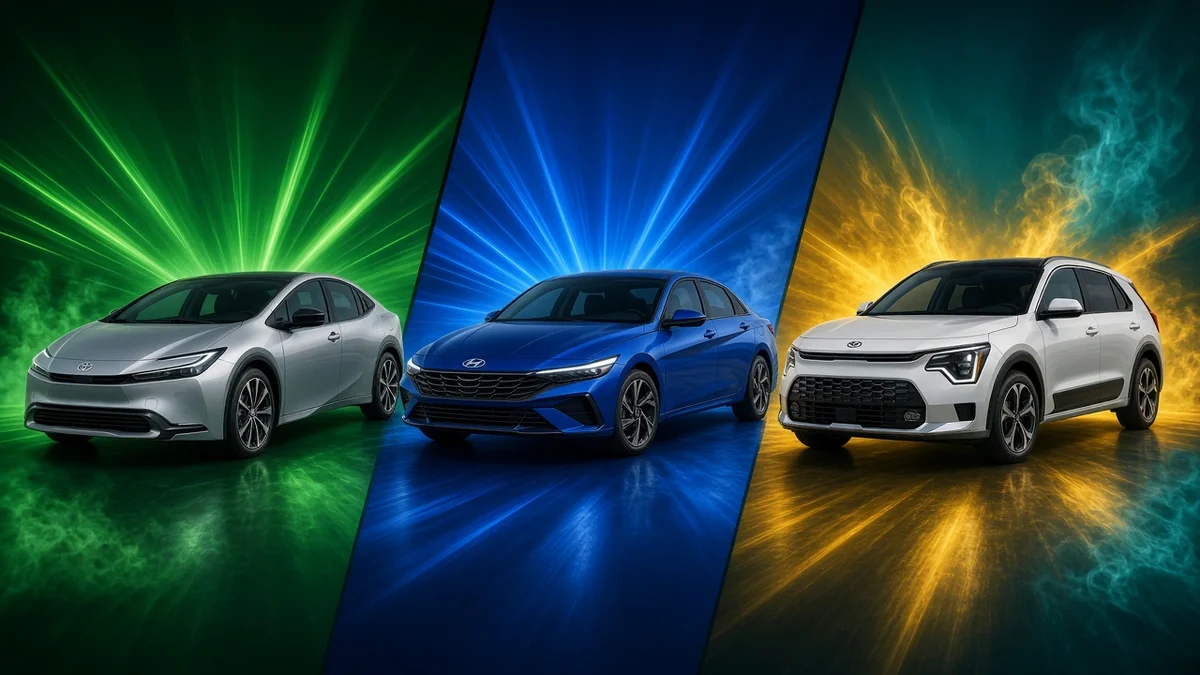
The most fuel-efficient car of 2026 without plug-in charging is the Toyota Prius LE, rated at 57 mpg combined by the US Environmental Protection Agency (EPA). The Hyundai Elantra Hybrid follows at 54 mpg, while the Kia Niro reaches 53 mpg. Several other hybrids deliver 44 mpg or better without requiring external charging.
How we ranked the most fuel-efficient cars of 2026
We compared official US EPA fuel-economy ratings for 2026 model-year vehicles, focusing on conventional gasoline-electric hybrids that do not require plugging in. Each vehicle is ranked by its most efficient available configuration, using combined city and highway miles per gallon. To avoid filling the ranking with different trims of the same vehicle, we count each distinct model once.
These are US-market EPA figures, which provide a consistent basis for comparison. Fuel-economy ratings in Europe, Australia, and other markets use different testing procedures and may produce different numbers. Actual consumption also varies with driving conditions, speed, temperature, maintenance, and vehicle configuration.
| Rank | 2026 model | Combined MPG | City MPG | Highway MPG |
|---|---|---|---|---|
| 1 | Toyota Prius LE FWD | 57 | 57 | 56 |
| 2 | Hyundai Elantra Hybrid Blue | 54 | 51 | 58 |
| 3 | Kia Niro FE Hybrid | 53 | 53 | 54 |
| 4 | Toyota Camry LE FWD | 51 | 52 | 49 |
| 5 | Hyundai Sonata Hybrid Blue | 51 | 47 | 56 |
| 6 | Toyota Corolla Hybrid FWD | 50 | 53 | 46 |
| 7 | Honda Civic Sedan Hybrid | 49 | 50 | 47 |
| 8 | Honda Accord Hybrid | 48 | 51 | 44 |
| 9 | Lexus ES 350h FWD | 46 | 48 | 44 |
| 10 | Honda Prelude Hybrid | 44 | 46 | 41 |
10. 2026 Honda Prelude Hybrid – 44 MPG
The revived Honda Prelude brings a somewhat unexpected entry to the fuel-efficiency rankings. Rather than adopting a conventional gasoline-only sports-car powertrain, the 2026 Prelude uses Honda’s two-motor hybrid system. The EPA rates it at 44 mpg combined, with 46 mpg in the city and 41 mpg on the highway.
Its 2.0-liter hybrid powertrain is related to the system used in other Honda hybrids, but the Prelude has a distinct coupe body and a sportier driving focus. Honda also offers its S+ Shift technology, designed to simulate gear changes and provide a more involved driving experience. The Prelude demonstrates that buyers interested in a sporty coupe do not necessarily have to settle for low fuel economy.
9. 2026 Lexus ES 350h – 46 MPG
The 2026 Lexus ES 350h offers an efficient luxury-sedan alternative, achieving an EPA-rated 46 mpg combined with front-wheel drive. Its individual ratings are 48 mpg city and 44 mpg highway. The new ES 350h replaces the previous ES 300h designation and introduces Lexus’s sixth-generation hybrid system.
Buyers can also choose all-wheel drive, although the EPA rates that version at 44 mpg combined. Unlike several mainstream hybrids in this ranking, the EPA lists premium gasoline for the ES 350h, which matters when comparing operating costs. Its inclusion makes it one of the highest-rated non-plug-in luxury sedans available for the 2026 model year.
8. 2026 Honda Accord Hybrid – 48 MPG
The 2026 Honda Accord Hybrid combines midsize-sedan practicality with an EPA rating of 48 mpg combined in its most efficient configuration. That translates to 51 mpg in city driving and 44 mpg on the highway. Its two-motor hybrid system uses a 2.0-liter gasoline engine alongside electric propulsion.
However, buyers should pay attention to the trim rather than assuming every Accord Hybrid achieves the same result. The Sport and Touring configurations receive lower EPA ratings of 44 mpg combined. For drivers primarily concerned with fuel consumption, the more efficient configuration offers a measurable advantage without changing the basic vehicle size or hybrid architecture.
7. 2026 Honda Civic Sedan Hybrid – 49 MPG
The Honda Civic Sedan Hybrid earns 49 mpg combined, with EPA ratings of 50 mpg city and 47 mpg highway. Its hybrid powertrain delivers 200 horsepower, giving the Civic a relatively strong performance figure for an economy-focused compact sedan. The combination makes it a relevant alternative to the Toyota Corolla Hybrid and Hyundai Elantra Hybrid.
Body style is important when comparing Civic variants. The 2026 Civic Hybrid hatchback receives a slightly lower combined rating of 48 mpg, compared with the sedan’s 49 mpg. Buyers deciding between the two should consider whether they value the hatchback’s cargo access enough to accept the small difference in official efficiency.
6. 2026 Toyota Corolla Hybrid – 50 MPG
The Toyota Corolla Hybrid reaches 50 mpg combined in its efficient front-wheel-drive configuration. The EPA records 53 mpg in the city and 46 mpg on the highway, making it particularly competitive for urban driving. Its conventional hybrid system automatically switches between gasoline and electric assistance without requiring a charging cable.
Unlike several efficiency-focused compact sedans, the Corolla Hybrid also offers all-wheel drive. The EPA rates an AWD configuration at 48 mpg combined, making it an alternative for buyers who want additional traction without moving to a larger vehicle. The Corolla’s strongest advantage in this comparison is its high city rating, although the Elantra Hybrid Blue performs better on the highway.
5. 2026 Hyundai Sonata Hybrid Blue – 51 MPG
The Hyundai Sonata Hybrid Blue earns an EPA-estimated 51 mpg combined, matching the most efficient Toyota Camry. Its 47 mpg city rating is lower than the Camry’s, but its 56 mpg highway figure is substantially higher. That difference makes the Sonata Blue particularly interesting for drivers who spend much of their time on highways.
The Blue configuration is crucial to achieving the headline number. Other 2026 Sonata Hybrid configurations are rated at 47 mpg combined, with 44 mpg city and 51 mpg highway. Buyers should therefore check the exact model and equipment package rather than relying on the highest advertised Sonata Hybrid rating.
4. 2026 Toyota Camry LE FWD – 51 MPG
The 2026 Toyota Camry continues with an exclusively hybrid powertrain lineup in the US market. Its most efficient version, the front-wheel-drive LE, achieves 51 mpg combined according to the EPA. City efficiency reaches 52 mpg, while highway economy is rated at 49 mpg.
The Camry ties the Sonata Hybrid Blue on combined MPG but delivers a different balance between city and highway driving. Toyota also offers all-wheel drive, with the Camry AWD LE rated at 50 mpg combined. Higher front-wheel-drive trims have lower ratings, so the LE remains the configuration to examine when maximizing fuel efficiency is the priority.
3. 2026 Kia Niro FE Hybrid – 53 MPG
The Kia Niro FE Hybrid stands apart because it offers crossover-style practicality while delivering 53 mpg combined. Its EPA figures are 53 mpg city and 54 mpg highway, putting it ahead of most conventional compact cars. The Niro uses a 1.6-liter gasoline-electric hybrid powertrain paired with an automated dual-clutch transmission.
Importantly, the 53 mpg rating applies specifically to the FE configuration. The EPA lists other Niro hybrid configurations at 49 mpg combined, so buyers should verify the exact version. For those who prefer a higher-riding vehicle to a traditional sedan or hatchback, the Niro provides an unusually efficient non-plug-in option.
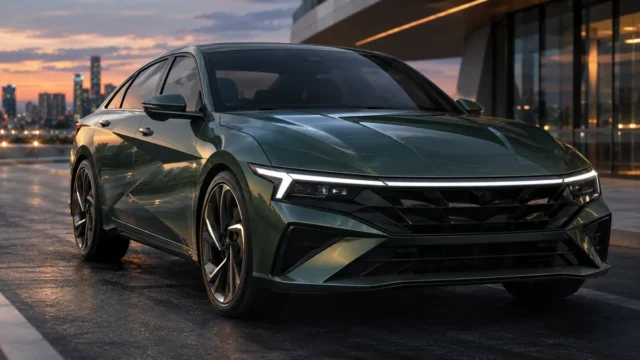
2. 2026 Hyundai Elantra Hybrid Blue – 54 MPG
The Hyundai Elantra Hybrid Blue achieves 54 mpg combined, placing it second among these 2026 models. Its 51 mpg city and 58 mpg highway ratings make it especially efficient during highway driving. The 58 mpg highway figure is higher than that of the Prius LE, even though the Toyota has the better combined rating.
The Elantra Hybrid uses a 1.6-liter gasoline-electric powertrain and a six-speed dual-clutch automatic transmission. Other Elantra Hybrid configurations are rated at 50 mpg combined, four mpg below the Blue. That difference matters because buyers comparing vehicles online may encounter several Elantra Hybrid versions with different official figures.
1. 2026 Toyota Prius LE FWD – 57 MPG
The Toyota Prius LE remains the fuel-economy leader among 2026 non-plug-in cars, with an EPA rating of 57 mpg combined. Its city rating is also 57 mpg, while highway efficiency reaches 56 mpg. These numbers place it three combined mpg ahead of the Hyundai Elantra Hybrid Blue.
The 2026 Prius uses a 2.0-liter hybrid powertrain that produces 194 horsepower in front-wheel-drive form. Its aerodynamic hatchback design and efficient gasoline-electric system contribute to the strong EPA results. Buyers seeking the maximum official rating should focus on the LE front-wheel-drive configuration, because higher trims and certain all-wheel-drive versions have different fuel-economy ratings.
One important distinction is that the standard Prius hybrid should not be confused with a plug-in hybrid model. The conventional Prius recharges its hybrid battery through regenerative braking and engine operation during driving. It requires no external charging equipment, which is why it qualifies for this ranking.
What about cars without hybrid technology?
Conventional gasoline-powered cars generally achieve lower combined EPA ratings than the leading full hybrids. The redesigned 2026 Nissan Sentra provides a useful comparison: its S and SV versions are rated at 33 mpg combined, with 30 mpg city and 38 mpg highway. The SR and SL configurations are rated at 32 mpg combined.
For perspective, a vehicle returning 33 mpg uses approximately 455 US gallons to travel 15,000 miles, while a 57 mpg vehicle uses approximately 263 gallons over the same distance. That represents a difference of roughly 192 gallons annually under those simplified conditions. Purchase price, insurance, servicing, and fuel costs must also be considered before treating a more efficient hybrid as the cheaper vehicle to own.
Frequently asked questions
What is the most fuel-efficient non-plug-in car in 2026?
The 2026 Toyota Prius LE with front-wheel drive leads this ranking at 57 mpg combined according to the US EPA. It also achieves 57 mpg city and 56 mpg highway. The figures apply to the conventional hybrid Prius, which does not require external charging.
Which 2026 hybrid car gets the best highway MPG?
The Hyundai Elantra Hybrid Blue achieves 58 mpg highway, exceeding the Prius LE’s 56 mpg highway rating. Its combined economy is 54 mpg, compared with the Prius’s 57 mpg. Drivers should compare both highway and combined figures according to their typical driving patterns.
Are hybrid cars more fuel-efficient in city driving?
Many conventional hybrids perform particularly well in city traffic because regenerative braking recovers energy during deceleration and electric motors can assist at lower speeds. However, the exact result depends on the vehicle. The Elantra Hybrid Blue, for example, has a higher EPA highway rating than city rating.
Does buying a higher trim reduce fuel economy?
It can. Different wheel sizes, equipment, vehicle weight, and drivetrain configurations can change official efficiency ratings. The Prius LE earns 57 mpg combined, while front-wheel-drive XLE and Limited versions are rated at 52 mpg. Checking the EPA rating for the exact configuration is essential before purchasing.
Are US EPA fuel-economy ratings the same worldwide?
No. The United States uses EPA testing, while Europe uses WLTP and other markets may follow their own procedures. These tests can produce different consumption figures for similar vehicles. International buyers should compare locally certified ratings and remember that US MPG figures use US gallons rather than imperial gallons.
The 2026 Toyota Prius LE leads non-plug-in fuel economy at 57 mpg combined, followed by the Hyundai Elantra Hybrid Blue at 54 mpg and Kia Niro FE at 53 mpg. The 2026 rankings also include efficient midsize sedans, a luxury hybrid, and a sports coupe. If you were choosing your next car primarily by fuel economy, would you pick the Prius’s 57 mpg or sacrifice some efficiency for a larger vehicle like the Camry?