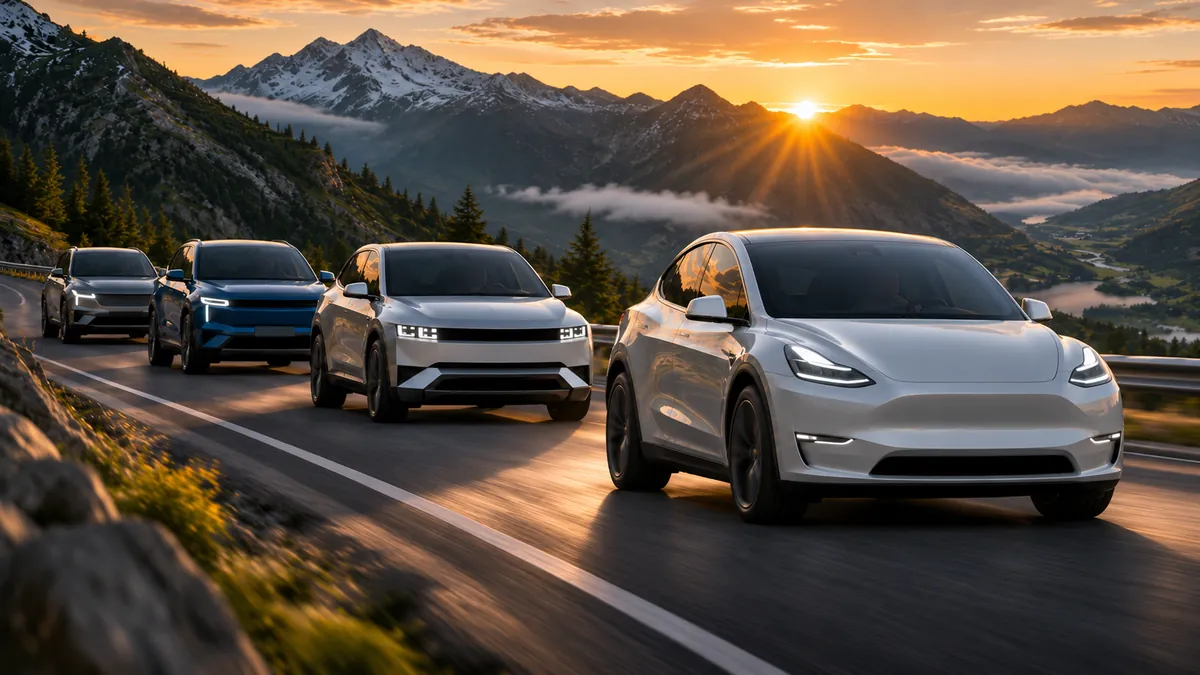
The Tesla Model Y is the strongest all-round electric SUV for many families in 2026, while the Hyundai Ioniq 5 offers a more compact alternative and the Kia EV9 and Hyundai Ioniq 9 suit buyers who need three rows. The best choice depends on passenger capacity, local charging access, luggage space and the range needed between stops.
Electric SUVs have become practical alternatives to conventional family vehicles, with manufacturers offering everything from relatively affordable five-seat crossovers to large seven-seat models. However, a long advertised driving range does not automatically make an SUV suitable for family use. Rear-seat comfort, boot capacity, charging speed and the availability of dependable charging stations can matter just as much.
We have considered independent road tests, manufacturer specifications, everyday practicality and value to rank eight electric SUVs worth considering in 2026. The selection includes mainstream and premium options, although availability and specifications vary between countries. Range figures also use different testing standards, so EPA and WLTP estimates should not be compared directly.
1. Tesla Model Y – Best overall electric SUV for families
The Tesla Model Y remains one of the most compelling choices for families looking for a practical electric SUV without moving into the luxury-car price bracket. Its combination of passenger space, useful storage, strong acceleration and access to Tesla’s Supercharger network in supported markets makes it particularly convenient for everyday driving and longer journeys.
The 2026 refresh brings revised exterior styling, improved cabin refinement, a more comfortable suspension setup and an additional rear-seat touchscreen. Tesla’s US specifications list seating for five and up to 74 cubic feet of cargo capacity, giving families considerable flexibility when carrying luggage, shopping or recreational equipment.
Its charging ecosystem is another important advantage, particularly for households that regularly travel between cities. However, the touchscreen-heavy controls will not suit every driver, and the absence of Apple CarPlay and Android Auto remains a drawback. Families needing three rows should also look at larger alternatives rather than assuming the standard Model Y will accommodate seven passengers.
2. Hyundai Ioniq 5 – Best for everyday comfort and fast charging
The Hyundai Ioniq 5 is one of the most balanced electric crossovers available in 2026. Its distinctive design, spacious cabin, comfortable seating and straightforward driving experience make it particularly suitable for families that need a practical five-seat vehicle rather than a large three-row SUV.
Its biggest advantage is its 800-volt electrical architecture. Hyundai says the 2026 model can charge from 10% to 80% in approximately 20 minutes using a compatible 350kW DC fast charger in the US specification. European specifications quote approximately 18 minutes for the same charging window under suitable conditions. This makes the Ioniq 5 an attractive option for families who frequently undertake longer journeys.
The vehicle also offers useful interior flexibility, including a relatively flat floor and generous passenger accommodation. Its vehicle-to-load functionality can power compatible electrical equipment, which may be useful during camping trips or outdoor activities. The main limitation is that it has only two seating rows, so larger families should consider the Ioniq 9 or Kia EV9 instead.
3. Kia EV9 – Best seven-seat electric SUV for large families
The Kia EV9 addresses one of the biggest challenges facing families considering electric vehicles: finding a genuinely spacious three-row SUV. Rather than squeezing additional seats into a compact crossover, Kia has designed the EV9 around a larger cabin with available six- and seven-seat configurations, depending on the market and trim.
Its third row is particularly important because it makes the EV9 suitable for households that regularly travel with children, relatives or additional passengers. The 2026 US model offers up to seven seats, an available battery capacity of 99.8kWh and an EPA-estimated maximum range of 305 miles in the Light Long Range rear-wheel-drive version. Kia also quotes approximately 24 minutes for a 10–80% DC fast-charging session with a suitable high-powered charger.
The EV9 offers substantial luggage flexibility when the rear seats are folded, and its quiet cabin makes it suitable for extended family journeys. However, its large dimensions can make parking and navigating narrow urban streets difficult. It is also considerably more expensive than smaller electric SUVs, particularly in higher equipment grades.
4. Hyundai Ioniq 9 – Best premium electric SUV for seven passengers
The Hyundai Ioniq 9 takes the three-row electric SUV concept further with an emphasis on passenger comfort, interior flexibility and long-distance capability. It shares important engineering foundations with the Kia EV9 but adopts a different design and a more lounge-like cabin experience.
Hyundai offers six- and seven-passenger configurations, depending on the market. Its 110.3kWh battery supports a projected maximum WLTP range of up to 620km in the long-range rear-wheel-drive configuration. The manufacturer also quotes approximately 24 minutes for charging from 10% to 80% using a 350kW DC charger under suitable conditions.
Interior space is one of its strongest attributes. Hyundai quotes up to 1,323 litres of luggage capacity with the third row folded, while the flexible seating arrangements make it suitable for households that regularly carry different combinations of passengers and luggage. Its larger dimensions and higher purchase cost are the principal compromises, but families prioritising comfort over compact dimensions should put it on their shortlist.
5. Skoda Elroq – Best value electric SUV for smaller families
The Skoda Elroq demonstrates that a family-friendly electric SUV does not need to be particularly large. Positioned below the Enyaq in Skoda’s electric lineup, it combines a relatively compact exterior with a spacious rear cabin, practical storage solutions and a competitive equipment package.
The Elroq is available with different battery and powertrain configurations. Its 85 version offers a maximum claimed WLTP range of up to 577km, while the official specifications quote approximately 29 minutes for a 10–80% DC charging session. The luggage compartment provides 470 litres of capacity, increasing to 1,580 litres when the rear seats are folded.
What Car? ranked the Elroq first in its May 2026 family electric SUV assessment, citing its combination of comfort, rear passenger space and value. It is particularly appealing to families that spend most of their time travelling with four or five occupants rather than requiring a third row. Its touchscreen-dependent controls and optional heat pump are worth considering when selecting a specification. Availability is also more limited in some international markets.
6. Renault Scenic E-Tech – Best for long-distance family travel
The Renault Scenic E-Tech Electric is a practical alternative for families who want a conventional five-seat layout, a comfortable cabin and substantial driving range. The name has a long association with family transportation, and the electric version retains that emphasis on passenger accommodation and everyday usability.
Renault’s September 2026 update introduced an improved battery offering. The 89kWh NMC version delivers a claimed WLTP range of up to 642km, while the manufacturer quotes a DC charging time of approximately 28 minutes from 15% to 80%. A smaller 67kWh LFP battery option is also planned, with a claimed WLTP range of up to 467km.
Practicality is another strong point. The Scenic provides 545 litres of boot capacity, increasing to as much as 1,670 litres with the rear seats folded. Its comfortable suspension and relatively straightforward cabin layout make it a sensible choice for families that spend considerable time on motorways. However, it only seats five, and its availability is concentrated in European markets.
7. Volvo EX90 – Best luxury electric SUV for larger families
The Volvo EX90 targets buyers who want a premium electric SUV without compromising on family practicality. Its large cabin, third-row seating options, sophisticated driver-assistance technology and understated Scandinavian interior design make it a strong alternative to conventional luxury SUVs.
The 2026 model received an important electrical architecture upgrade, moving to an 800-volt system. Volvo says the improvement allows the vehicle to add up to 250km of driving range in approximately 10 minutes under suitable charging conditions. The company has also introduced a more powerful computing platform and additional connected safety and driver-support functions.
Its spacious cabin is particularly useful for families who regularly travel with several passengers. Seating configurations differ between markets, so buyers should confirm whether their preferred version has six or seven seats. The EX90’s premium positioning, large exterior dimensions and relatively high purchase cost mean it is unlikely to be the most economical option, but it offers a more luxurious approach to family electric transportation.
8. BMW iX – Best premium five-seat electric SUV
The BMW iX is worth considering for families who prefer a luxurious five-seat electric SUV over a larger three-row vehicle. Its strengths include a quiet cabin, high-quality interior materials, strong acceleration and a sophisticated infotainment system.
The 2026 xDrive45 version produces 402 horsepower and has an EPA-estimated driving range of up to 312 miles. Edmunds rates the iX highly for its comfortable interior, technology and performance, although its purchase price places it firmly in the premium category. Its five-seat configuration is suitable for smaller households, but it does not offer the additional passenger capacity of the Kia EV9 or Volvo EX90.
Boot capacity is another consideration. At approximately 500 litres in the specification reviewed by What Car?, it provides useful everyday storage, although some competing family SUVs offer more room. The iX is therefore better suited to families prioritising cabin refinement and driving comfort than those needing maximum luggage capacity.
How to choose the right electric SUV for your family
Before choosing an electric SUV, families should consider how they actually use their vehicles rather than relying exclusively on advertised range figures. A five-seat vehicle may provide more luggage space and better value than a seven-seater if the third row is rarely needed. Similarly, a vehicle with a slightly shorter range but faster charging may be more convenient for frequent motorway journeys.
There are four important factors to examine before making a purchase:
-
Seating and luggage capacity: Check whether the third row can accommodate the passengers who will actually use it. Also examine boot capacity with every seat occupied, not just with the rear seats folded.
-
Real-world driving range: EPA and WLTP figures use different testing procedures. Compare vehicles using the same testing standard and consider how climate, highway speeds, heating and air conditioning affect battery consumption.
-
Charging infrastructure: Check the availability of compatible public DC fast chargers along your regular routes. A vehicle’s maximum charging speed is useful only when the charging station can deliver sufficient power.
-
Ownership costs: Compare battery warranties, servicing requirements, insurance, electricity prices and the availability of authorised repair facilities in your country.
Frequently asked questions
Which is the best electric SUV for families in 2026?
The Tesla Model Y is a strong all-round choice because of its practicality, cargo capacity, driving range and charging ecosystem. Families requiring seven seats should consider the Kia EV9 or Hyundai Ioniq 9 instead.
Which electric SUV has the best seven-seat configuration?
The Kia EV9 and Hyundai Ioniq 9 are two of the strongest options. Both offer dedicated three-row layouts, flexible passenger configurations and substantial battery capacity. The Volvo EX90 is another premium alternative, with seating configurations that vary by market.
Which family electric SUV offers the longest driving range?
Among the models featured here, the Renault Scenic E-Tech offers up to 642km of claimed WLTP range with its updated 89kWh battery. The Hyundai Ioniq 9 offers up to 620km under WLTP testing in its long-range rear-wheel-drive configuration. Actual driving range will depend on weather, speed, road conditions and vehicle specification.
Are electric SUVs practical for long family road trips?
Yes. Models such as the Hyundai Ioniq 5, Tesla Model Y, Kia EV9 and Hyundai Ioniq 9 support DC fast charging, making longer journeys easier to plan. However, drivers should check charging-station availability, charging speeds and the vehicle’s expected highway range before travelling.
Is a five-seat or seven-seat electric SUV better for families?
A five-seat SUV is generally sufficient for households that regularly travel with four or five occupants. It can also offer better luggage flexibility when compared with a seven-seat vehicle carrying passengers in all three rows. Families that frequently transport additional passengers should prioritise a dedicated three-row model.
The 2026 electric SUV market offers choices ranging from the practical Tesla Model Y and Skoda Elroq to seven-seat models such as the Kia EV9, Hyundai Ioniq 9 and Volvo EX90. Range, charging capability, passenger capacity and local availability remain important differences between these vehicles. If you were choosing one for your household, would you prioritise a longer driving range, a genuinely usable third row or a lower purchase price?