Banff is worth visiting in December for snowy Canadian Rockies scenery, skiing, frozen lakes, winter walks and outdoor hot springs. A three-day trip gives visitors enough time to explore Banff town, visit Lake Louise and enjoy a mountain activity. However, freezing temperatures, shorter daylight hours and seasonal trail closures require careful planning.
Is Banff worth visiting in December?
December is one of the most appealing months for travellers who want a traditional Canadian winter experience. Banff National Park transforms into a snow-covered destination, with opportunities for downhill skiing, snowboarding, ice skating, snowshoeing and wildlife viewing. Visitors can also enjoy Banff’s restaurants, shops and hot springs after spending time outdoors.
The main consideration is the weather. According to Parks Canada, the average December temperature in the town of Banff is approximately -5.3°C during the day and -13.8°C overnight. Lake Louise is colder, with average highs of -7.6°C and lows of -20.4°C. December also has approximately 7.8 hours of daylight, so outdoor activities should be planned around the shorter days.
For travellers visiting during the Christmas and New Year period, accommodation and popular activities should be booked ahead. The busiest holiday dates can make last-minute arrangements more difficult.
Banff in December: A practical 3-day winter itinerary
Three days provide a good introduction to the national park without requiring visitors to rush between distant attractions. We recommend spending the first day around Banff town, the second at Lake Louise and the third enjoying skiing, snow tubing or a winter walking trail.
| Day | Main destination | Recommended activities |
|---|---|---|
| Day 1 | Banff town | Explore Banff Avenue, ride the Banff Gondola and visit Upper Hot Springs. |
| Day 2 | Lake Louise | Enjoy mountain scenery, walk along the lakeshore and skate if the maintained rink is open. |
| Day 3 | Banff’s ski areas | Choose skiing, snowboarding, snow tubing or a suitable winter walking trail. |
Day 1: Explore Banff town, Sulphur Mountain and Upper Hot Springs
Begin with Banff Avenue, the town’s main commercial street. It has restaurants, cafés, outdoor equipment shops and small boutiques, with Cascade Mountain providing a dramatic backdrop. Walking around the town centre is a convenient way to get familiar with Banff before travelling to attractions farther away.
In the afternoon, visit the Banff Gondola at the base of Sulphur Mountain. The cableway takes visitors towards the summit, where observation areas and elevated walkways provide views across the Bow Valley and surrounding mountains. The attraction operates throughout the winter, although visitors should check its operating schedule and purchase tickets in advance. The gondola is also accessible using Roam Transit Route 1.
Finish the day at Banff Upper Hot Springs. The outdoor pool offers an opportunity to relax in naturally heated mineral water while surrounded by winter mountain scenery. Adult admission is currently CAD 19.75, according to Parks Canada’s published fees. Check operating hours before visiting, as seasonal schedules can change.
Day 2: Visit Lake Louise and experience winter skating
Lake Louise deserves a dedicated day because of its mountain scenery and winter activities. The lake sits beneath the Victoria Glacier, surrounded by snow-covered peaks and forests. Even visitors who do not ski can spend several hours enjoying the lakeshore and the surrounding winter scenery.
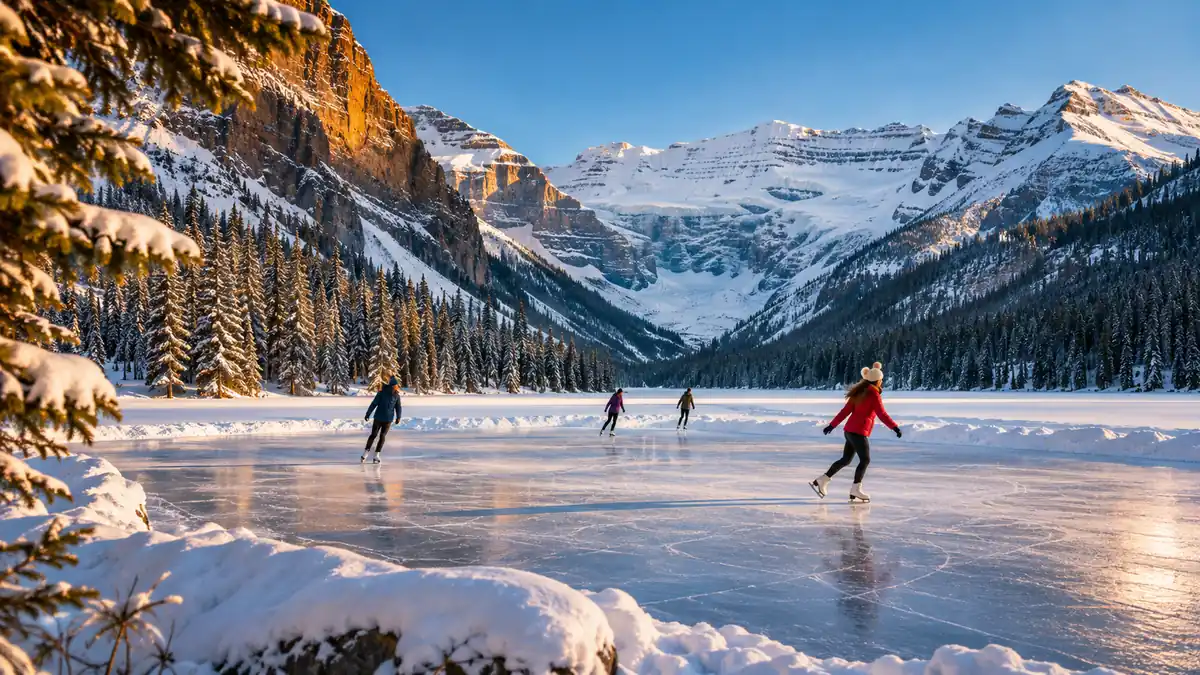
Ice skating is one of the best-known winter activities here. The Fairmont Chateau Lake Louise maintains a skating area on the lake when weather and ice conditions permit. Skating generally becomes available around mid-December, although the exact opening depends on conditions. Visitors should check with the hotel before travelling specifically to skate, particularly during the first half of December.
Those who prefer not to skate can enjoy the lakeside views, take photographs or explore suitable snow-covered walking routes. Snowshoeing and cross-country skiing are other winter activities available in the Lake Louise area, subject to trail conditions.
One important distinction concerns Moraine Lake. Although it appears in many summer Banff itineraries, its access arrangements are different during winter. Moraine Lake Road closes to regular vehicle traffic from mid-October until early June. The road is track-set for skiing during winter, but the lake itself is inaccessible because of avalanche hazards. Visitors should not include a conventional Moraine Lake sightseeing stop in their December plans.
Day 3: Choose skiing, snowboarding or winter walking
Banff has three established ski resorts: Lake Louise Ski Resort, Banff Sunshine Village and Mount Norquay. Their winter seasons generally begin in November, with operations continuing into spring. Actual lift availability and open terrain depend on snowfall, weather and resort conditions.
Lake Louise is a popular option for visitors seeking extensive skiing terrain and mountain views. Sunshine Village offers another major skiing destination, while Mount Norquay provides skiing, night skiing and snow tubing during its operating season. Travellers who have never skied before can also look into lessons and equipment rentals at the resorts.
Not everyone needs to spend the third day on a ski slope. Visitors who prefer a quieter experience can explore designated winter walking trails. The Fenland Trail is a relatively easy 2.1-kilometre loop through spruce forest, while Marsh Loop offers a 2.8-kilometre route near Cave and Basin National Historic Site. Both provide opportunities to experience Banff’s winter scenery without committing to a full day of skiing.
Check the latest trail conditions before setting out. Ice cleats and hiking poles are recommended for slippery sections, and visitors should avoid wandering beyond designated routes without appropriate winter and avalanche knowledge.
Can you visit Banff without renting a car in winter?
Yes. Visitors can explore several major attractions without renting a vehicle, provided they plan around public transport schedules and seasonal services. Roam Transit operates Route 8X throughout the year, connecting downtown Banff with Lake Louise Village and the lakeshore.
For the 2026–27 winter season, the published adult one-way fare on Route 8X is CAD 12.50. Alternatively, the system-wide day pass costs CAD 30 for adults and includes a reserved round trip between Banff and Lake Louise, along with unlimited travel on other Roam services that day. Children aged 12 and under travel free but still require reservations.
Visitors should reserve their Route 8X seats in advance, particularly around Christmas and New Year. Forty per cent of seats on each departure are allocated for walk-up passengers, but these are available on a first-come, first-served basis. Travellers using the Lake Louise Ski Resort should also remember that Route 8X does not go directly to the ski area.
For skiing, free shuttle services connect Banff with all three ski resorts. These shuttles are available to passengers with valid lift tickets and operate from convenient pickup locations around Banff, as well as selected locations in Lake Louise.
There is one important seasonal transport issue. Roam Route 9, which normally connects Banff with Johnston Canyon, was suspended from October 13 until approximately November 30, 2026. Its return to service should be checked separately from the trail’s reopening.
Important winter closures: What should visitors know?
Johnston Canyon is one of Banff National Park’s popular walking destinations, particularly because its waterfalls can develop impressive ice formations during winter. However, visitors planning a December 2026 trip need to account for an official temporary closure.
Parks Canada has ordered the Johnston Canyon Trail and Day Use Area closed from October 13 through December 11, 2026, to allow construction work and protect public and worker safety. The closure includes the trail, washrooms and P1 parking lot. Travellers visiting before December 12 should not plan a visit to the usual Lower Falls or Upper Falls trail.
For visits from December 12 onward, check the latest Parks Canada bulletin before travelling rather than assuming the trail has reopened automatically. Other trails and access points can also have temporary restrictions during winter, particularly where avalanche hazards or maintenance work are involved.
How much does a Banff winter trip cost?
The total cost depends on accommodation, transport, meals and the activities selected. Skiing, equipment rentals and gondola tickets can make a significant difference to the overall budget. However, visitors can estimate some basic expenses using the currently published admission and transport rates.
| Expense | Published price |
|---|---|
| Banff National Park daily admission, adult | CAD 12.25 |
| Banff National Park daily admission, senior | CAD 10.75 |
| Banff Upper Hot Springs, adult | CAD 19.75 |
| Roam Route 8X, adult one-way | CAD 12.50 |
| Roam system-wide day pass, adult | CAD 30 |
National park admission is separate from attraction tickets and transport costs. Visitors planning multiple days in the park can also compare the daily admission charges with the Parks Canada Discovery Pass, which currently costs CAD 83.50 for an individual adult.
These are published Canadian-dollar prices, not estimates of an entire holiday. Accommodation, lift tickets, meals and equipment rentals should be budgeted separately, with prices checked for the actual travel dates.
What should you pack for Banff in December?
Cold temperatures and changing mountain conditions make suitable clothing essential. A warm jacket alone may not be enough, particularly when temperatures fall below -15°C or visitors spend several hours outdoors.
We recommend packing thermal base layers, an insulated winter jacket, waterproof trousers, warm gloves or mittens, a winter hat, a neck warmer and insulated waterproof boots. Wool or thermal socks, hand warmers and an extra dry layer can also make outdoor activities more comfortable.
For walking and sightseeing, bring ice cleats, sunglasses, sunscreen, a water bottle or thermos and a small first-aid kit. Parks Canada specifically recommends ice cleats for winter walking because many trails become snow-packed and slippery.
Natural ice requires particular caution. Parks Canada does not monitor natural ice surfaces or certify them as safe. Its recommended minimum thickness is 15 centimetres for an individual and 20 centimetres for groups skating or playing games. Visitors should use maintained skating areas and follow local safety information rather than judging ice safety by appearance.
Frequently asked questions
How many days are enough for Banff in December?
Three days are enough to explore Banff town, visit Lake Louise and enjoy a winter activity such as skiing, snowboarding or snowshoeing. Travellers who want to explore additional destinations or spend several days skiing should consider staying longer.
Is Lake Louise frozen in December?
Lake Louise generally freezes during winter, but the timing and suitability of its ice for skating depend on weather conditions. The maintained skating area at Fairmont Chateau Lake Louise generally becomes available around mid-December. Check its current operating information before planning a skating visit.
Can you visit Moraine Lake in December?
No conventional sightseeing access is available during winter. Moraine Lake Road closes to regular vehicle traffic from mid-October until early June, and the lake itself is inaccessible because of avalanche hazards. The road is track-set for skiing, but this does not provide access to the lake.
Which ski resorts are open near Banff in December?
Visitors can choose between Lake Louise Ski Resort, Banff Sunshine Village and Mount Norquay. All three operate winter ski seasons, although individual lifts and trails depend on weather and snow conditions. Check current resort reports before booking.
Is Banff too cold to visit in December?
Banff can be very cold in December, with average overnight temperatures around -13.8°C in town and -20.4°C in Lake Louise. However, visitors can comfortably enjoy winter activities with appropriate insulated clothing, suitable footwear and careful planning around weather conditions.
Banff in December offers access to Lake Louise, three established ski resorts, winter walking trails, the Banff Gondola and Upper Hot Springs. A three-day itinerary can cover the main experiences, provided travellers account for cold temperatures, shorter daylight hours, transport reservations and temporary closures. Are you planning to spend your third day skiing in the Canadian Rockies or exploring Banff’s quieter winter trails?