The best winter sun destinations in Europe for 2026–2027 are the Canary Islands, Madeira, Cyprus, Sicily, Malta and southern Spain. The Canary Islands offer the warmest and most reliable winter weather, with daytime temperatures around 20°C to 23°C in coastal areas. Madeira is better for outdoor adventures, while Mediterranean destinations offer milder weather for sightseeing and cultural trips.
Where is the warmest place in Europe in winter?
Spain’s Canary Islands are Europe’s strongest choice for winter sunshine. Located in the Atlantic Ocean off the coast of northwestern Africa, the archipelago enjoys a subtropical climate that keeps temperatures relatively comfortable between December and February. While much of northern and central Europe experiences freezing temperatures, southern coastal areas of the Canaries can remain warm enough for beach days.
Gran Canaria, Tenerife, Lanzarote and Fuerteventura are particularly attractive during this period. Long-term weather records show that Gran Canaria’s average daytime highs reach 22.2°C in December, 20.8°C in January and 21.2°C in February. Rainfall is relatively limited, although conditions vary between the islands and even between their northern and southern coasts.
1. Gran Canaria, Spain: Best for winter beach holidays
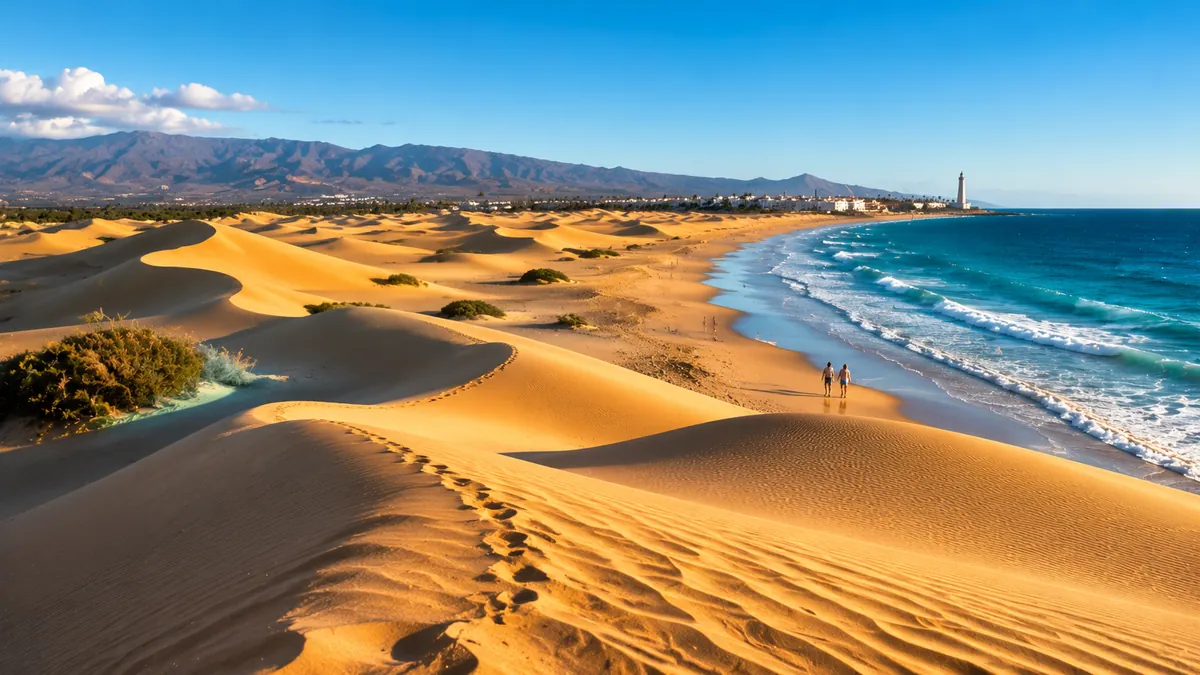
Gran Canaria is one of the most dependable destinations for travellers who want sunshine without leaving the European holiday market. Its southern coastline, particularly around Maspalomas and Puerto Rico, offers beach resorts, restaurants and outdoor activities throughout the winter. The island also has a striking variety of scenery, from enormous sand dunes to mountainous inland villages.
Average daytime highs reach 22.2°C in December, before settling around 20.8°C in January and 21.2°C in February. Overnight temperatures generally remain between 15°C and 16°C, so evenings are considerably cooler than afternoons. The southern coastline is usually the better choice for travellers prioritising sunshine and time by the sea.
Swimming is possible during winter, although the Atlantic is cooler than it is during summer. Sea temperatures average approximately 21.5°C in December and 20°C to 20.7°C during January and February. Maspalomas is a particularly appealing base for its dunes, beaches and resort facilities.
2. Tenerife, Spain: Best for resorts and varied scenery
Tenerife combines beach resorts, volcanic scenery and opportunities for outdoor exploration. Its southern coast, including Costa Adeje, Los Cristianos and Playa de las Américas, is generally warmer and sunnier than the northern part of the island. This geographical difference matters when choosing accommodation for a winter holiday.
Tenerife South Airport records average daytime highs of approximately 22.9°C across the November-to-March period. Northern Tenerife is cooler and wetter, with Tenerife Norte Airport recording average highs of around 16.9°C in January and 17.9°C in December. Travellers who want reliable beach weather should therefore prioritise the south.
Beyond the resorts, Mount Teide National Park offers volcanic landscapes and dramatic views. Whale and dolphin watching, coastal walks and excursions through traditional towns provide alternatives to spending every day beside the swimming pool. Tenerife works particularly well for travellers who want a mixture of relaxation and sightseeing.
3. Lanzarote, Spain: Best for volcanic landscapes
Lanzarote offers a different kind of winter escape. Its volcanic terrain, dark lava fields, whitewashed villages and dramatic coastline make it particularly attractive to travellers interested in nature and architecture. The island is generally dry and sunny during winter, with daytime temperatures commonly around 19°C to 22°C.
Unlike destinations built primarily around large beach resorts, Lanzarote offers plenty of opportunities to explore its natural surroundings. Timanfaya National Park is one of its most distinctive attractions, while the coastal areas around Playa Blanca and Puerto del Carmen provide restaurants, accommodation and beaches.
Wind can make some winter days feel cooler, especially along exposed beaches. Lanzarote is therefore a strong option for outdoor exploration, coastal drives and relaxed resort holidays rather than guaranteed hot-weather swimming.
4. Madeira, Portugal: Best for hiking and natural scenery
Madeira is an excellent winter destination for travellers who value landscapes, hiking and outdoor activities more than hot beach weather. The Portuguese Atlantic island enjoys mild temperatures throughout the season, with average daytime highs around 19°C in December and 18°C in January. Its subtropical vegetation, mountain scenery and coastal viewpoints make it particularly appealing during Europe’s colder months.
Funchal is a convenient base, offering historic streets, botanical gardens, restaurants and access to the island’s main attractions. The famous levada walking routes follow historic irrigation channels through forests and mountain scenery. Some trails are relatively accessible, while others involve steep climbs and exposed sections that require appropriate footwear.
Swimming is possible in natural volcanic pools and sheltered coastal areas, but the water can feel cold during winter. Madeira also receives more rainfall than the Canary Islands during parts of the season, so flexible sightseeing plans are useful. It is best suited to travellers seeking mild temperatures and outdoor experiences rather than a traditional hot-weather beach holiday.
5. Cyprus: Best for sunshine and historical sightseeing
Cyprus is another appealing choice for a European winter break, particularly for travellers interested in combining sunshine with history, food and coastal exploration. December and January daytime temperatures generally fall between 16°C and 19°C, depending on the location. These conditions are comfortable for sightseeing but considerably cooler than the Canary Islands.
Paphos offers archaeological attractions, including the Tombs of the Kings and its famous Roman mosaics. Limassol combines a modern waterfront with a historic centre, while the Troodos Mountains provide a completely different experience for visitors interested in villages and winter scenery.
Rainfall becomes more frequent during the winter months, so visitors should plan for occasional wet days. Cyprus is a better choice for a cultural holiday with mild weather than for a guaranteed swimming holiday.
6. Sicily, Italy: Best for food, history and quieter attractions
Sicily offers a quieter way to experience southern Italy during winter. Average daytime highs reach approximately 16°C to 17°C in December and around 14°C in January. Although these temperatures are too cool for most traditional beach holidays, they can make sightseeing more comfortable than during the island’s hot summer months.
The Valley of the Temples in Agrigento is among Sicily’s most remarkable archaeological attractions. Visitors can explore ancient Greek temples against the backdrop of the Mediterranean countryside without the intensity of peak-season crowds. Palermo, Catania and Syracuse also offer historic architecture, local markets and regional food.
Winter visitors should account for shorter daylight hours and occasional rainfall. Some seasonal businesses and coastal resorts operate on reduced schedules, so checking opening arrangements before travelling is sensible. Sicily is best approached as a cultural and culinary destination during this season.
7. Malta: Best for a compact cultural escape
Malta is particularly convenient for travellers who want a relatively compact destination with history, architecture and coastal scenery. December and January daytime temperatures average approximately 14°C to 15°C, making the island considerably cooler than the Canary Islands. However, the milder climate can be comfortable for walking through historic towns and exploring archaeological sites.
Valletta is the obvious starting point, with its limestone buildings, historic streets and harbour views. Mdina offers a quieter experience through its medieval streets, while the Three Cities provide a different perspective on Malta’s maritime history. Visitors can also take excursions to Gozo for coastal scenery and rural villages.
Swimming is less appealing during winter because Mediterranean sea temperatures fall considerably compared with summer. Malta is therefore better suited to sightseeing, restaurants and outdoor exploration than a beach-focused holiday.
8. Algarve, Portugal: Best for coastal walks and relaxed towns
Portugal’s Algarve region remains attractive during winter because of its dramatic coastline, relaxed towns and comparatively mild weather. Average daytime temperatures in December and January are around 14°C to 15°C, although sunny afternoons can feel warmer. It is a good option for travellers who enjoy walking, coastal scenery and quieter resort towns.
Lagos, Faro and Tavira provide different experiences, from historic centres to beaches and waterfront restaurants. The region’s famous limestone cliffs and coastal walking routes remain major attractions outside the summer season. Winter also offers an opportunity to explore popular towns without the same visitor numbers seen during peak holiday periods.
Rain and stronger Atlantic winds are possible, so beach conditions are less predictable. The Algarve is better suited to a relaxed coastal break than a trip built around swimming and sunbathing.
9. Southern Spain: Best for mild winter city breaks
Seville, Málaga and Cádiz are strong choices for travellers who want to explore southern Spain without the intense heat of summer. Midwinter daytime temperatures generally range between 13°C and 16°C, depending on the city and weather conditions. These destinations offer historic architecture, outdoor dining and cultural attractions within relatively easy reach of one another.
Seville is known for the Alcázar, its cathedral and the Plaza de España. Málaga combines museums, a historic centre and Mediterranean waterfront, while Cádiz offers beaches, historic streets and a distinctive coastal atmosphere. Each city provides a different reason to visit during the quieter winter season.
Winter nights can become chilly, particularly in inland Seville, so visitors should pack warmer clothing for evenings. These cities are best for walking holidays and cultural exploration rather than beach swimming.