Cillian Murphy can make a quiet glance feel more threatening than an entire action sequence. Whether he is playing a scientist confronting the consequences of his invention, a survivor navigating a zombie apocalypse or a gangster protecting his empire, the Irish actor has built a filmography filled with unusually intense performances. His Academy Award-winning turn in Christopher Nolan’s Oppenheimer introduced him to an even larger global audience, while the continued interest in 28 Years Later has brought renewed attention to the horror film that helped establish his career. Here are the 10 best Cillian Murphy movies, ranked by the strength of his performance, the quality of the film and its lasting impact.
10. Red Eye (2005)
Wes Craven’s Red Eye is a compact thriller that turns an ordinary flight into a terrifying experience. Murphy plays Jackson Rippner, a seemingly charming passenger who gradually reveals that he has a much more sinister reason for sitting beside hotel manager Lisa Reisert, played by Rachel McAdams. What begins as an uncomfortable conversation becomes a deadly situation when Jackson reveals the threat facing Lisa’s father.
Murphy is particularly effective because he never needs to behave like a conventional action-movie villain. His character remains polite, composed and almost friendly even when making horrifying threats. That contrast gives Jackson an unsettling quality, especially when Lisa realises how little control she has over the situation.
McAdams provides an equally strong performance as a woman forced to think quickly under extraordinary pressure. Craven keeps the running time tight and the tension focused, making the film an excellent thriller that rarely wastes a scene. It may not be Murphy’s most emotionally complicated role, but it is one of his most entertaining performances as an antagonist.
9. Batman Begins (2005)
Before becoming one of Christopher Nolan’s most trusted collaborators, Murphy entered the world of Gotham City as Dr. Jonathan Crane in Batman Begins. Known in the comics as Scarecrow, Crane is a psychiatrist who uses fear-inducing chemicals to terrorise his victims. His position at Arkham Asylum gives him access to people who are already vulnerable, making him a particularly dangerous enemy for Batman.
Murphy brings an unusual calmness to the character. Rather than relying on physical intimidation, he plays Crane as an intelligent professional whose apparent respectability conceals a deeply disturbing personality. His transformation into Scarecrow also gives the film some of its most memorable horror imagery.
Christian Bale leads the film as Bruce Wayne, while Liam Neeson, Gary Oldman and Michael Caine help establish the wider world of Nolan’s Batman. Murphy’s screen time is smaller than that of the principal characters, but his performance makes a lasting impression. He would return as Scarecrow in both The Dark Knight and The Dark Knight Rises, turning the character into a recurring presence across the trilogy.
8. The Wind That Shakes the Barley (2006)
Ken Loach’s The Wind That Shakes the Barley is one of Murphy’s most emotionally demanding films. Set during the Irish War of Independence and the subsequent Irish Civil War, it follows two brothers whose lives become increasingly divided by political conflict. Murphy plays Damien O’Donovan, a young doctor who abandons his plans to work in London and joins the Irish Republican Army.
His brother Teddy, played by Pádraic Delaney, is already involved in the independence struggle. Their shared commitment initially brings them together, but the political divisions that emerge after the Anglo-Irish Treaty eventually place them on opposite sides. The personal consequences of that disagreement give the film its devastating emotional power.
Murphy’s performance is restrained and deeply affecting. Damien begins as someone who would rather pursue medicine than violence, but the circumstances around him gradually change his outlook. Loach avoids turning the historical conflict into a simple story of heroes and villains, allowing the characters’ disagreements to carry real weight.
The film won the Palme d’Or at the 2006 Cannes Film Festival and remains an important entry in Murphy’s career. It demonstrates his ability to carry serious historical drama without relying on the kind of theatrical intensity associated with some of his more famous roles.
7. Sunshine (2007)
Danny Boyle’s science-fiction thriller Sunshine sends Murphy into one of the most visually ambitious films of his career. He plays Robert Capa, a physicist aboard a spacecraft carrying a massive stellar bomb intended to reignite the dying Sun. The mission is humanity’s last attempt to prevent the planet from becoming uninhabitable.
The crew’s journey becomes increasingly dangerous as technical failures, psychological pressure and unexpected events threaten their chances of completing the mission. Rose Byrne, Chris Evans, Michelle Yeoh, Hiroyuki Sanada and Benedict Wong form part of the ensemble. Each character contributes to the sense that the crew is trapped inside a situation far larger than any individual can control.
Murphy gives Capa a convincing combination of scientific intelligence and personal vulnerability. He is not a conventional action hero, and the film becomes more interesting because its central character must confront problems that cannot simply be solved through physical strength. The pressure of knowing that millions of lives depend on his calculations gives his performance considerable emotional weight.
Sunshine also deserves recognition for its striking visual design and increasingly unsettling atmosphere. It may not have received the same mainstream attention as Nolan’s later science-fiction films, but it remains one of the most ambitious projects in Murphy’s filmography.
6. Dunkirk (2017)
Murphy’s role in Christopher Nolan’s Dunkirk is relatively small, yet it is one of the film’s most memorable performances. He plays a shell-shocked soldier rescued from the water by a civilian boat during the evacuation of Allied troops from the French coastline in 1940. The character is never given a conventional heroic introduction or an elaborate personal backstory.
Instead, Murphy communicates the psychological damage of war through fear, silence and unpredictable behaviour. His character’s trauma becomes a source of tension for the civilians attempting to bring him to safety, particularly when he becomes increasingly desperate to return home. The performance captures how war can continue to affect someone long after the immediate danger has passed.
Nolan structures the film around three interconnected timelines involving soldiers on the beach, civilians crossing the Channel and pilots fighting above them. Murphy’s storyline belongs to the civilian evacuation, but his presence gives the film an intimate emotional counterpoint to its enormous battle sequences.
It is a terrific example of how much Murphy can achieve without dominating the screen. He makes a relatively brief role feel essential to the film’s emotional impact, proving that a strong performance does not always require the most dialogue or screen time.
5. Small Things Like These (2024)
Small Things Like These is among Murphy’s finest recent dramatic performances. Directed by Tim Mielants and based on Claire Keegan’s novel, the film takes place in 1980s Ireland, where Murphy plays Bill Furlong, a coal merchant who discovers disturbing truths about a local convent. His investigation forces him to confront the silence and complicity surrounding the treatment of vulnerable young women.
Bill is a relatively ordinary man with a family and a business to maintain. He is not presented as a fearless crusader, which makes his growing moral conflict more believable. The danger lies in what he might lose if he challenges a powerful institution in a small community where everybody knows everybody else.
Murphy’s acting is remarkably controlled. Much of the film depends on his expressions and the emotional decisions that Bill struggles to make, rather than dramatic speeches. Emily Watson delivers a formidable performance as Sister Mary, while the film’s restrained visual style creates an atmosphere of unease.
The subject matter gives the story considerable historical and emotional significance, particularly in its depiction of Ireland’s Magdalene laundries. Murphy also served as a producer on the film, making it an important project beyond his performance. It earned strong critical praise and demonstrated that his interests as a filmmaker extend well beyond large studio productions.
4. 28 Days Later (2002)
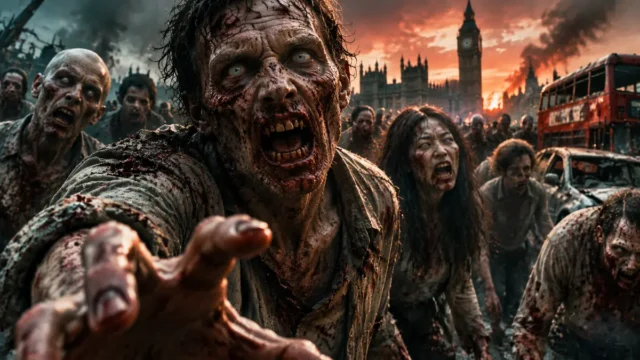
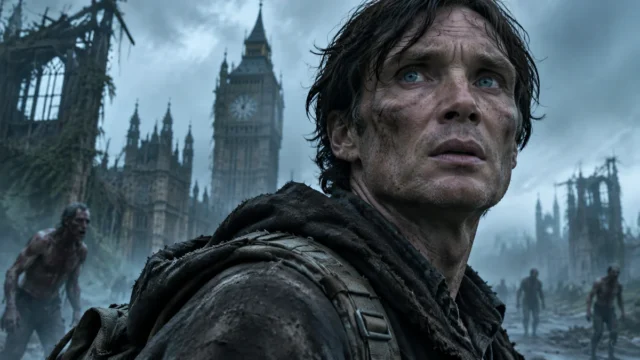
Danny Boyle’s 28 Days Later helped redefine modern zombie cinema, and Murphy’s performance as Jim remains one of the central reasons the film works so well. Jim wakes from a coma in an abandoned London hospital to discover that society has collapsed following the spread of a highly contagious rage virus. The empty streets and deserted landmarks make his first journey through the city genuinely haunting.
Unlike many established horror protagonists, Jim begins as an ordinary person with little understanding of the world around him. He gradually encounters other survivors, including Selena, played by Naomie Harris, and Frank, played by Brendan Gleeson. Their attempt to find safety becomes increasingly complicated as the infected are revealed to be only one part of a much larger human nightmare.
Murphy makes Jim’s vulnerability believable without making him passive. His character changes considerably as the story progresses, especially when the survivors discover that some supposedly safe people can be more dangerous than the infected. That shift gives the film its strongest dramatic moments.
Shot using digital video cameras, the film created an unusually immediate visual style for its time. Its depiction of an abandoned London became iconic, while its fast-moving infected helped influence countless later horror productions. Murphy’s performance is central to that success, and his brief return in 28 Years Later: The Bone Temple gives the original film’s fans another reason to revisit it.
3. Breakfast on Pluto (2005)
Neil Jordan’s Breakfast on Pluto gives Murphy one of the most transformative roles of his career. He plays Patrick “Kitten” Braden, a transgender woman who leaves her small Irish hometown in search of her birth mother in London. The journey takes place against the political and social tensions of the 1970s, creating a story that mixes personal identity with a turbulent historical period.
Kitten approaches the world with a distinctive mixture of optimism, humour and resilience. Her experiences are often painful, but the character refuses to allow cruelty to define her personality. Murphy’s performance captures that balance without reducing Kitten to a collection of stereotypes.
The film also features Liam Neeson, Ruth Negga and Stephen Rea in supporting roles. Jordan uses a colourful, sometimes surreal storytelling style that reflects Kitten’s imagination and determination to find a place where she belongs.
Murphy received a Golden Globe nomination for Best Actor in a Motion Picture – Musical or Comedy for the performance. It remains one of the clearest demonstrations of his willingness to take challenging roles and move far beyond conventional leading-man expectations.
2. Inception (2010)
Christopher Nolan’s Inception gives Murphy an important role in one of the most ambitious science-fiction thrillers of the 21st century. He plays Robert Fischer, the heir to a massive business empire whose subconscious becomes the target of a carefully constructed dream-infiltration mission. Leonardo DiCaprio plays Dom Cobb, the specialist leading the operation.
The mission requires Cobb’s team to enter Fischer’s dreams and implant an idea that could change the future of his company. Joseph Gordon-Levitt, Elliot Page, Tom Hardy, Ken Watanabe and Marion Cotillard complete the principal cast. Murphy’s character is especially important because the entire operation depends on understanding his relationship with his father.
Rather than playing Fischer as a simple corporate villain, Murphy gives him emotional vulnerability and unresolved personal pain. The character’s memories become the foundation of the film’s most important emotional storyline, which makes the mission more complicated than a straightforward intellectual exercise.
Murphy’s performance is an excellent example of his ability to contribute meaningfully to an ensemble without competing for attention. In a film filled with elaborate dream sequences and complicated ideas, he provides one of its most human emotional threads.
1. Oppenheimer (2023)
At the top of this ranking is Oppenheimer, the Christopher Nolan epic that finally gave Murphy the leading role in one of Hollywood’s biggest cinematic events. He portrays J. Robert Oppenheimer, the theoretical physicist who led the Manhattan Project’s scientific work to develop the first atomic bomb during the Second World War. The film follows his rise, the creation of the weapon and the political consequences that eventually threatened his reputation and career.
Murphy carries practically the entire film, often through long stretches of dialogue and close-up shots that capture the smallest changes in Oppenheimer’s expression. His character is intellectually brilliant but deeply complicated, struggling with the consequences of an achievement that permanently changed the world. The performance never reduces him to either a straightforward hero or a conventional villain.
The supporting cast is equally impressive. Robert Downey Jr. plays Lewis Strauss, Emily Blunt portrays Katherine Oppenheimer, Matt Damon appears as General Leslie Groves, and Florence Pugh plays Jean Tatlock. Their performances help build the political and personal conflicts that surround the central character.
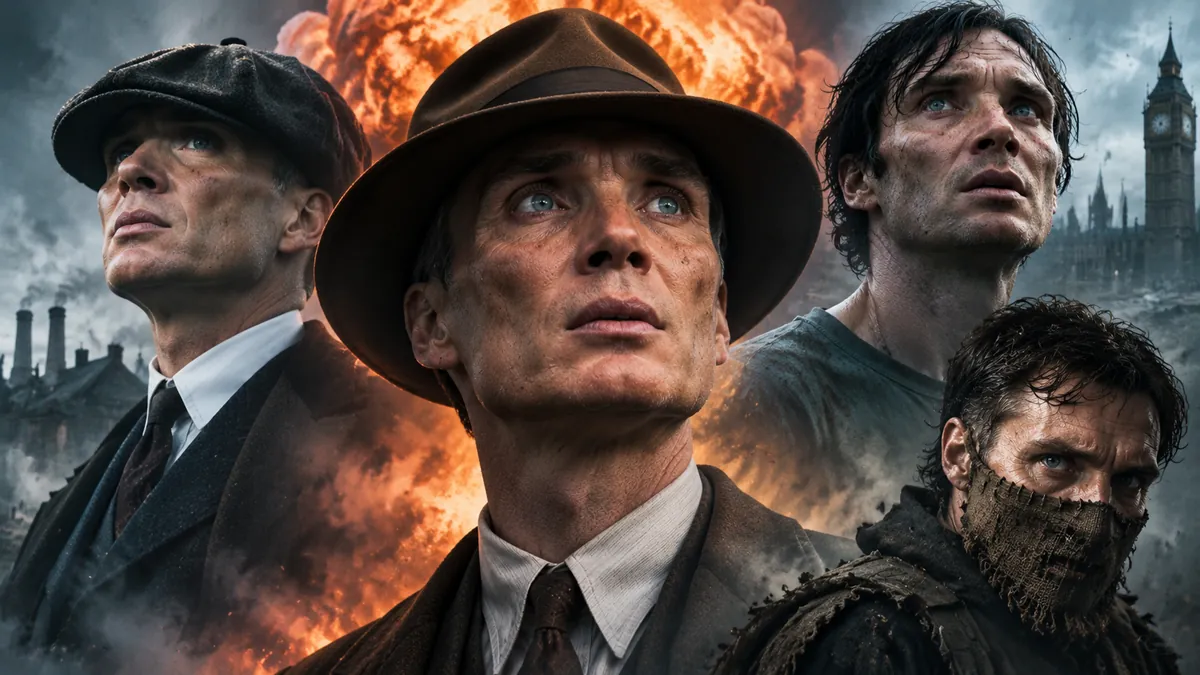
The film became a major awards success, earning Murphy the Academy Award for Best Actor, alongside a Golden Globe and BAFTA in the same category. Its enormous theatrical success also introduced his work to audiences who may previously have known him mainly through Peaky Blinders or his appearances in Nolan’s Batman films.
What makes Oppenheimer his strongest movie is the combination of performance and storytelling. Murphy gives the film an emotional centre that holds together its complicated chronology, scientific discussions and political drama. It is the role that most completely demonstrates the scale of his abilities as a leading actor.
The performances that define Cillian Murphy
Murphy’s career has never depended on playing the same type of character repeatedly. He has moved from independent Irish dramas to psychological thrillers, science-fiction films, historical epics and major Hollywood productions, often choosing roles that demand considerable emotional restraint. His Academy Award for Oppenheimer recognised a talent that audiences who discovered him through 28 Days Later and Peaky Blinders had appreciated for years.
With his return to the world of Jim in 28 Years Later: The Bone Temple and his continued work as Thomas Shelby in Peaky Blinders: The Immortal Man, Murphy’s filmography continues to attract attention in 2026. Which performance deserves the number-one position in his career: Oppenheimer, Tommy Shelby, Jim from 28 Days Later, or a different character entirely?