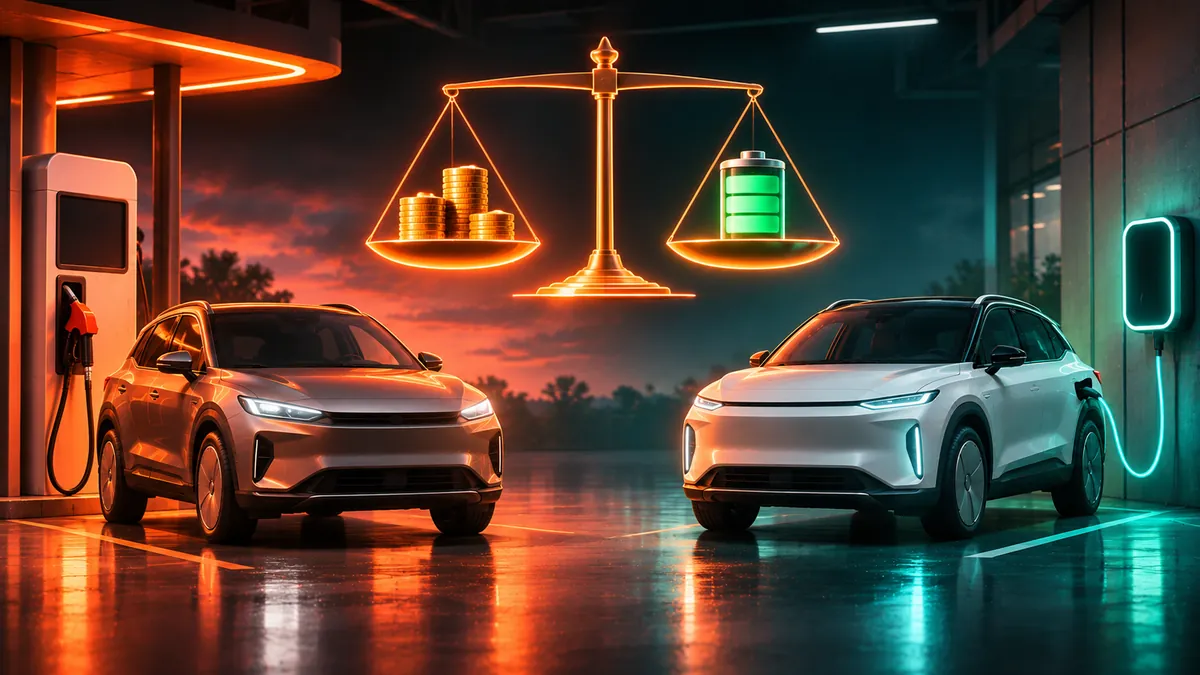
A home-charged EV in India typically costs roughly one-sixth to one-ninth as much per kilometre in energy as a comparable petrol car. In Autocar India’s tests, the Tata Punch EV returned 7.61 km/kWh, which works out to about ₹1.05 per km at an illustrative home rate of ₹8 per kWh, while the petrol Punch AMT costs about ₹6 to ₹9.5 per km at Delhi’s ₹102.12 per litre. Public DC fast charging at around ₹24.5 per kWh including GST costs about ₹3.2 per km, which narrows the gap but does not erase it.
Key takeaways
- EV cost per km = (₹ per kWh × kWh per 100 km) ÷ 100. Petrol cost per km = ₹ per litre ÷ km per litre.
- Autocar India measured the Punch EV (40 kWh) at 7.61 km/kWh overall: 7.92 in the city and 7.29 on the highway.
- Autocar India measured the petrol Punch AMT at 10.7 km/l in the city and 16.9 km/l on the highway, and its long-term car averaged 12 km/l in heavy city use.
- With petrol at ₹102.12 per litre in Delhi on November 10, 2026, the petrol Punch costs about ₹6.04 to ₹9.54 per km.
- A home-charged Punch EV costs about ₹0.66 to ₹1.31 per km at tariffs of ₹5 to ₹10 per kWh, which are illustrative rates and not a quoted tariff.
- Public DC charging at ₹20.75 per kWh plus 18% GST on Jio-bp’s Lite plan works out to about ₹3.2 per km.
How do you calculate energy cost per km?
The clearest comparison converts both cars into rupees per kilometre. For an electric car, multiply your electricity price per kWh by the car’s real-world consumption in kWh per 100 km, then divide by 100. For a petrol car, divide the petrol price per litre by the real-world kilometres you get from a litre.
These formulas matter because a price on its own tells you very little. A tariff per kWh only means something once you know how many kWh the car uses, and the same is true for petrol and mileage. Use tested, real-world efficiency numbers rather than brochure claims, because they are what you will actually pay for.
What do real-world tests say for a petrol car and an EV?
To keep the comparison fair, we picked one nameplate that exists in both forms. Autocar India’s real-world test of the 2026 Tata Punch EV used the 40 kWh version and measured 7.92 km/kWh in the city, 7.29 km/kWh on the highway and 7.61 km/kWh overall. That equals about 13.1 kWh per 100 km, with a real-world range of 304 km.
For the petrol car, Autocar India’s mileage data for the Punch AMT shows 10.7 km/l in the city and 16.9 km/l on the highway. Its long-term petrol Punch averaged 12 km/l over two months of heavy city running, which is a realistic budgeting figure for stop-start traffic. Other cars will differ, so treat the Punch as a worked example and substitute your own car’s figures.
How much does each kilometre cost?
Petrol was ₹102.12 per litre in Delhi on November 10, 2026, according to Mint’s daily fuel report, with Mumbai at ₹111.21 and Bengaluru at ₹111.68. The table below uses the Delhi price. The Ministry of Power’s 2024 charging guidelines say domestic electricity rates apply when you charge an EV at home, but tariffs differ by state and consumption slab, so the home figures are illustrative inputs. Please replace them with the effective rate on your own electricity bill, and see our home charger installation guide for the permissions involved.
| Scenario | Energy price | Efficiency | Cost per km |
|---|---|---|---|
| Petrol Punch AMT, city | ₹102.12/l | 10.7 km/l | ₹9.54 |
| Petrol Punch, long-term city average | ₹102.12/l | 12 km/l | ₹8.51 |
| Petrol Punch AMT, highway | ₹102.12/l | 16.9 km/l | ₹6.04 |
| Punch EV, home at ₹5/kWh (illustrative) | ₹5/kWh | 7.61 km/kWh | ₹0.66 |
| Punch EV, home at ₹8/kWh (illustrative) | ₹8/kWh | 7.61 km/kWh | ₹1.05 |
| Punch EV, home at ₹10/kWh (illustrative) | ₹10/kWh | 7.61 km/kWh | ₹1.31 |
| Punch EV, public DC fast charging | ₹24.49/kWh incl. GST | 7.61 km/kWh | ₹3.22 |
Over 1,000 km, the ₹8 home-charging scenario costs about ₹1,051 in energy, against about ₹6,043 for the petrol Punch on the highway and ₹9,544 in the city. Even on a public fast charger, the EV works out cheaper than the petrol car in these tests. The exact saving depends on your tariff, so it is worth running the same calculation with your own electricity rate.
When does public charging change the math?
Public DC fast charging is where the EV advantage shrinks. Jio-bp pulse lists its All India Pulse Lite plan at ₹20.75 per kWh and its Max plan at ₹20.25 per kWh, and the company says tariffs exclude 18% GST. With GST, the Lite rate comes to about ₹24.49 per kWh, which is more than three times the ₹8 home scenario above.
The formula stays the same, and only the price per kWh changes. If you charge mostly at home and top up on a fast charger occasionally, your blended cost will sit between the home and public figures. A weighted average based on your actual charging mix gives the most honest answer.
What else belongs in total cost of ownership?
Energy is only part of the picture. Purchase price, insurance, tyres, depreciation and financing all affect what a car really costs. For context, Autocar India lists the 2026 Punch EV at ₹9.7 lakh to ₹12.8 lakh ex-showroom, while petrol Punch prices start lower, so the energy saving has to be weighed against that upfront gap. This guide covers energy running cost only. It does not include EMIs, and nothing here is financial advice, so run the numbers on your own driving pattern before you decide.
How do you run your own comparison?
Collect four inputs: your home tariff in ₹ per kWh, the EV’s tested kWh per 100 km, today’s petrol price in ₹ per litre, and the petrol car’s tested km per litre. Add the public-charging price if you expect to use fast chargers often. Then work out both costs per kilometre and multiply by the distance you drive each month. If the EV is only slightly cheaper per km in your case, the purchase-price gap matters more. If it is several times cheaper, as in the home-charging examples above, the running-cost savings can offset a higher sticker price over time.
FAQ
Is an EV cheaper to run than a petrol car in India?
Usually, yes, when you charge at home. In Autocar India’s Punch tests, home charging at an illustrative ₹8 per kWh costs about ₹1.05 per km, against roughly ₹6 to ₹9.5 per km for the petrol Punch at Delhi prices.
How do I calculate the EV cost per km?
Multiply your tariff in ₹ per kWh by the car’s consumption in kWh per 100 km and divide by 100. For the Punch EV, 13.1 kWh per 100 km at ₹8 per kWh gives about ₹1.05 per km.
Does public fast charging make an EV more expensive than petrol?
Not in these tests. At about ₹24.49 per kWh including GST, the Punch EV costs roughly ₹3.22 per km, which is still well below the petrol Punch. The gap is smaller than with home charging, so charging mix matters.
What petrol price did you use?
Delhi’s ₹102.12 per litre on November 10, 2026. Mumbai was ₹111.21 and Bengaluru ₹111.68, so petrol costs per km are higher in those cities.
Does this include EMIs or the car’s price?
No. It compares energy cost per kilometre only. Insurance, tyres, depreciation and financing are separate parts of total ownership cost.