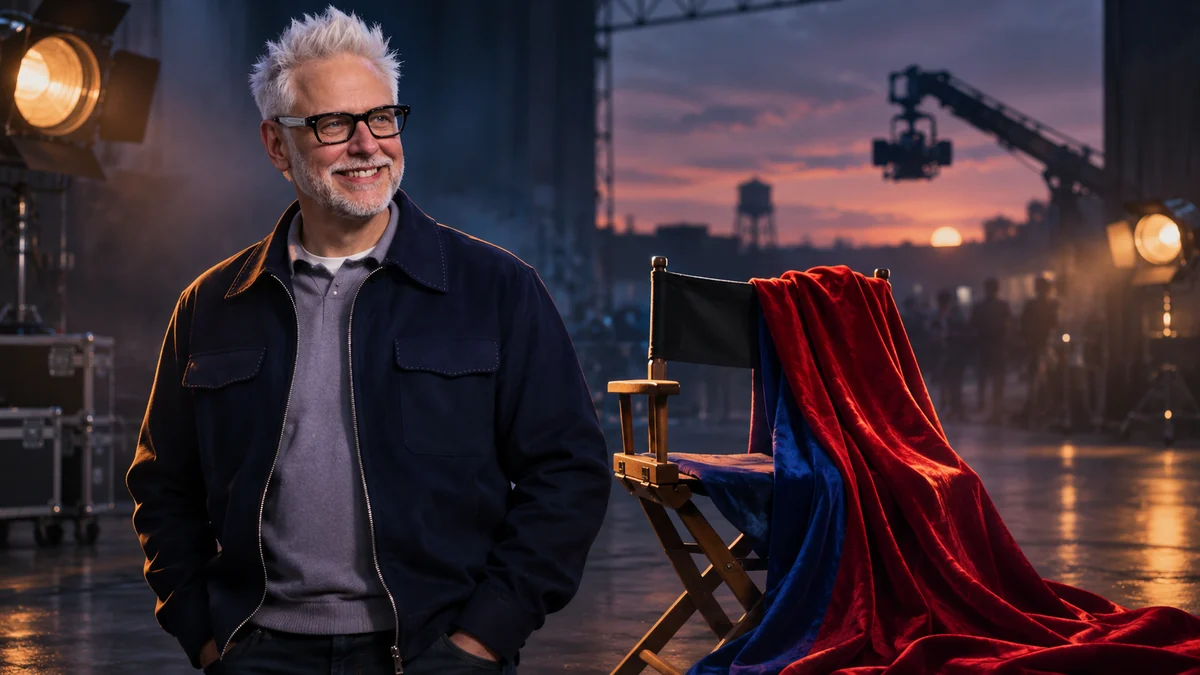
DC Studios is going through another leadership change. James Gunn and Peter Safran are stepping away from their positions after four years running the studio, with former Marvel Studios executive Jeremy Latcham taking over as President and Chief Creative Officer beginning December 1, 2026. For DC fans who thought Gunn’s arrival had brought an end to years of executive reshuffling, the announcement raises familiar concerns about where the franchise goes next. However, Gunn isn’t walking away from DC storytelling.
James Gunn is leaving the executive chair, not DC
Skydance announced the leadership change on November 9, confirming that Gunn and Safran will transition out of their management roles and return full-time to creative work. This doesn’t mean Gunn is abandoning his Superman plans or leaving the franchise behind. He is stepping away from overseeing the entire studio to concentrate on making movies and television, which was the work that brought him to fans’ attention in the first place.
Gunn and Safran took control of DC Studios in 2022 with the task of establishing a consistent creative direction across films, television and animation. During their tenure, they introduced a new interconnected universe while continuing to accommodate projects outside that continuity. Latcham will now take responsibility for managing and developing that operation.
Gunn already has major creative work continuing at DC. He remains writer and director of Man of Tomorrow, the next chapter involving Clark Kent and Lex Luthor, which is currently scheduled for July 9, 2027. Gunn and Safran are also staying involved as producers, so the leadership change doesn’t mean the projects they developed are automatically being abandoned.
Jeremy Latcham’s history at Marvel Studios
Jeremy Latcham may not be a familiar name to casual moviegoers, but he has worked on several films they will recognise. Latcham joined Marvel Studios in 2004 and eventually became Senior Vice President of Production and Development, working at the company during the years when the Marvel Cinematic Universe was being assembled. His producing credits include projects connected to Iron Man, The Avengers, Guardians of the Galaxy, Avengers: Age of Ultron and Spider-Man: Homecoming.
His appointment creates an interesting connection between DC and Marvel. DC spent years trying to establish its own interconnected universe before hiring Gunn, a filmmaker closely associated with Marvel, to rebuild it. Now the studio is handing its leadership to someone who worked at Marvel Studios during the MCU’s early development. We can understand why that history will attract attention, although it doesn’t necessarily tell us how Latcham intends to run DC.
Latcham also has an existing connection to Gunn through Guardians of the Galaxy, so the incoming executive has already worked with the filmmaker he is replacing. Skydance has described the transition as collaborative rather than presenting it as a break from the previous leadership. That leaves room for the existing creative plans to continue, although the announcement doesn’t establish exactly how much Latcham intends to change.
What Latcham could change at DC Studios
Latcham won’t simply be approving individual superhero movies. His role covers DC’s film, television and animation slate, along with development, production, talent and overall strategy. He will therefore have considerable influence over which projects move forward and how DC’s characters are developed across different formats.
For fans, another leadership change brings back some familiar concerns. Previous changes at DC have raised questions about cancelled projects, rewritten roadmaps and characters moving in unexpected directions. Gunn and Safran were brought in to provide the long-term stability the studio had struggled to maintain, so their departure from management creates uncertainty around projects that haven’t been formally announced.
We wouldn’t assume, however, that Latcham is arriving to dismantle Gunn’s universe and start again. Skydance’s announcement repeatedly emphasised the foundation Gunn and Safran established, and Gunn is still working on one of DC’s major upcoming films. Those details suggest that continuing the existing plans remains a possibility. Whether Latcham chooses to expand them or make substantial changes will become clearer through the studio’s decisions.
What the leadership change means for DC’s future
Gunn’s departure from management doesn’t mean he has “lost” DC. He remains part of the franchise as a filmmaker and producer, even though he will no longer be responsible for directing the studio’s wider strategy. The executive making decisions across DC Studios will now be separate from the filmmaker working on Superman’s next chapter.
That arrangement could have practical advantages. Running a studio involves managing budgets, schedules, talent, development, corporate strategy and projects at different stages of production. Those responsibilities require time that Gunn could otherwise spend writing and directing. With Latcham handling the broader operation, Gunn may have more room to concentrate on his creative work.
Jeremy Latcham now takes charge of a studio whose decisions receive considerable attention from superhero fans. Audiences will be watching what happens with Superman, Batman, Wonder Woman, the wider DCU and the eventual possibility of bringing these characters together. His Marvel background makes comparisons with the MCU difficult to avoid, but it remains unclear whether he will apply a similar approach or take DC in another direction.
For now, James Gunn is leaving the DC Studios executive office, not the DC universe. Jeremy Latcham, who helped develop projects during the early years of Marvel’s interconnected franchise, will take responsibility for the studio’s next phase. We will have to judge the transition by the projects DC develops and releases under his leadership, rather than assuming another complete reset is coming.