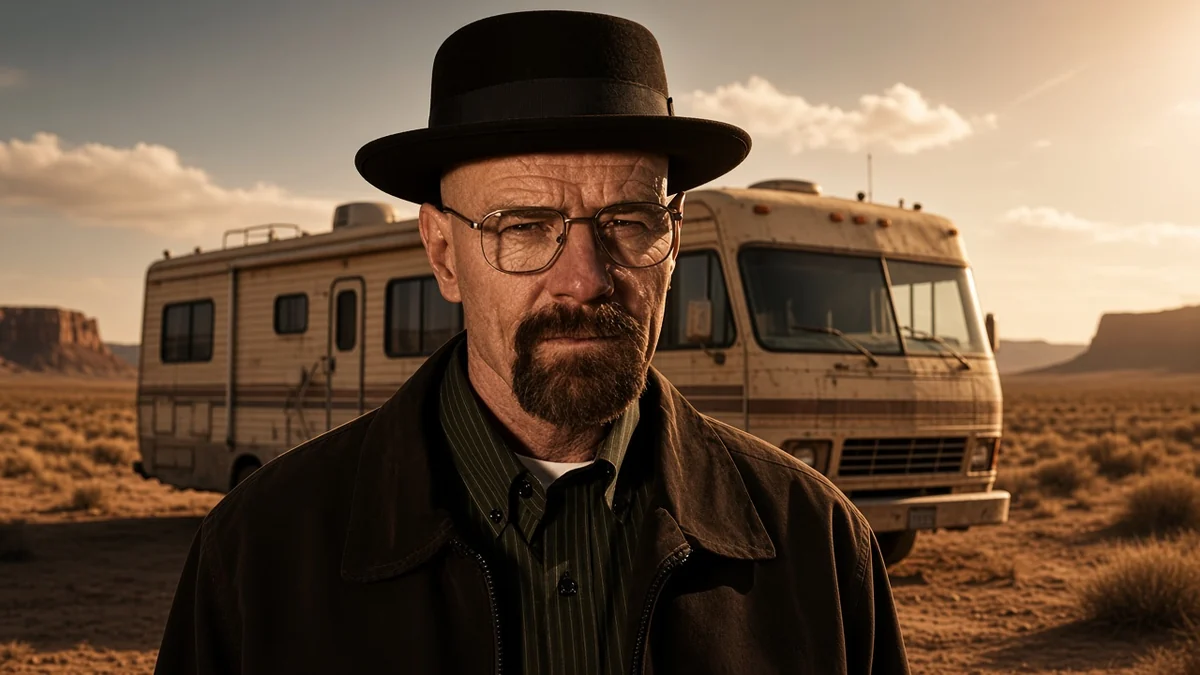
Some of television’s most unforgettable characters are people we would never want to meet in real life. They lie, manipulate, murder and make decisions that destroy the lives of everyone around them, yet somehow keep audiences invested in their journeys. That is the strange appeal of the television antihero: someone who occupies the centre of a story without necessarily being its moral centre. From Walter White’s transformation into Heisenberg to Tony Soprano’s complicated relationship with his family and criminal empire, these characters have helped redefine what a television protagonist can be.
The best antiheroes are not simply villains given more screen time. They have recognisable motivations, personal weaknesses and moments of vulnerability that make their behaviour understandable without excusing their actions. Some gradually become monsters, others struggle to escape their own destructive instincts, and a few manage to retain a sense of morality despite operating in deeply corrupt worlds. We are ranking 10 of the greatest TV antiheroes based on their character development, performances, moral complexity and lasting impact on television.
10. Barry Berkman (Barry)
Barry Berkman begins as a professional hitman who has become increasingly dissatisfied with his violent existence. Played by Bill Hader, the character travels to Los Angeles for a job and unexpectedly discovers an interest in acting after becoming involved with an amateur theatre group. For the first time, Barry believes he might have an opportunity to leave his criminal past behind and become someone entirely different.
Unfortunately, escaping his previous life proves considerably harder than he imagines. Barry repeatedly attempts to balance his desire for a normal existence with the demands of his criminal associates, while his inability to confront his own behaviour creates increasingly disastrous situations. His relationship with acting teacher Gene Cousineau and aspiring actress Sally Reed adds another layer to his increasingly complicated identity.
What makes Barry such an effective antihero is the gap between the person he wants to become and the person he actually is. He genuinely believes that he can start over, but his actions repeatedly undermine that possibility. His attempts to justify violence become increasingly disturbing as the series progresses, particularly when he begins treating other people as obstacles to his happiness.
Hader’s performance is the biggest reason the character works so well. He moves effortlessly between awkward comedy, emotional vulnerability and genuinely frightening violence. Across four seasons, Barry becomes a fascinating examination of guilt, self-deception and the destructive belief that a new identity can erase an old one.
9. Omar Little (The Wire)
Omar Little is one of the most distinctive characters in HBO’s The Wire, a crime drama that examines the institutions and power structures surrounding Baltimore’s drug trade. Played by Michael K. Williams, Omar is a notorious stick-up man who targets drug dealers and their organisations rather than ordinary civilians. His reputation becomes so powerful that even experienced criminals fear the possibility of encountering him.
What makes Omar interesting is that he operates according to a personal code in a world where almost everyone else appears willing to compromise their principles. He refuses to involve children in his criminal activities and generally avoids targeting people who are not part of the drug trade. However, his personal morality does not change the fact that he survives through armed robbery and violence.
Omar also challenges the traditional image of a criminal mastermind. He is openly gay in an environment where masculinity and intimidation are frequently used as weapons. His relationship with Brandon and his later connections with other characters reveal a vulnerable side that contrasts sharply with his frightening reputation.
Williams makes Omar unforgettable through his controlled performance, distinctive presence and ability to communicate danger without constantly resorting to threats. He is neither a conventional hero nor an uncomplicated villain. His personal code makes him different from the people around him, but it never makes him innocent of the violence that defines his existence.
8. Jessica Jones (Jessica Jones)
Jessica Jones offers a different kind of antihero from the crime bosses and morally compromised criminals who dominate television rankings. Played by Krysten Ritter, Jessica is a former superhero who has abandoned the traditional idea of saving the world and instead works as a private investigator in New York. She possesses extraordinary strength, but her personal struggles frequently make ordinary life more difficult than fighting criminals.
Her past relationship with Kilgrave, a manipulative villain capable of controlling people’s actions through verbal commands, has left her with deep psychological scars. Jessica’s reluctance to become involved in other people’s problems is partly connected to her desire to maintain control over her own life. However, her investigative work repeatedly brings her into situations where ignoring injustice becomes impossible.
What makes Jessica compelling is that she does not behave like a conventional superhero. She drinks excessively, pushes people away and often responds to emotional problems with sarcasm or anger. Yet beneath that defensive personality is someone who repeatedly risks her safety to protect people who cannot protect themselves.
Ritter’s performance gives Jessica an unusual combination of toughness, humour and vulnerability. The character also provides a more personal examination of trauma and recovery than many superhero television series attempt. Her moral imperfections make her feel human, while her determination to confront powerful abusers gives her a genuine heroic dimension.
7. Don Draper (Mad Men)
Don Draper is one of television’s most fascinating antiheroes because his greatest talent is also his greatest weakness: he knows how to create convincing identities. Played by Jon Hamm, Don is a highly successful advertising executive at Sterling Cooper, whose professional brilliance hides a complicated personal history. His carefully constructed identity is built on a secret that threatens to destroy the life he has created.
Don’s professional achievements frequently contrast with his inability to maintain healthy personal relationships. He cheats on his partners, manipulates colleagues and struggles to establish an honest connection with his children. His pursuit of success and personal satisfaction repeatedly leads him into situations that damage the people closest to him.
However, Don is not simply a selfish businessman. His childhood experiences, insecurity and constant desire to escape his past help explain why he behaves the way he does. The series gradually reveals the emotional distance between the confident advertising executive everyone admires and the deeply troubled individual behind that image.
Hamm delivers an extraordinary performance, particularly because Don’s emotions are often communicated through silence, expressions and carefully controlled conversations. Mad Men also uses the character to explore American consumer culture, masculinity and the changing social expectations of the 1960s. Don Draper remains one of television’s most sophisticated examples of a protagonist whose success cannot compensate for his personal failures.
6. Villanelle (Killing Eve)
Villanelle is a particularly unusual antihero because she is introduced as a highly skilled international assassin who appears to enjoy the violence she creates. Played by Jodie Comer, she is unpredictable, charming and frequently terrifying, moving between different identities as she carries out assignments across Europe. Her flamboyant personality makes her an entertaining character, but her actions are far from harmless.
Her obsession with intelligence officer Eve Polastri becomes the driving force behind Killing Eve. Eve begins investigating Villanelle’s murders, but their relationship gradually develops into a complicated psychological connection. Each woman becomes increasingly fascinated by the other, creating a dangerous dynamic in which professional pursuit and personal obsession become difficult to separate.
Villanelle’s greatest strength is her unpredictability. She can appear playful and almost childlike in one moment before committing an act of shocking violence in the next. Her extravagant fashion choices and dark humour make her particularly memorable, while her relationship with Eve introduces moments of emotional vulnerability that complicate the audience’s understanding of her.
Comer’s performance earned widespread critical recognition, including the Primetime Emmy Award for Outstanding Lead Actress in a Drama Series in 2019. Villanelle is not a conventional character audiences should admire, but her personality and complicated emotional development make her one of television’s most entertaining morally ambiguous figures.
5. Dexter Morgan (Dexter)
Dexter Morgan is one of television’s most unusual antiheroes because his entire existence revolves around a contradiction. Played by Michael C. Hall, Dexter works as a blood-spatter analyst for the Miami Metro Police Department while secretly operating as a serial killer. His victims are generally criminals who have escaped conventional justice, following a strict set of rules taught to him by his adoptive father, Harry Morgan.
The so-called Harry Code is central to Dexter’s identity. It instructs him to target people who have committed serious crimes, avoid innocent victims and ensure that he never gets caught. Dexter presents his actions as a controlled outlet for his violent urges, but the series repeatedly questions whether he is genuinely motivated by justice or simply using the code to justify his behaviour.
His relationships with Debra, Rita and the people around him reveal another complicated dimension. Dexter wants to understand ordinary human emotions and maintain the appearance of a normal life, even though his secret activities constantly threaten those relationships. The contrast between his outwardly controlled personality and his hidden violence becomes the central source of tension.
Hall’s performance makes Dexter simultaneously disturbing and strangely entertaining. His internal narration allows audiences to understand his thought processes, while his growing emotional connections challenge his belief that he cannot experience genuine human attachment. The character’s story has continued beyond the original series through Dexter: New Blood and Dexter: Resurrection, keeping the franchise alive for another generation of viewers.
4. Jimmy McGill / Saul Goodman (Better Call Saul)
Jimmy McGill might be the most tragic antihero on this list because audiences get to watch him become the person he eventually turns into. Played by Bob Odenkirk, Jimmy begins Better Call Saul as a struggling lawyer trying to establish a legitimate career despite his difficult past. He wants professional respect, financial security and recognition from his older brother, Chuck McGill.
However, Jimmy’s natural talent for manipulation and his willingness to bend the rules repeatedly create problems. He frequently finds clever ways to exploit legal loopholes, deceive opponents and secure victories that conventional lawyers would never consider. His relationship with Chuck becomes particularly damaging because Jimmy desperately wants approval from someone who doubts his ability to become a respectable lawyer.
His relationship with Kim Wexler adds another emotional dimension to the transformation. Kim understands Jimmy’s intelligence and ambition, but she also becomes increasingly involved in the questionable schemes that define his professional identity. Their relationship demonstrates how two people can encourage each other’s worst instincts even when they genuinely care about one another.
Eventually, Jimmy becomes Saul Goodman, the flamboyant criminal lawyer audiences first encountered in Breaking Bad. The transformation is not a sudden personality change but the result of years of disappointment, grief and deliberate decisions. Odenkirk’s performance is remarkable because he makes every stage of Jimmy’s journey understandable without pretending that the character’s actions are acceptable.
Better Call Saul is also an outstanding example of how a spin-off can develop into a compelling drama in its own right. Jimmy’s story explores the difference between being talented and being trustworthy, making him one of television’s most carefully developed antiheroes.
3. Walter White (Breaking Bad)
Walter White begins Breaking Bad as an underpaid high-school chemistry teacher whose life appears to have passed him by. Played by Bryan Cranston, he receives a terminal cancer diagnosis and decides to manufacture methamphetamine to secure his family’s financial future. His scientific knowledge gives him an unusual advantage in the drug trade, and his partnership with former student Jesse Pinkman becomes the beginning of an extraordinary criminal transformation.
Initially, Walter presents his actions as sacrifices made for his wife and children. However, his growing ambition gradually exposes a much darker motivation. He becomes increasingly obsessed with control, recognition and proving that he is more capable than the people who previously underestimated him.
The transformation into Heisenberg is one of the greatest character arcs in television history. Walter moves from an inexperienced criminal who struggles to survive dangerous situations into a ruthless drug kingpin capable of manipulating people and ordering murders. His decisions become increasingly destructive, particularly for Jesse, whose life is repeatedly damaged by Walter’s selfishness.
What makes Walter such an effective antihero is that the audience understands where his journey begins. His frustration with his circumstances is recognisable, but his decisions eventually become impossible to defend. The series carefully exposes the difference between his original justification and the real motivations driving his actions.
Cranston’s performance earned him four Primetime Emmy Awards for Outstanding Lead Actor in a Drama Series. His ability to move between vulnerability, intimidation and arrogance makes Walter White unforgettable. He remains one of the clearest examples of how a television protagonist can gradually become the very monster audiences once believed he was fighting.
2. Tony Soprano (The Sopranos)
Tony Soprano helped redefine what audiences could expect from a television protagonist. Played by James Gandolfini, he is a New Jersey mob boss attempting to balance the demands of organised crime with his responsibilities as a husband and father. The pressures of his criminal life contribute to panic attacks, eventually leading him to seek treatment from psychiatrist Dr Jennifer Melfi.
The therapy sessions become one of the most important elements of The Sopranos because they allow viewers to understand Tony’s fears, insecurities and emotional contradictions. He can be affectionate towards his children, protective of his friends and deeply attached to his family, yet he is also capable of extraordinary cruelty. His criminal activities include extortion, intimidation and murder, often with little regard for the suffering he causes.
What makes Tony particularly compelling is his ability to justify almost anything. He frequently complains about the declining moral standards of society while refusing to acknowledge his own behaviour. His therapy sessions reveal moments of genuine vulnerability, but they do not necessarily make him a better person. In fact, Tony sometimes uses his growing understanding of psychology to manipulate the people around him more effectively.
Gandolfini’s performance is extraordinary because he makes Tony simultaneously intimidating, funny and deeply uncomfortable to watch. Small changes in his expression can communicate affection, anger or the threat of violence. The character also became an important influence on later television antiheroes, including Walter White and Dexter Morgan.
Tony ranks second because his character helped establish the template for the morally complicated television protagonist. The Sopranos does not ask audiences to believe that he is secretly a good person. Instead, it makes them confront the uncomfortable experience of understanding and sometimes sympathising with someone whose actions are indefensible.
1. Frank Underwood (House of Cards)
Frank Underwood takes the top position because he represents an especially chilling form of television antihero: a man who understands political power as a game in which almost every human relationship can become an instrument of control. Played by Kevin Spacey during the show’s first five seasons, Frank begins House of Cards as a powerful Democratic congressman who is furious after being denied the position he expected to receive in the new administration.
Rather than accepting the decision, Frank begins an elaborate campaign to destroy the people who have disappointed him and climb towards the highest levels of government. He manipulates colleagues, exploits political weaknesses and uses journalists to advance his ambitions. His relationship with his wife Claire Underwood is equally complicated, with both characters understanding the importance of power and the sacrifices required to maintain it.
Frank’s defining characteristic is his ability to manipulate the political environment around him. He rarely approaches a problem directly when he can create a situation in which another person makes the decision he wants. His direct conversations with the audience also provide an unusual perspective, allowing viewers to hear the calculations behind his seemingly ordinary public appearances.
What makes him particularly dangerous is the absence of a conventional moral boundary. Frank does not simply want to succeed within the political system; he wants to control it. His ambition gradually becomes more important than loyalty, friendship or even his own personal safety. The series follows his rise through Washington’s political establishment and examines the destructive consequences of treating power as the only measure of success.
Frank’s position at number one comes with an important qualification. House of Cards changed direction after Spacey’s departure, and the final season shifts its attention towards Claire Underwood, played by Robin Wright. Nevertheless, Frank’s early journey remains one of television’s most memorable portrayals of political manipulation, ruthless ambition and moral corruption.
Why television’s greatest antiheroes remain unforgettable
The best television antiheroes are compelling because their stories rarely offer simple moral answers. Tony Soprano can love his family and still destroy other people’s lives, Walter White can begin with understandable fears and eventually become a ruthless criminal, and Jimmy McGill can genuinely want to be a good lawyer while repeatedly choosing deception. Their contradictions make them more interesting than conventional heroes who always know the right thing to do.
These characters have also demonstrated the power of long-form television storytelling. A film may have two hours to establish a character’s motivations, but a television series can spend several seasons examining how small decisions gradually change a person’s identity. That is why their transformations remain so memorable long after their respective finales.
There are plenty of other contenders who deserve recognition, including Vic Mackey from The Shield, Nucky Thompson from Boardwalk Empire, Tommy Shelby from Peaky Blinders and Carmy Berzatto from The Bear. However, the 10 characters on this list represent some of the most fascinating morally complicated protagonists television has produced. Who deserves the number one position in your ranking: Tony Soprano, Walter White, Frank Underwood or someone we have left out?