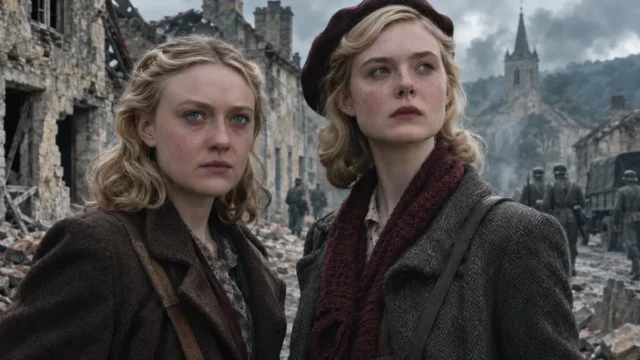
World War II has inspired some of cinema’s most powerful stories, from the horrors of the Holocaust to extraordinary acts of courage on the battlefield. The best World War II movies go beyond military victories and historical events to explore the people whose lives were changed forever. With Dakota and Elle Fanning’s upcoming drama The Nightingale bringing another wartime story to cinemas in 2027, here are 10 essential World War II movies worth watching, ranked.
10. Casablanca (1942)
Before World War II became the subject of countless historical dramas, Hollywood was already telling stories about the people caught in its shadow. Michael Curtiz’s Casablanca remains one of the greatest examples. Starring Humphrey Bogart and Ingrid Bergman, the film follows Rick Blaine, an American nightclub owner living in Vichy-controlled Morocco. His relatively comfortable existence changes when Ilsa Lund, a former lover, arrives with her husband Victor Laszlo, a resistance leader trying to escape the Nazis.
What makes Casablanca special is that its central conflict is deeply personal. Rick must decide whether to protect his own interests or help Ilsa and Victor escape, even if that means sacrificing his chance of being with her. The film uses the atmosphere of wartime Casablanca to create a story about love, loyalty and moral responsibility.
Bogart gives Rick a fascinating combination of cynicism and vulnerability, while Bergman makes Ilsa’s emotional dilemma convincing. The supporting characters also contribute to the film’s memorable atmosphere, particularly Claude Rains as Captain Louis Renault. Although Casablanca is not a traditional battlefield movie, its depiction of refugees, resistance fighters and Nazi influence makes it an essential World War II film.
9. The Great Escape (1963)
If you enjoy stories about ingenuity, teamwork and extraordinary escape plans, The Great Escape deserves a place on your watchlist. Directed by John Sturges, this 1963 classic follows Allied prisoners of war held in a supposedly escape-proof German camp during World War II. Their objective is to organise a mass breakout by constructing tunnels beneath the camp while attempting to avoid the attention of German guards.
The film features an impressive ensemble cast, including Steve McQueen, James Garner, Richard Attenborough, Charles Bronson, James Coburn and Donald Pleasence. Each character brings a different skill to the operation, whether it involves organising the escape, forging documents, obtaining supplies or distracting the guards. The preparation becomes almost as compelling as the eventual breakout because every small mistake could expose the entire operation.
One of the most famous sequences features McQueen’s character, Virgil Hilts, attempting to escape on a motorcycle. His chase through the countryside has become one of the most recognisable moments in classic Hollywood cinema. The movie is based on the real mass escape from Stalag Luft III in March 1944, although Hollywood made several changes to the historical events and characters.
The real operation involved 76 Allied airmen escaping through a tunnel, with most eventually recaptured. The film’s more adventurous treatment does not diminish its entertainment value. The Great Escape remains an excellent combination of suspense, character-driven storytelling and wartime adventure.
8. Grave of the Fireflies (1988)
Not every great World War II movie needs soldiers, military operations or explosions. Studio Ghibli’s Grave of the Fireflies delivers one of cinema’s most devastating portrayals of war through the experiences of two Japanese children. Directed by Isao Takahata, the animated film follows teenage Seita and his younger sister Setsuko as they struggle to survive after American firebombing destroys much of Kobe in the final months of the war.
After losing their mother, the siblings attempt to find shelter and security while dealing with hunger, displacement and the breakdown of their family life. Their relationship becomes the emotional centre of the story. Seita tries to protect Setsuko and give her moments of happiness, even when he has very little control over their circumstances.
The film’s animation makes its emotional impact particularly striking. Takahata carefully recreates the homes, streets, air-raid shelters and devastated surroundings of wartime Japan. However, the most memorable scenes are often the quiet ones, especially those involving Setsuko’s childhood innocence and Seita’s determination to keep her happy.
Based on Akiyuki Nosaka’s semi-autobiographical short story, Grave of the Fireflies approaches the war from the perspective of civilians who have little power over the events destroying their lives. Its portrayal of childhood, loss and survival makes it one of the most emotionally demanding animated films ever produced. It is also a reminder that the consequences of war extend far beyond the people fighting on the front lines.
7. Letters from Iwo Jima (2006)
Most Hollywood World War II movies concentrate on Allied soldiers, particularly American and British forces. Clint Eastwood’s Letters from Iwo Jima takes a different approach by examining the Battle of Iwo Jima through the experiences of Japanese soldiers defending the island. Released in 2006, the film offers an important companion to Eastwood’s Flags of Our Fathers, which explores the same battle from the American perspective.
Ken Watanabe plays General Tadamichi Kuribayashi, the Japanese commander responsible for organising the island’s defence. Unlike commanders who simply demand that their men sacrifice themselves, Kuribayashi understands the difficult military situation and attempts to use the island’s geography to delay the American advance. His strategy relies on an extensive network of underground tunnels and defensive positions.
The film also follows ordinary soldiers, including Saigo, a baker who wants to survive and return to his newborn daughter. His personal motivations contrast with the expectations placed on him by the military hierarchy. The characters are not presented as faceless enemies; they are individuals with families, fears and conflicting feelings about the conflict.
What makes Letters from Iwo Jima particularly important is its willingness to explore the experiences of soldiers on the opposing side without simplifying the historical conflict. The film was primarily performed in Japanese, giving its characters an authenticity that would have been difficult to achieve through an entirely English-language production. It received four Academy Award nominations, including Best Picture and Best Director, and won the Oscar for Best Sound Editing.
6. Dunkirk (2017)
Christopher Nolan’s Dunkirk takes one of the most significant Allied evacuation operations of World War II and turns it into an intensely immersive cinematic experience. Released in 2017, the film recreates the evacuation of Allied soldiers from the beaches of Dunkirk in 1940, when hundreds of thousands of troops were trapped by advancing German forces. Rather than concentrating on a conventional military hero, Nolan tells the story through several groups of people caught in the crisis.
The film follows three interconnected timelines. The first takes place over a week on land, focusing on soldiers attempting to escape the beaches. The second follows a civilian boat travelling across the Channel to help rescue stranded troops over the course of a day. The third follows RAF pilots attempting to protect the evacuation from German aircraft over the course of an hour.
Fionn Whitehead, Tom Hardy, Mark Rylance, Kenneth Branagh, Cillian Murphy and Barry Keoghan are among the film’s ensemble cast. Harry Styles also appears as a young British soldier, in his feature-film acting debut. The characters experience the evacuation from different positions, allowing the audience to understand the scale of the operation without relying on lengthy historical explanations.
Hoyte van Hoytema’s cinematography and Hans Zimmer’s score contribute enormously to the film’s tension. The sound of approaching aircraft, explosions and ticking clocks creates an atmosphere in which even relatively quiet scenes feel dangerous. Dunkirk received eight Academy Award nominations and won three, including awards for Film Editing, Sound Editing and Sound Mixing. It is one of the most technically impressive World War II films of the modern era.
5. Das Boot (1981)
Wolfgang Petersen’s Das Boot takes viewers inside a German submarine during World War II, creating one of the most claustrophobic war films ever made. The 1981 German production follows the crew of U-96 as they undertake dangerous missions in the Atlantic. Rather than presenting the submarine crew as traditional action heroes, the film examines the psychological pressure of living in an enclosed vessel surrounded by the threat of enemy attacks.
Jürgen Prochnow leads the cast as the submarine’s captain, while Herbert Grönemeyer plays Lieutenant Werner, a war correspondent assigned to accompany the crew. Werner initially approaches the mission as an opportunity to document the experiences of German submariners. However, the realities of life underwater quickly challenge his expectations.
The submarine itself becomes almost another character. Its narrow corridors, mechanical equipment and constant sounds create an environment where the crew rarely has an opportunity to relax. A single depth-charge attack can turn an ordinary patrol into a terrifying struggle for survival. The film builds tension through mechanical failures, exhaustion and the growing fear that the vessel may never return to port.
What makes Das Boot especially compelling is its refusal to romanticise submarine warfare. The sailors are shown as human beings operating under extraordinary pressure, rather than invincible military figures. The original theatrical version runs for approximately two and a half hours, while the extended television version offers an even more detailed experience. The film received six Academy Award nominations, including Best Director, and remains one of the most respected submarine dramas ever produced.
4. The Pianist (2002)
Roman Polanski’s The Pianist is one of the most powerful films about the Holocaust and the destruction of Jewish communities during World War II. Based on the memoir of Polish-Jewish musician Władysław Szpilman, the film follows his struggle to survive the Nazi occupation of Warsaw. Adrien Brody plays Szpilman, whose promising musical career is interrupted when German forces begin persecuting the Jewish population.
As the occupation becomes increasingly brutal, Szpilman and his family are forced into the Warsaw Ghetto. Their lives are controlled by restrictions, violence and the constant threat of deportation. Szpilman eventually becomes separated from his family and must find ways to survive alone while hiding from German forces.
Brody delivers an extraordinary performance, communicating much of the character’s suffering through silence and physical expression. As Szpilman loses access to food, shelter and the ordinary comforts of life, the film gradually removes the elements that once defined him as a musician. His connection to music, however, never completely disappears.
One of the film’s most memorable sequences involves a German officer discovering Szpilman hiding in an abandoned building. When the officer learns that he is a pianist, he asks him to play. The encounter creates an extraordinary moment of humanity in a setting defined by violence and persecution.
The Pianist won the Palme d’Or at the 2002 Cannes Film Festival. Brody also won the Academy Award for Best Actor, while Polanski received the Oscar for Best Director. Its personal approach to the Holocaust makes the film essential viewing for anyone interested in understanding the human consequences of World War II.
3. Come and See (1985)
Elem Klimov’s Come and See is among the most disturbing anti-war films ever made. Set in Nazi-occupied Belarus in 1943, the Soviet film follows a teenage boy named Flyora who joins a group of partisans hoping to fight the German occupation. What begins as an adventure driven by youthful excitement quickly becomes an unbearable experience of violence and psychological destruction.
Alexei Kravchenko plays Flyora, whose initial enthusiasm gradually disappears as he witnesses the brutality inflicted on civilians. His experiences take him through devastated villages and encounters with people whose lives have been destroyed by the occupation. The film does not present war as an opportunity for conventional heroism. Instead, it focuses on the physical and psychological damage inflicted on those who experience it.
Klimov’s direction is particularly effective because the audience experiences much of the story through Flyora’s perspective. The camera frequently stays close to his face, capturing his fear and confusion as the world around him becomes increasingly terrifying. The sound design also plays an important role, recreating the overwhelming noise and disorientation of wartime violence.
Unlike many traditional war movies, Come and See offers very little relief through heroic victories or moments of triumph. Its treatment of the Nazi occupation and the destruction of Belarusian communities makes it an extremely difficult watch, but that is precisely why it remains so powerful. The film is frequently recognised among the greatest anti-war works ever made, and the British Film Institute included it in its 2022 Greatest Films of All Time poll.
2. Saving Private Ryan (1998)
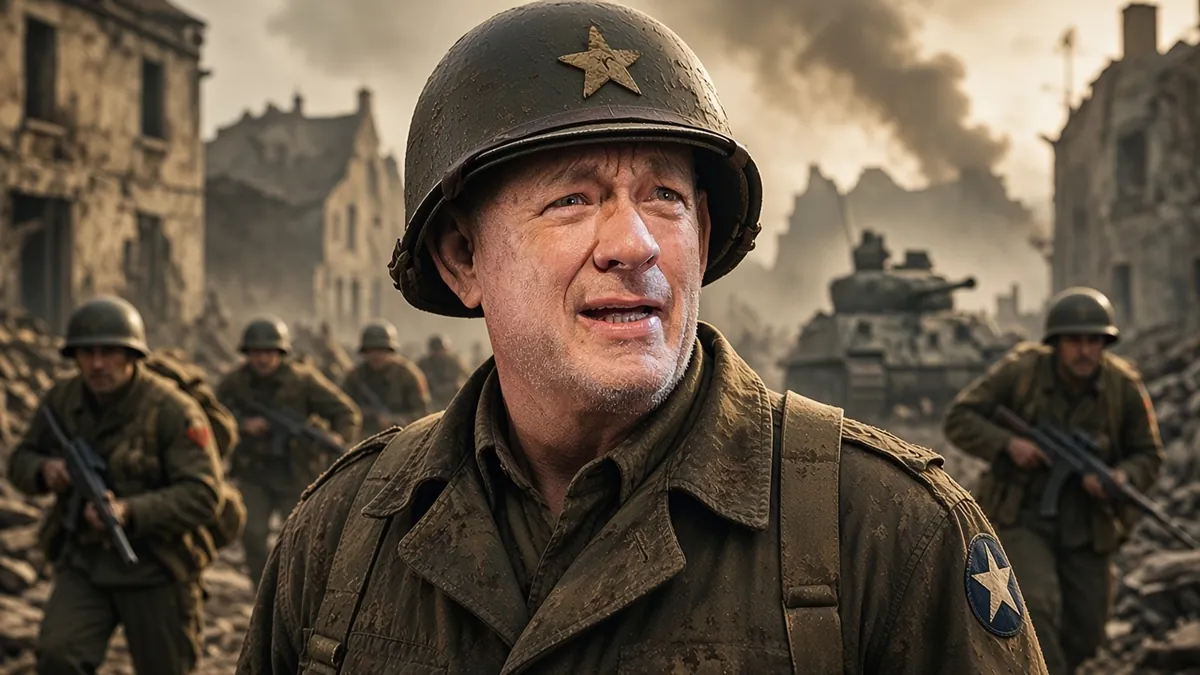
Steven Spielberg’s Saving Private Ryan is one of the most influential World War II films ever made, particularly because of its extraordinary recreation of the D-Day invasion. Released in 1998, the film opens with American soldiers landing at Omaha Beach in Normandy on June 6, 1944. The sequence places viewers directly in the middle of the assault, capturing the confusion, destruction and terrifying vulnerability of soldiers attempting to reach the shore.
Tom Hanks stars as Captain John Miller, an experienced officer assigned an unusual mission. After learning that three brothers from the Ryan family have been killed in action, the American military decides to locate their surviving brother, Private James Ryan, and bring him home. Miller assembles a small group of soldiers and travels behind enemy lines to find him.
The mission creates a difficult moral question for the group. Why should several soldiers risk their lives to rescue one man when thousands of others are fighting and dying? Miller’s team members struggle with the assignment, especially as their journey becomes increasingly dangerous. Matt Damon plays Ryan, whose own understanding of sacrifice complicates the mission when the soldiers finally locate him.
Spielberg’s decision to combine a large-scale battle recreation with an intimate character story is what makes the film so effective. The Omaha Beach sequence remains one of the most technically accomplished depictions of combat in cinema, while the quieter scenes reveal the relationships and personal conflicts developing among the soldiers.
The film received 11 Academy Award nominations and won five, including Best Director for Spielberg. Its influence can also be seen in later war productions that attempted to recreate combat with similar visual realism. Saving Private Ryan remains an essential film for viewers interested in the experiences of Allied soldiers during the European campaign.
1. Schindler’s List (1993)
At the top of our ranking is Steven Spielberg’s Schindler’s List, a film that approaches World War II through one of the darkest chapters in modern history. Based on Thomas Keneally’s book Schindler’s Ark, the 1993 drama tells the true story of Oskar Schindler, a German industrialist who used his factories and influence to save more than a thousand Jewish people from the Holocaust.
Liam Neeson plays Schindler, who initially arrives in occupied Poland hoping to profit from the war. He establishes a factory using Jewish workers and develops relationships with people who can help him maintain his business. However, as the Nazi persecution of Jewish communities intensifies, Schindler begins recognising the human consequences of the system from which he is benefiting.
Ben Kingsley plays Itzhak Stern, Schindler’s Jewish accountant and business associate, who helps organise the factory workforce. Ralph Fiennes portrays Amon Göth, the brutal SS officer responsible for the Plaszow concentration camp. The contrast between Schindler’s evolving conscience and Göth’s cruelty gives the film much of its emotional force.
Spielberg filmed much of the movie in black and white, creating a documentary-like visual style that reinforces its historical setting. One of its most recognisable moments involves a little girl wearing a red coat. The brief use of colour makes her presence particularly striking amid the otherwise monochromatic images of persecution and violence.
The film’s final section follows Schindler as he realises that he could have used his wealth and possessions to save even more lives. Neeson’s performance captures the emotional weight of a man who has finally understood the value of every person he was able to protect. The story does not suggest that one individual’s actions could undo the horrors of the Holocaust, but it demonstrates how individual choices can still matter during periods of extraordinary cruelty.
Schindler’s List received 12 Academy Award nominations and won seven, including Best Picture and Best Director. It remains one of Spielberg’s most acclaimed films and one of the most important historical dramas ever produced. Its combination of historical detail, powerful performances and an extraordinary true story makes it our choice for the greatest World War II movie of all time.
World War II cinema has given audiences stories that approach the conflict from radically different perspectives, whether through soldiers fighting on the front lines, families struggling under occupation or civilians trying to survive the destruction around them. With The Nightingale bringing another story of courage and resistance in occupied France to cinemas in March 2027, which of these 10 films would you recommend to someone looking to understand the human side of World War II?