The best Hunger Games characters are the ones who make Panem feel terrifyingly real, whether they’re fighting inside the arena, manipulating the Capitol’s political machinery or refusing to surrender their humanity. Suzanne Collins has created an extraordinary collection of heroes, villains and morally complicated survivors across the original trilogy and its prequels. With Sunrise on the Reaping bringing Haymitch Abernathy’s past to theaters in November 2026, we’ve ranked the 10 greatest characters in the franchise based on their development, emotional impact, influence on the story and sheer memorability.
Our ranking covers the original Hunger Games films, The Ballad of Songbirds and Snakes and the characters whose stories have gained new significance through Sunrise on the Reaping. We’re judging the characters themselves rather than simply ranking the actors who portrayed them, although some performances have become impossible to separate from their roles. Naturally, several entries discuss major events from the films and books.
10. Effie Trinket
Effie Trinket begins as one of the most ridiculous people in Panem, and that’s exactly why she deserves a place on this list. Played by Elizabeth Banks in the original movies, Effie is the brightly dressed Capitol escort responsible for guiding District 12’s tributes through the Hunger Games. Her obsession with manners, schedules and extravagant fashion initially makes her seem completely disconnected from the suffering of the children she’s helping send into the arena.
However, Effie gradually becomes one of the franchise’s most unexpectedly sympathetic characters. Her relationship with Katniss, Peeta and Haymitch reveals a genuine affection that clashes with the Capitol’s cruel traditions, particularly when the Quarter Quell forces her to confront what the Games mean for people she knows. Banks finds surprising emotional depth beneath the elaborate wigs and costumes, making Effie’s changing perspective one of the movies’ quieter successes.
Elle Fanning’s portrayal of a younger Effie in Sunrise on the Reaping adds another chapter to the character’s history. The character’s greatest strength remains her ability to demonstrate how an ordinary Capitol citizen can participate in a monstrous system without initially questioning it. Effie isn’t a revolutionary by nature, which makes her eventual discomfort with that system worth watching.
9. Rue
Rue has relatively little screen time in the original Hunger Games movie, yet few characters leave such a devastating impression. Played by Amandla Stenberg, the 12-year-old District 11 tribute forms an unlikely alliance with Katniss during the 74th Hunger Games. She’s resourceful, intelligent and exceptionally skilled at moving through the trees, but her resemblance to Prim makes Katniss especially protective of her.
What makes Rue unforgettable is the contrast between her innocence and the horrific competition surrounding her. Her friendship with Katniss reminds us that the tributes are children who should never have been forced to kill one another. When Rue dies, Katniss covers her body with flowers and makes a gesture of respect that transforms an intensely personal loss into an act of public defiance.
That moment changes the emotional direction of the franchise. In the film, Katniss’s tribute to Rue inspires unrest in District 11, demonstrating that the Capitol’s carefully controlled entertainment can create sympathy and resistance instead of obedience. Rue never gets to see the rebellion that follows, but her story remains one of the clearest explanations for why the Hunger Games must end.
8. Cinna
Cinna proves that resistance doesn’t always begin with weapons. Played by Lenny Kravitz, Katniss’s stylist enters the story as a surprisingly gentle figure in a Capitol obsessed with spectacle and superficial beauty. Unlike many of his colleagues, he immediately treats Katniss as a person rather than an object to be transformed for television.
His genius lies in understanding how the Capitol’s own obsession with appearances can be turned against it. By creating Katniss’s unforgettable fire-themed outfits, Cinna gives the District 12 tribute an identity powerful enough to capture the country’s attention. His greatest achievement comes in Catching Fire, when a wedding dress transforms into a mockingjay costume during Katniss’s televised interview.
That transformation is a direct challenge to President Snow, and Cinna suffers terribly for it. Yet his designs continue influencing the rebellion even after his departure from the story, demonstrating how powerful an image can become when millions recognize its meaning. Cinna earns his place because he understands Katniss’s potential before she fully recognizes it herself.
7. Johanna Mason
Johanna Mason is angry, unpredictable and completely uninterested in making anyone comfortable. Jena Malone’s performance in Catching Fire introduces the District 7 victor as someone who refuses to participate politely in the Capitol’s carefully scripted performances. Her blunt comments and open contempt for the Games make her immediately entertaining, but there’s considerable pain underneath that aggression.
Johanna originally survived her Hunger Games by convincing her opponents that she was weak before revealing how dangerous she actually was. That history explains her ability to manipulate expectations, even when confronting people who underestimate her. During the 75th Hunger Games, her actions also become essential to the plan that eventually gets Katniss out of the arena.
Her subsequent imprisonment and torture by the Capitol expose the psychological cost of surviving the Games. Johanna’s struggle with trauma is especially apparent in Mockingjay, where even water becomes a source of terror after what she has endured. The franchise never pretends that surviving the arena automatically turns someone into a heroic, well-adjusted person, and Johanna is one of its most effective examples.
6. Lucy Gray Baird
Lucy Gray Baird brings a completely different kind of energy to The Hunger Games: The Ballad of Songbirds and Snakes. Played by Rachel Zegler, she’s a District 12 tribute and member of the Covey, a traveling musical group whose songs and performances shape her identity. Rather than trying to appear dangerous, Lucy Gray uses her charisma and talent to attract attention during the 10th Hunger Games.
Her relationship with the young Coriolanus Snow is among the most fascinating parts of the prequel. Snow initially treats her success as an opportunity to restore his family’s fortunes, while Lucy Gray must decide how far she can trust the ambitious Capitol student assigned to mentor her. Their relationship gradually reveals the enormous difference between genuine affection and the desire to control another person.
Lucy Gray’s greatest strength is her refusal to let the Capitol dictate who she should become. Her music gives her a voice in a society designed to silence people from the districts, while her ambiguous disappearance leaves a haunting mystery at the center of Snow’s past. Unlike Katniss, she fights much of her battle through performance, instinct and an extraordinary talent for reading people.
5. Finnick Odair
Few Hunger Games characters make a better first impression than Finnick Odair. Played by Sam Claflin, the handsome District 4 victor arrives in Catching Fire as a seemingly arrogant celebrity who enjoys manipulating the attention surrounding him. His confidence, flirtatious behavior and extraordinary skill with a trident make him look like exactly the sort of privileged champion Katniss has learned to distrust.
Then the franchise reveals what’s underneath that carefully maintained image. Finnick was exploited by President Snow after winning his Games, and his public reputation conceals years of coercion and personal suffering. His devotion to Annie Cresta shows a compassionate side that contrasts sharply with the persona the Capitol expects him to maintain.
Finnick becomes one of Katniss’s most valuable allies during the rebellion, and his willingness to expose Snow’s secrets provides a powerful weapon against the president. His wedding to Annie offers a rare moment of happiness in Mockingjay before his story takes another devastating turn. He’s unforgettable because the series gradually dismantles every superficial assumption audiences might have made about him.
4. President Coriolanus Snow
President Snow is among the most chilling villains in modern blockbuster cinema because he rarely needs to raise his voice. Donald Sutherland portrays him as a calculating dictator who understands that fear becomes most effective when people begin controlling themselves to avoid punishment. His conversations with Katniss are especially disturbing because every polite remark carries the possibility of a threat.
The Ballad of Songbirds and Snakes makes Snow considerably more fascinating by exploring his younger years. Tom Blyth portrays an ambitious student whose poverty, family pride and hunger for influence gradually push him toward increasingly ruthless decisions. The prequel doesn’t excuse his behavior, but it demonstrates how he learns to rationalize cruelty whenever his future appears threatened.
Sunrise on the Reaping introduces another incarnation of the president, with Ralph Fiennes portraying Snow during the 50th Hunger Games. Across these different periods, he remains the embodiment of a political system that treats human lives as disposable tools for maintaining power. Snow deserves such a high ranking because understanding his motivations makes the entire Hunger Games universe more disturbing.
3. Peeta Mellark
Peeta Mellark could easily have become a conventional romantic lead, but Suzanne Collins gives him a far more interesting role. Played by Josh Hutcherson, the District 12 baker’s son possesses a form of courage that differs greatly from Katniss’s survival instincts. He’s physically capable and intelligent, yet his defining characteristic is his determination to remain compassionate in a competition designed to destroy compassion.
His declaration of love for Katniss becomes part of the strategy that helps them survive their first Hunger Games. However, Peeta’s feelings cannot be reduced to a publicity stunt, and the complicated relationship between genuine affection and televised performance becomes central to their story. He’s also remarkably skilled at understanding how audiences respond to emotion, frequently using his public appearances to protect other people.
Mockingjay gives Peeta his most difficult storyline when the Capitol subjects him to psychological conditioning that distorts his memories and turns him against Katniss. His gradual struggle to distinguish reality from manipulation is one of the franchise’s most painful character arcs. Peeta earns third place because his kindness is an active moral choice, one he must repeatedly fight to preserve.
2. Haymitch Abernathy
Haymitch Abernathy has always been one of the Hunger Games franchise’s most compelling characters, and Sunrise on the Reaping makes his story even more significant. Woody Harrelson originally portrays him as District 12’s cynical, frequently drunk mentor, a man who seems almost incapable of taking anything seriously. Yet beneath the sarcasm lies an exceptionally intelligent survivor who understands the Games better than almost anyone around him.
His ability to guide Katniss and Peeta comes from firsthand experience, but that experience has destroyed much of his personal life. The original trilogy gradually reveals that Haymitch’s alcoholism and emotional distance are connected to the trauma of winning the 50th Hunger Games. He’s forced to mentor new tributes year after year, knowing that most of them will never return home.
Sunrise on the Reaping finally places a 16-year-old Haymitch at the center of the story, with Joseph Zada taking over the role. The Second Quarter Quell doubles the number of tributes, forcing Haymitch into an arena alongside fellow District 12 competitors including Maysilee Donner. His experiences reveal how early he learned to challenge the Capitol’s authority and why President Snow regards him as a threat.
What makes Haymitch exceptional is the contradiction between his outward behavior and his determination to protect the people entrusted to him. His complicated relationships with Katniss and Peeta eventually become some of the franchise’s strongest emotional connections. He’s an imperfect mentor, a deeply damaged survivor and a remarkably clever strategist, making him worthy of a place just below the series’ central heroine.
1. Katniss Everdeen
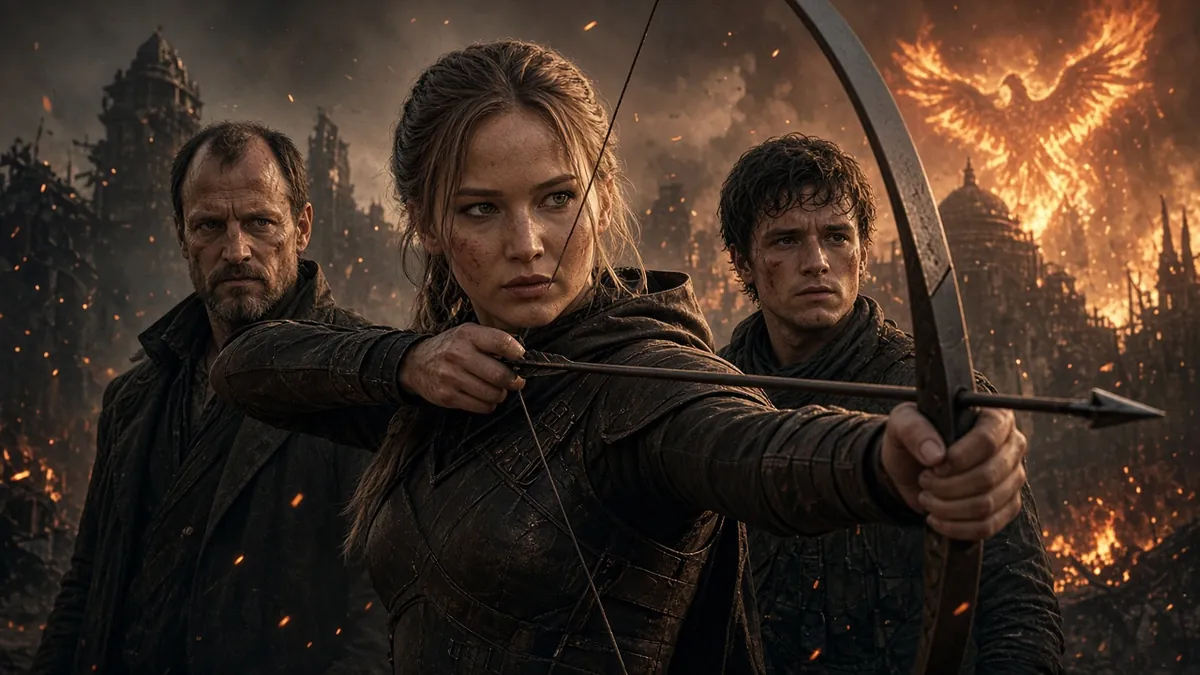
No Hunger Games character deserves the top spot more than Katniss Everdeen. Jennifer Lawrence’s performance helped transform Suzanne Collins’ heroine into one of the most recognizable protagonists in modern cinema, but Katniss’s enduring appeal comes from her contradictions. She’s brave yet suspicious, compassionate yet sometimes emotionally distant, and far more comfortable protecting her family than becoming the public face of a revolution.
Her defining moment arrives almost immediately when she volunteers to take Prim’s place at the reaping. It’s an act of love rather than political rebellion, but it begins a chain of events that eventually threatens the Capitol’s control over Panem. Inside the arena, Katniss repeatedly refuses to abandon her humanity, whether she’s protecting Rue or challenging the rule that would force her and Peeta to kill one another.
What separates Katniss from more conventional action heroes is her discomfort with becoming a symbol. She doesn’t enjoy performing for cameras, hates being manipulated by powerful figures and frequently struggles to understand why other people view her as inspirational. Her experiences during the rebellion expose the frightening reality that even those fighting against tyranny can become consumed by their desire for power.
By the conclusion of Mockingjay, Katniss has endured extraordinary loss while discovering that defeating one dictator doesn’t necessarily guarantee a better political system. Her final confrontation with President Coin demonstrates that her strongest quality remains her willingness to question authority, even when the people holding power claim to be on her side. She remains the franchise’s greatest character because her heroism never depends on wanting to become a hero.
From Rue’s heartbreaking innocence to Snow’s terrifying ambition, the Hunger Games franchise has built its strongest stories around characters whose choices carry enormous personal consequences. The release of Sunrise on the Reaping adds further depth to Haymitch’s history while connecting another generation of characters to Katniss’s eventual rebellion. With Haymitch’s full story now part of the film series, does he deserve to overtake Katniss as the greatest Hunger Games character, or does the Girl on Fire still belong at number one?