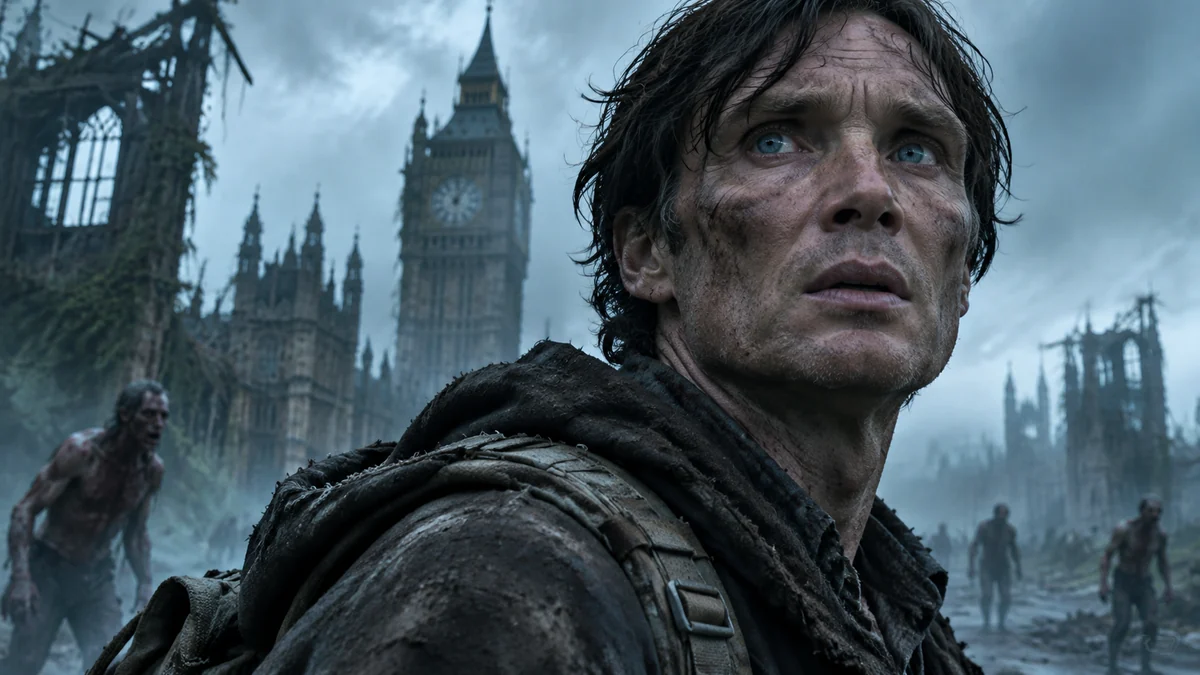
The planned third 28 Years Later movie has a finished screenplay, a returning Cillian Murphy and a director who desperately wants to complete the story. There is just one problem: nobody has secured the money to make it yet. Danny Boyle has provided a fresh update on the proposed trilogy finale, confirming that Alex Garland has written what he calls a fantastic script and that Murphy is enthusiastic about returning for a much larger role as Jim.
Speaking during an appearance connected to his upcoming film Ink, Boyle explained that the project still needs financial backing despite having been greenlit by Sony before the release of 28 Years Later: The Bone Temple. His comments offer encouraging news about the creative side of the production, but they also expose the commercial problem that could prevent the planned trilogy from reaching its intended conclusion.
Alex Garland has completed the third film’s screenplay
The most encouraging development is that the writing is already finished. Boyle praised Garland’s work when discussing the proposed sequel, describing the screenplay as fantastic and expressing considerable confidence in the way it concludes the story. This is particularly significant because the third film has been discussed as the final chapter of the new trilogy rather than another standalone outbreak story.
Boyle also suggested that the screenplay delivers a carefully constructed conclusion to the characters and events introduced in the previous two movies. He described the ending as completing the story in a beautiful, mathematically perfect way, even comparing its circular structure to something Christopher Nolan might appreciate. That description gives us a fascinating indication of the filmmakers’ ambitions without revealing any actual plot details.
The creative partnership between Boyle and Garland has been central to the franchise since 28 Days Later arrived in 2002. Boyle directed the original film, while Garland wrote its screenplay. They reunited for 28 Years Later in 2025, making the possibility of another collaboration particularly important for audiences who have followed the series from the beginning.
Cillian Murphy is expected to have a much bigger role
Murphy’s involvement is arguably the biggest reason audiences are eager to see the trilogy completed. He originally played Jim, a bicycle courier who wakes from a coma to discover that a devastating outbreak has transformed Britain into a nightmare. His performance helped make the original film one of the defining British horror releases of its era.
Although Murphy did not lead either of the two recent films, the franchise has already begun bringing Jim back into its central storyline. He makes a surprise appearance in the closing moments of 28 Years Later: The Bone Temple, where he is shown living with his daughter when they encounter Spike and another survivor being pursued by infected attackers.
That brief appearance was an obvious setup for something considerably bigger. Boyle has previously indicated that the planned third instalment would feature a lot of Murphy, and his latest comments make the intention even clearer. He confirmed that the actor is enthusiastic about returning and that Garland has written a particularly strong part for him.
There is an important distinction here: Murphy’s return is something Boyle has discussed positively, but the production has not yet secured the financing required to move forward. There is no confirmed filming schedule, release date or completed cast announcement for the third movie.
The Bone Temple’s box-office performance created a problem
The financial uncertainty becomes easier to understand when we examine the theatrical performance of the two recent films. 28 Years Later earned approximately $151 million worldwide against a reported production budget of $60 million. That was a respectable result for an R-rated horror film, although it was hardly an overwhelming blockbuster performance.
The situation became considerably more difficult with 28 Years Later: The Bone Temple. Directed by Nia DaCosta and released in 2026, the sequel earned approximately $58.5 million worldwide against a reported production budget of around $63 million. That means the film failed to recover its production cost through theatrical ticket sales alone, before accounting for marketing, distribution and cinema revenue shares.
There is an interesting contradiction in the franchise’s reception. The Bone Temple received stronger critical reviews than its predecessor and attracted considerable praise for its performances, disturbing imagery and willingness to take the story in unexpected directions. Yet that critical response did not translate into the theatrical audience numbers Sony would have wanted.
For a studio considering another expensive instalment, that difference matters. A well-reviewed horror film can still struggle commercially, particularly when its audience is smaller than the franchise’s reputation suggests. The third film now needs a convincing financial argument before the filmmakers can turn Garland’s completed screenplay into an actual production.
Sony’s earlier greenlight is no longer enough
Sony had previously approved plans for the third film in December 2025, before The Bone Temple reached cinemas. The original production strategy involved developing the trilogy as a connected project, with Boyle directing the first instalment and DaCosta taking charge of the second. The third chapter was expected to bring the central creative partnership back together.
However, an earlier greenlight does not guarantee that a movie will enter production regardless of its predecessors’ financial performance. Boyle’s latest comments make it clear that funding remains the immediate obstacle. The director is still interested, Garland has completed the script, and Murphy is willing to return, but those ingredients cannot replace the financial commitment required to make the film.
There is also a scheduling consideration. Garland has been working on A24’s upcoming adaptation of Elden Ring, another major project that requires substantial creative attention. Boyle is meanwhile preparing to release Ink, his film about Rupert Murdoch and the rise of the British newspaper The Sun. Even if financing becomes available, coordinating the schedules of the key collaborators will be important.
The trilogy’s ending is now the biggest unanswered question
The second film deliberately leaves several narrative threads open, particularly through Jim’s unexpected return and the encounter with Spike. A third instalment would have the opportunity to bring these characters together and resolve the wider story that began with the original outbreak. The prospect of seeing Murphy return as a central character also gives the proposed finale a direct connection to the film that started everything in 2002.
There is still no guarantee that audiences will see that conclusion. Boyle’s latest comments are more encouraging than his October description of the project being on the back burner, but they do not represent confirmation that filming is imminent. The screenplay exists, the lead actor is interested and the director remains committed; the missing piece is a financial backer willing to take the risk.
Would you rather see Sony finance Danny Boyle’s planned trilogy finale as a theatrical release, or would you be comfortable with another studio or streaming platform stepping in to bring Cillian Murphy’s Jim back for one final chapter?