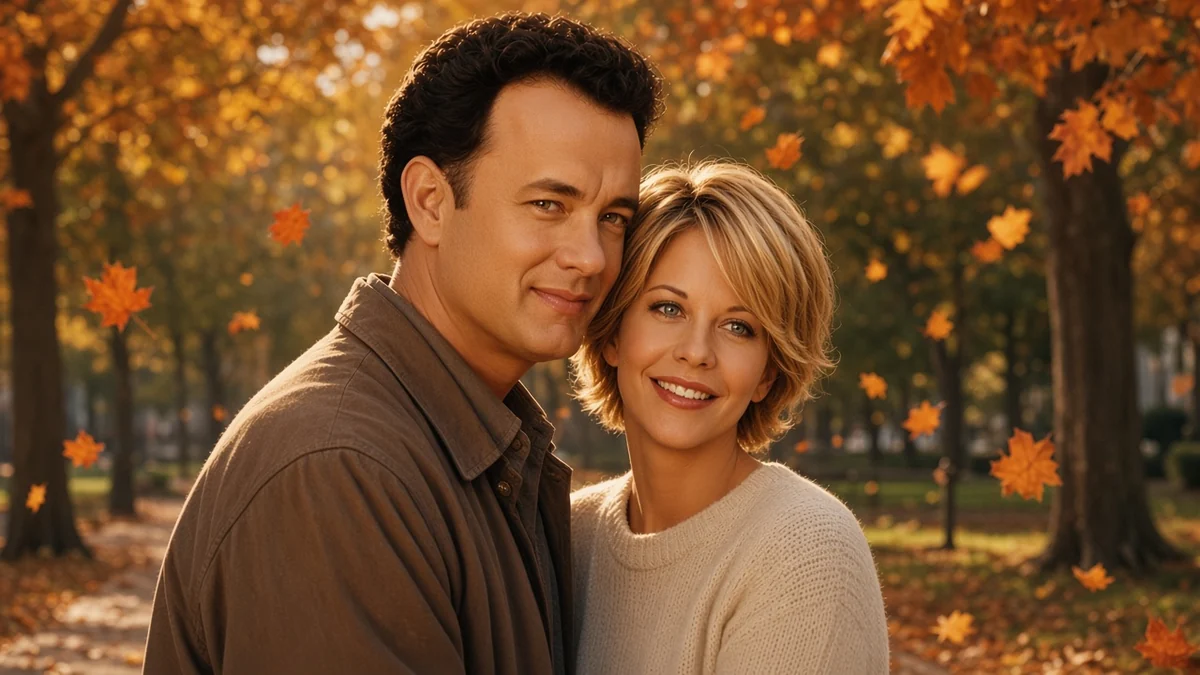
Nearly three decades after Tom Hanks and Meg Ryan starred in a romance built around anonymous emails, Warner Bros. is developing a new version of the 1990s romantic comedy You’ve Got Mail. Jason Orley is attached to direct and rewrite the screenplay. The project raises an interesting question about how a story built around the novelty of email could work in a world where people can find information about each other so easily.
Deadline reported the news on November 10, 2026, and Variety subsequently confirmed the project. The new movie draws on an earlier script by Deborah Kaplan and Harry Elfont, with Neal Moritz and Tania Landau producing through Original Film. Warner Bros. has not announced a cast or detailed premise, so it’s unclear how closely the new version will follow the 1998 movie.
Warner Bros. has found its director
Jason Orley has experience directing comedies about relationships, which makes his involvement worth examining. His feature directorial debut, Big Time Adolescence, arrived in 2019, followed by the 2022 romantic comedy I Want You Back, starring Charlie Day and Jenny Slate. That film followed two recently dumped strangers who join forces to disrupt their former partners’ new relationships, giving Orley experience with characters whose romantic decisions create complications.
Orley has also directed episodes of Pete Davidson’s Peacock comedy series Bupkis and worked on comedy specials. His upcoming film Close Personal Friends features Brie Larson, Jack Quaid, Lily Collins and Henry Golding, and Variety reported that he had recently completed post-production on it. Quaid is also Meg Ryan’s son, although there is no indication that he is involved in You’ve Got Mail.
Orley will work from a screenplay originally developed by Kaplan and Elfont, whose credits include Can’t Hardly Wait and Josie and the Pussycats. Both the writers and director have worked on comedies involving relationships, although their approach to this particular story remains undisclosed. The project is currently in development, and there has been no announcement that filming has begun.
Why the original You’ve Got Mail still matters
Released in 1998 and directed by Nora Ephron, You’ve Got Mail starred Hanks and Ryan as two New Yorkers who unknowingly fall for each other through anonymous online correspondence. Ryan played Kathleen Kelly, who ran a small children’s bookstore, while Hanks played Joe Fox, whose family’s larger bookstore business threatened hers. They disliked each other in person while developing a close relationship through their emails, unaware that they already knew each other.
The email exchanges allowed Kathleen and Joe to discuss fears and desires they struggled to express face-to-face. Their growing affection also complicated an existing conflict involving commerce, community and the survival of independent shops. The supporting cast included Greg Kinnear, Parker Posey, Jean Stapleton and Steve Zahn, while the story gave its central couple problems beyond their romantic misunderstanding.
The movie earned approximately $250 million worldwide against a reported budget of around $65 million. Beyond its commercial success, Ephron’s writing and the chemistry between Hanks and Ryan helped establish its reputation among romantic-comedy audiences. The two actors had already appeared together in Joe Versus the Volcano and Sleepless in Seattle, making You’ve Got Mail their third film together.
This story has been adapted before
A new You’ve Got Mail would follow a history of adaptations built around the same central premise. Ephron’s film drew from Miklós László’s play Parfumerie, which also inspired the 1940 film The Shop Around the Corner, starring James Stewart and Margaret Sullavan. That movie followed co-workers who clashed in person while developing romantic feelings through anonymous letters.
The premise later appeared in the musical film In the Good Old Summertime and the stage musical She Loves Me. Each adaptation placed the characters in a different setting while retaining the contrast between their personal interactions and private correspondence. Ephron updated the concept for the emerging internet, replacing traditional letters with emails that allowed two strangers to develop a relationship.
The internet has changed how the romance could work
In 1998, an anonymous email exchange offered a believable way for two people to develop a relationship without knowing much about each other’s identities. Today, dating apps, social feeds, video calls and searchable profiles make that situation harder to maintain. A contemporary version would need to explain why its characters continue communicating without discovering who the other person is.
Another challenge is finding a conflict with consequences beyond mistaken identity. Kathleen and Joe weren’t simply two people who misunderstood each other, because the success of his business threatened the future of hers. Whether Orley retains the bookstore setting or introduces a different professional rivalry, the story will need a reason for its characters to remain at odds when they meet in person.
We’d be interested in seeing how the filmmakers approach the contrast between what people reveal privately and how they behave around each other. However, social media anonymity, dating apps and an updated workplace setting are possibilities rather than confirmed plot details. Deadline and Variety haven’t revealed how the screenplay will modernize the story, so there is no confirmed information about the film’s new setting or central conflict.
Tom Hanks and Meg Ryan are not confirmed to return
Warner Bros. has not announced any cast members for the new version, including Hanks and Ryan. Their performances are closely associated with the original movie, so casting different actors or introducing new characters would be a significant creative decision. A cameo or reunion involving the original stars is possible to imagine, but neither has been reported as part of the project.
At QuirkyByte, we’d rather see the new movie develop its own characters and relationships than depend entirely on recognition of the original title. The premise still offers material for a romantic comedy about two people who connect privately while struggling to get along in person. With Orley attached and the screenplay being rewritten, the next step will be learning how Warner Bros. intends to adapt that idea for contemporary audiences.
Source: Deadline