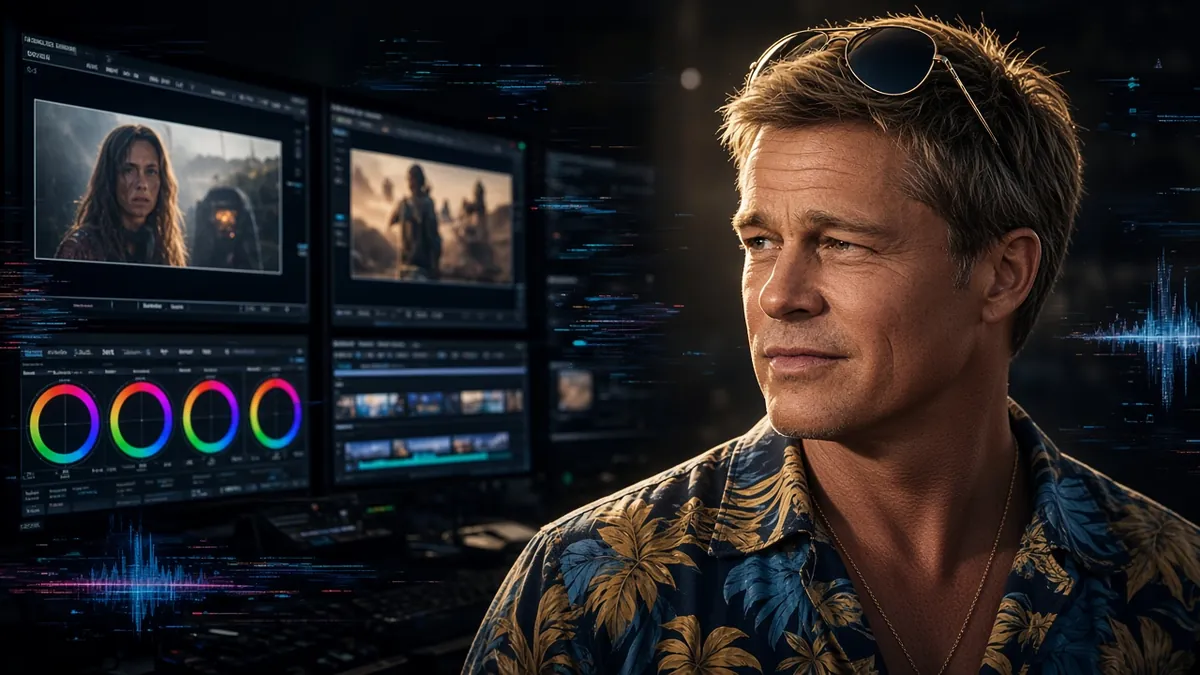
David Fincher has confirmed that AI was used in post-production on The Further Mis-Adventures of Cliff Booth, the Brad Pitt sequel he directed from a Quentin Tarantino script. Discussing the film on The Ringer’s The Big Picture podcast, Fincher described using the technology to improve dialogue tracks and align a preferred line reading with a preferred visual take. The David Fincher Cliff Booth AI conversation now has one clear answer, though it does not settle every concern viewers have raised about the movie.
That distinction matters. Fincher was discussing specific work on actors’ recorded performances, while some of the debate around the film concerns images that viewers suspect were generated or altered with AI. The podcast interview was recorded before those allegations emerged, according to Variety, so Fincher was not asked to address the disputed shots directly.
David Fincher’s Cliff Booth AI comments explain the dialogue work
Fincher told podcast host Sean Fennessey that the production spent only four or five days recording replacement dialogue. When Fennessey identified a scene he thought had been dubbed, Fincher said AI had instead been used to clean up its audio. He also described a process that could adjust an actor’s lip movements when the strongest line reading came from a different take than the strongest image.
For a director known for searching through many takes, the appeal is easy to understand. A performance might look exactly right in one take while sounding better in another. Fincher’s account presents AI as a way to bring those choices together, using material the actors performed, rather than asking them to return to record every line again.
He went further when discussing what the technology might make possible on future sets. Fincher imagined filming actors and capturing their performances in ways that would give a production more room to correct technical problems later. He argued that such work would still depend on performers and the crews who build the physical world around them. That is his vision for the process; it is not a full accounting of every AI technique used in Cliff Booth.
The disputed Cliff Booth images remain unaddressed
The timing of the interview leaves the most contentious part of this story unresolved. Early viewers have questioned whether certain images in The Further Mis-Adventures of Cliff Booth were generated or extensively changed with AI. Fincher’s explanation of dialogue cleanup and lip adjustments does not confirm how those images were made.
As The Playlist reported, neither Fincher nor Netflix had answered its request for clarification about the broader visual allegations. That means claims about any particular shot should stay claims until the people behind the film explain the work. A visible oddity may prompt a fair question, but a viewer cannot establish a production method from a screenshot alone.
The uncertainty is especially striking because Fincher’s films invite close inspection. We tend to watch his frames for precise choices, whether the scene is tense, funny or apparently effortless. Our ranking of David Fincher’s movies traces how much of his appeal comes from that control. When audiences spot something that appears out of place in a new Fincher film, they are bound to ask how it got there.
Why this sequel has drawn such a sharp reaction
Cliff Booth already came with an unusual creative handoff. Pitt returns to the character introduced in Once Upon a Time in Hollywood, but Fincher directs this follow-up from Tarantino’s screenplay. It puts a familiar character in the hands of a filmmaker whose style differs sharply from the one that first brought Booth to the screen.
That made the movie a subject of intense curiosity before the AI discussion began. Early responses to the sequel were enthusiastic enough to give us plenty to examine in our coverage of the first Cliff Booth reactions. The new debate changes what some viewers will be looking for, but it should not flatten every conversation about the film into a verdict on technology.
There is also a practical difference between the uses Fincher described and the possibilities people fear. Cleaning an existing recording, adjusting lips to match an actor’s own line reading and creating an image from scratch are different decisions with different effects on the finished movie. Fincher has spoken specifically about the first two. Anyone claiming that his comments confirm the third is going beyond what the interview establishes.
His remarks still reveal a great deal about where his thinking has moved. Fincher sounds willing to use AI when it gives him more freedom to choose the best recorded elements of a scene. Fans may admire that precision or feel uneasy about how far the process could go; either response deserves an accurate account of what was done.
For now, Fincher has explained some of the AI work in The Further Mis-Adventures of Cliff Booth, while the questions about its disputed visuals remain open. We want to see the film judged on what is actually on screen, with equally clear answers about how the contested shots were made. The next useful detail would be a direct explanation from Fincher or Netflix of those images and the techniques used to produce them.