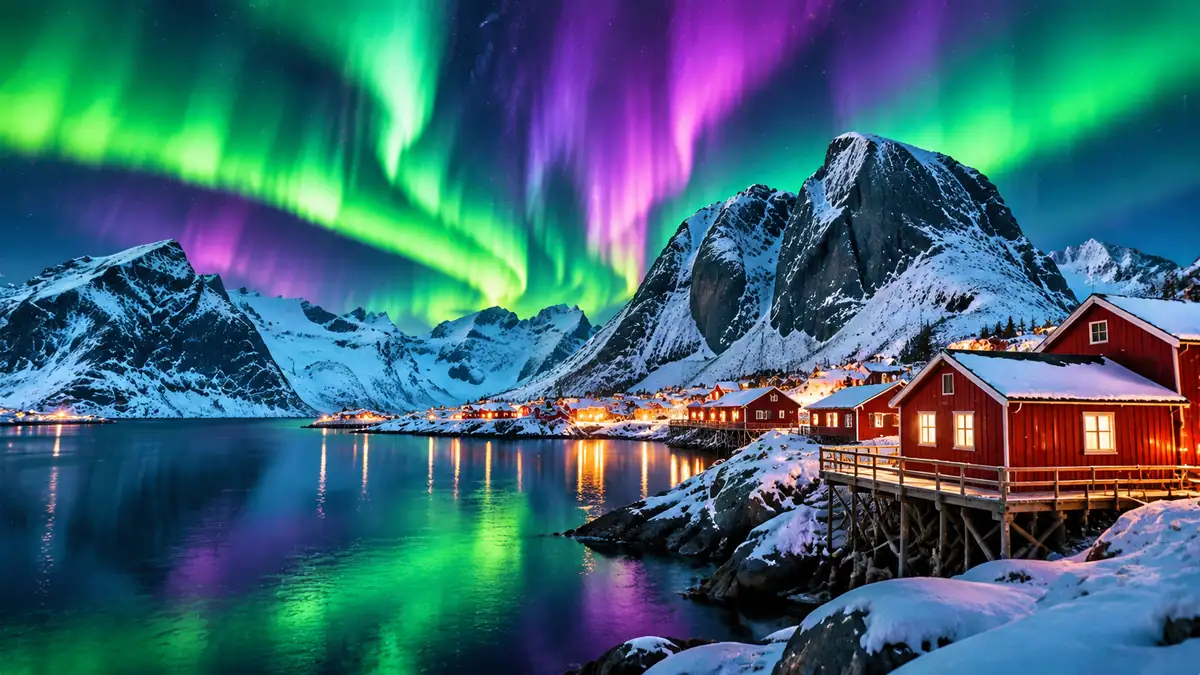
The best places to see the Northern Lights in winter 2026–27 include Tromsø in Norway, Abisko in Sweden, Finnish Lapland, Fairbanks in Alaska, Yellowknife in Canada and Iceland. The viewing season generally runs from September through March, but clear skies, darkness and several nights at your destination matter more than chasing a particular solar storm.
Is winter 2026–27 a good time to see the Northern Lights?
Yes. Although Solar Cycle 25 passed its peak around October 2024, the declining phase does not mean the Northern Lights disappear. Geomagnetic activity can remain strong during the following years, with solar wind streams from coronal holes continuing to produce auroral displays.
There are also seasonal patterns worth understanding. Aurora activity often increases around the March and September equinoxes, when the orientation of Earth’s magnetic field can make interactions with the solar wind more favourable. This makes September and March attractive months for aurora enthusiasts, although winter offers longer hours of darkness at high northern latitudes.
For the 2026–27 season, travellers should distinguish between two things: the likelihood of geomagnetic activity and the likelihood of actually seeing it. A strong aurora can occur above a completely cloud-covered destination, making local weather one of the biggest obstacles to successful viewing.
What are the best places to see the Northern Lights in 2026–27?
1. Tromsø, Norway – Best for first-time Northern Lights travellers
Best months: September to March
Typical tour prices: Approximately NOK 1,350–1,759 for selected small-group aurora excursions, depending on the operator and package.
Ideal for: First-time visitors, guided aurora hunts and Arctic experiences.
Tromsø is one of the most accessible destinations for Northern Lights tourism. Located in northern Norway at approximately 69.6 degrees north, the city sits within the auroral oval, the region where auroral activity is concentrated. Its international airport, accommodation choices and established tour industry make it particularly convenient for international visitors.
The city also experiences Polar Night, when the Sun remains below the horizon for an extended period. This generally occurs from late November to mid-January, creating exceptionally long opportunities for night-time activities. Visitors can combine aurora excursions with whale-watching trips, dog sledding and traditional Arctic experiences.
One advantage of booking an organised aurora chase is that guides can drive away from city lights and search for clearer skies in surrounding regions. However, Tromsø’s coastal weather can be unpredictable, so travellers should avoid assuming that a central hotel location guarantees good viewing conditions.
2. Abisko National Park, Sweden – Best for clearer skies
Best months: October to March
Typical Aurora Sky Station winter visit: SEK 1,295–1,300, subject to the selected ticket and availability.
Ideal for: Photography, quieter Arctic stays and dedicated aurora viewing.
Abisko has a particularly strong reputation among Northern Lights photographers because of its local weather conditions. The surrounding mountains create a rain-shadow effect that can leave the area clearer when other parts of Swedish Lapland experience cloud cover. This phenomenon is often associated with the region’s Blue Hole.
The Swedish Tourist Association operates the Aurora Sky Station on Mount Nuolja, offering visitors an elevated viewing location away from much of the surrounding artificial light. Its published winter 2026–27 evening season runs from October 19, 2026, to March 27, 2027, with visits scheduled between 9 PM and 1 AM. Advance reservations are required.
Abisko is also an appealing destination for travellers who prefer a quieter experience rather than staying in a busy tourist city. Accommodation and transport options are more limited than in Tromsø, so arranging train connections and lodging ahead of time is important.
3. Fairbanks, Alaska, USA – Best for viewing reliability
Best months: September to March
Recommended stay: At least three nights.
Ideal for: US travellers, winter photography and dedicated aurora holidays.
Fairbanks is among the strongest destinations in North America for Northern Lights viewing. Its position beneath the auroral oval and relatively low precipitation give visitors favourable conditions during the aurora season. Explore Fairbanks identifies August 21 to April 21 as its viewing season.
The destination’s tourism organisation reports that visitors staying for at least three nights during the season and actively watching during late evening hours can have a greater than 90% chance of seeing the aurora. This is a destination-specific estimate rather than a guarantee for every traveller, since weather and solar activity remain unpredictable.
Fairbanks also offers more than night-sky viewing. Visitors can explore Chena Hot Springs, experience dog sledding and enjoy other winter activities. The main consideration is temperature: winter conditions can become extremely cold, requiring appropriate thermal clothing and careful planning for extended outdoor viewing.
4. Yellowknife, Canada – Best for dedicated aurora holidays
Best months: August to April, with winter offering extended darkness.
Ideal for: Travellers prioritising aurora viewing over city attractions.
Yellowknife, the capital of Canada’s Northwest Territories, is another established Northern Lights destination. Its position beneath the auroral oval makes it particularly attractive for visitors planning a dedicated aurora holiday rather than a general sightseeing trip.
The surrounding region offers relatively open terrain and opportunities to escape artificial lighting. Aurora Village, outside Yellowknife, is one of the recognised viewing facilities, providing heated shelters where visitors can wait comfortably during long winter nights.
Winter temperatures can be severe, particularly between December and February. Travellers should prepare for extended periods outdoors and consider guided excursions that provide suitable clothing, heated facilities and transport away from city lights.
Yellowknife is especially worth considering for visitors who can spend several consecutive nights in the region. A longer stay gives travellers more opportunities to catch clear skies and active auroral displays.
5. Finnish Lapland – Best for families and winter experiences
Best months: September to March
Typical selected small-group tour prices: Around €98 in Rovaniemi, depending on the operator and itinerary.
Ideal for: Families, couples, glass-roof cabins and snow activities.
Finnish Lapland offers several excellent bases for Northern Lights holidays, including Rovaniemi, Saariselkä and Inari. These destinations combine access to the auroral zone with winter activities, accommodation options and established tourism infrastructure.
Rovaniemi is particularly convenient for first-time visitors because of its airport connections and family-oriented attractions. It is also the gateway to Santa Claus Village, making it a popular choice for travellers combining a winter holiday with aurora viewing.
Saariselkä and Inari offer a quieter alternative further north. They are particularly attractive for visitors interested in glass-roof accommodation, remote wilderness stays and darker surroundings away from larger settlements.
The Finnish Meteorological Institute provides information about auroral activity in Finland, while local operators offer guided excursions to locations with better viewing conditions. Travellers should remember that a glass-roof cabin does not guarantee a sighting: clouds can obscure the sky regardless of accommodation quality.
6. Iceland – Best for combining Northern Lights with a road trip
Best months: September to March, within Iceland’s broader September-to-April aurora season.
Typical Reykjavík tour prices: Selected bus excursions have been advertised from approximately ISK 9,999, although prices vary by operator and date.
Ideal for: Road trips, dramatic natural scenery and photography.
Iceland offers a different kind of Northern Lights holiday because visitors can combine aurora viewing with glaciers, waterfalls, volcanic landscapes and geothermal attractions. Reykjavík is the main international gateway, but travellers generally need to move away from its artificial lighting to find darker viewing locations.
Þingvellir National Park is a popular option for visitors looking for a dark-sky location within driving distance of the capital. Other possibilities include the Snæfellsnes Peninsula, northern Iceland and the countryside around Jökulsárlón glacier lagoon.
Weather is the biggest challenge. Iceland’s coastal conditions can change quickly, and cloud cover can prevent sightings even when auroral activity is strong. Guided tours often monitor weather forecasts and adjust their routes, while some operators provide opportunities to rebook if the first excursion does not produce a sighting. The exact policy depends on the booking.
When is the best time to see the Northern Lights in winter 2026–27?
The best viewing period depends on whether travellers prioritise long hours of darkness, seasonal geomagnetic activity or milder temperatures. September and March are traditionally attractive around the equinoxes, while December and January provide particularly long nights across much of the Arctic.
| Month | Viewing conditions | What to expect |
|---|---|---|
| September 2026 | Good | Autumn equinox period and relatively mild conditions. |
| October 2026 | Very good | Longer darkness and autumn aurora opportunities. |
| November 2026 | Very good | Increasing darkness across Arctic destinations. |
| December 2026 | Very good | Extremely long nights and winter conditions. |
| January 2027 | Very good | Extended darkness and established winter tourism. |
| February 2027 | Very good | Long nights with gradually increasing daylight. |
| March 2027 | Very good | Spring equinox period and strong seasonal viewing opportunities. |
Travellers should also consider the Moon. A new moon produces darker skies, which can help when viewing faint auroral structures. However, a full Moon does not prevent bright Northern Lights from appearing, and clear weather remains more important than lunar timing.
How many nights should you book to see the Northern Lights?
We recommend planning at least three to four nights in an auroral-zone destination. A single evening leaves very little room for weather disruptions, while a longer stay increases the number of opportunities to experience clear skies and active auroral displays.
The University of Alaska Fairbanks Geophysical Institute provides aurora information and forecasting resources that can help visitors understand viewing conditions. Its guidance reinforces the importance of planning around local weather rather than relying entirely on predictions of geomagnetic activity.
For a first-time trip, booking four or five nights is a sensible approach if the budget allows. Travellers can also schedule a guided excursion early in their stay, leaving subsequent evenings available for independent viewing or another tour if conditions are unfavourable.
What time of night should you look for the Northern Lights?
Many aurora displays occur during the late evening and early morning, with approximately 10 PM to 2 AM often used as a practical viewing window in Arctic destinations. However, auroras can appear outside these hours, so visitors should not restrict themselves to a fixed schedule.
Checking local aurora forecasts, cloud cover and darkness conditions before heading outdoors is more useful than relying on a specific time. Visitors should also move away from streetlights and brightly illuminated buildings wherever possible.
Frequently asked questions
Are the Northern Lights guaranteed in 2026–27?
No. Even destinations beneath the auroral oval cannot guarantee a sighting. Solar activity, cloud cover, darkness and local weather all influence whether visitors can see the display on a particular night.
Which country is cheapest for a Northern Lights holiday?
There is no universal cheapest destination because flights, accommodation, transport and guided excursions vary considerably. Travellers should compare complete trip costs rather than tour prices alone. Finnish Lapland and selected Icelandic or Norwegian destinations offer a range of accommodation and excursion budgets.
Can you see the Northern Lights without joining a tour?
Yes. Visitors can watch independently from suitable dark locations, provided they understand local weather conditions, transport arrangements and safety requirements. A guided tour can be useful in unfamiliar regions because experienced operators know where to search for clearer skies.
Do you need a professional camera to photograph the Northern Lights?
No. Modern smartphones can capture bright auroral displays using night mode or long-exposure settings. A tripod or stable surface helps reduce movement, while a dedicated camera provides greater control over exposure, focus and image quality.
Planning your Northern Lights trip for 2026–27
Tromsø offers convenient Arctic tourism, Abisko is attractive for its local weather conditions, Fairbanks and Yellowknife are established North American viewing bases, Finnish Lapland suits families and winter holidays, and Iceland combines aurora opportunities with extensive sightseeing. For the best chance of a sighting, plan several nights, monitor local cloud forecasts and choose accommodation within reach of dark skies.
If you could spend four nights chasing the Northern Lights in winter 2026–27, would you choose Norway’s dramatic fjords, Sweden’s Abisko National Park, a glass-roof cabin in Finnish Lapland or the remote wilderness of Alaska?