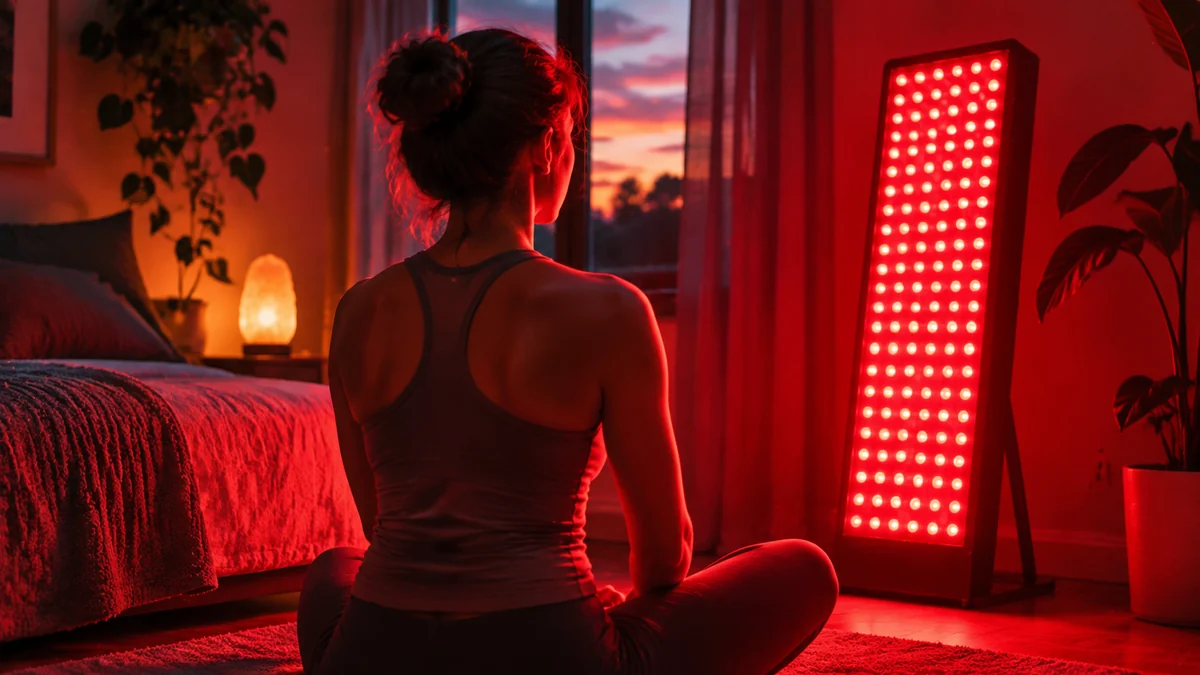
Red light therapy uses specific wavelengths of red and near-infrared light to influence biological processes in the body. At home, LED masks and panels commonly use red light around 630–660nm for skin-related applications and near-infrared light around 810–850nm for deeper tissue research. Clinical studies suggest potential benefits for wrinkles, skin texture and selected recovery applications, although results depend on the device, treatment dose and condition.
What is red light therapy and how does it work?
Red light therapy, also called photobiomodulation (PBM), is a non-invasive treatment that exposes tissue to low-intensity red or near-infrared light. Unlike ultraviolet light, which can damage skin cells and increase skin cancer risk, photobiomodulation uses different wavelengths and biological pathways. It is available through professional treatments and consumer devices such as LED face masks, handheld wands and larger light panels.
One proposed mechanism involves mitochondria, the structures responsible for producing much of the energy used by cells. Researchers have investigated cytochrome c oxidase, an enzyme involved in the mitochondrial respiratory chain, as a possible light-sensitive target. Changes in cellular signalling, reactive oxygen species and nitric oxide may also contribute to the biological response.
These processes may influence cellular energy production, inflammation and tissue repair. However, the precise mechanisms are still being investigated, and cytochrome c oxidase should not be treated as the only established explanation for every photobiomodulation effect.
What are the best red light therapy wavelengths?
Wavelength is one of the most important specifications when comparing red light therapy devices. Different wavelengths interact with biological tissue differently, and the appropriate choice depends on the treatment target. Two commonly studied categories are visible red light and near-infrared light.
| Wavelength | Light category | Common research applications |
|---|---|---|
| 630–660nm | Visible red | Skin rejuvenation, wrinkles and superficial tissue applications |
| 810–830nm | Near-infrared | Cellular responses and deeper tissue applications |
| 830–850nm | Near-infrared | Musculoskeletal and recovery-related research |
630–660nm: Red light for skin health
Red wavelengths between approximately 630nm and 660nm are frequently investigated for dermatological applications. They are used in research involving skin texture, fine lines, wrinkles and wound-related healing processes. The 633nm and 660nm wavelengths are particularly familiar in consumer LED masks and professional photobiomodulation systems.
These wavelengths interact with relatively superficial tissue compared with near-infrared light. However, actual penetration depends on factors such as skin composition, pigmentation, tissue thickness, light intensity and treatment geometry. There is no universal depth measurement that applies to every device or individual.
810–850nm: Near-infrared light for deeper tissues
Near-infrared light is invisible to the human eye and generally travels through tissue differently from visible red light. Wavelengths around 810–850nm are frequently investigated for applications involving muscles and other deeper tissues, including research into pain and exercise recovery.
The 830nm and 850nm wavelengths appear in several consumer and research devices. However, a longer wavelength does not automatically guarantee a better result. The amount of light delivered to the target tissue, exposure time and overall treatment dose also influence the outcome.
What are the proven benefits of red light therapy?
Research into photobiomodulation has produced encouraging findings for selected applications, but the quality of evidence varies by condition. The American Academy of Dermatology (AAD) reports that some studies have found improvements in fine lines, wrinkles, rough skin texture, redness and dark spots following red LED treatments. For skin rejuvenation, the proposed benefits include:
- Fine lines and wrinkles: Certain LED treatments have produced improvements in the appearance of facial wrinkles.
- Skin texture: Some studies report smoother skin and improvements in roughness.
- Skin tone: Research has identified potential improvements in redness and certain forms of discoloration.
- Collagen-related activity: Photobiomodulation research has investigated cellular responses associated with collagen production and skin repair.
There is also research into red and near-infrared light for muscle recovery, pain and inflammation. However, results vary considerably across studies because researchers use different wavelengths, treatment doses, devices and participant groups. It would be inaccurate to treat every consumer light panel as a clinically established treatment for muscle injuries or chronic pain.
The distinction between professional and home devices also matters. Dermatologists generally use more powerful equipment in clinical settings, while consumer devices are designed for home use. The AAD recommends treating red light as a complementary option rather than a replacement for established dermatological treatments.
Which red light therapy devices are available for home use?
Home red light therapy devices generally fall into three categories: LED masks, handheld devices and full-body panels. Their designs serve different treatment areas, so the most suitable option depends on whether you want to address facial skin concerns or use light over larger areas of the body.
LED face masks
LED masks are designed to cover the face and deliver light over a relatively consistent treatment area. One example is the Omnilux Contour Face, which combines 633nm red light with 830nm near-infrared light. The manufacturer recommends three to five 10-minute sessions per week for four to six weeks, followed by maintenance treatments as desired.
This is an example of a specific manufacturer’s treatment protocol, not a universal recommendation for every LED mask. Device output, coverage, treatment distance and instructions differ between products.
Handheld LED devices
Handheld wands and smaller LED devices are designed for targeted treatment. They can be useful when someone wants to concentrate on a smaller area rather than use a full-face mask or large panel. However, treatment coverage and consistency depend on how the device is positioned and used.
Full-body red light panels
Larger panels combine multiple LED lights to cover areas such as the back, legs and shoulders. Some models combine approximately 660nm red light with 850nm near-infrared light. These products are often marketed for general wellness and recovery, but buyers should examine their actual technical specifications and evidence for the intended application rather than relying on broad marketing claims.
How to choose a red light therapy device
Wavelength alone does not determine whether a device is effective. Two products advertising the same wavelength can deliver different amounts of energy and produce different treatment experiences. Before purchasing a device, consider these specifications:
- Wavelength accuracy: Check the actual wavelengths emitted rather than relying on generic descriptions such as red light or infrared.
- Irradiance: Look for the measured light output at the intended treatment distance, usually expressed in milliwatts per square centimetre.
- Energy dose: Check the manufacturer’s treatment instructions and reported energy delivery, expressed in joules per square centimetre where available.
- Treatment coverage: Choose a mask, wand or panel that matches the body area you intend to treat.
- Regulatory status: For devices sold in the United States, check whether the specific model has FDA clearance for its stated intended use.
- Safety instructions: Look for clear guidance on exposure duration, eye protection, contraindications and treatment frequency.
Are home red light therapy devices FDA approved?
The terminology matters. The US Food and Drug Administration (FDA) classifies over-the-counter light-based wrinkle-reduction devices as Class II medical devices. Some individual products have received 510(k) clearance after the FDA determines that they are substantially equivalent to an appropriate legally marketed device.
FDA clearance is not the same as blanket approval of red light therapy or proof that every advertised benefit has been clinically established. It is also not a certification that every product using red LEDs is safe or effective. Consumers should verify the regulatory status of the exact device and the intended use covered by its clearance.
For example, the Omnilux Contour Face is marketed as an FDA-cleared device for facial wrinkle treatment. That specific status should not be extended to unrelated products simply because they use similar wavelengths.
Is red light therapy safe to use at home?
Short-term research generally suggests that red light therapy has a favourable safety profile when used appropriately. The American Academy of Dermatology reports that common side effects are usually mild and may include temporary discomfort or skin irritation. Unlike ultraviolet exposure, red light has not been shown to cause the same type of DNA damage associated with UV radiation.
However, some precautions are important. People with conditions that increase light sensitivity, such as lupus, or those taking medications that make their skin more sensitive to light should consult a dermatologist before treatment. People with darker skin tones should also seek professional advice because visible light sensitivity can contribute to hyperpigmentation in some individuals.
Follow the manufacturer’s exposure instructions and use the recommended eye protection whenever required. Avoid increasing treatment time or frequency in the expectation that more exposure will produce faster results. Long-term safety data and the optimal treatment dose for different skin concerns remain areas of ongoing research.
Frequently asked questions
What is the best wavelength for red light therapy?
There is no single best wavelength for every application. Red light around 630–660nm is commonly studied for skin-related concerns, while near-infrared wavelengths around 810–850nm are investigated for deeper tissue applications. The appropriate choice depends on the intended treatment and device specifications.
Does red light therapy actually increase collagen?
Some clinical and laboratory research suggests that photobiomodulation can influence cellular processes associated with collagen production. Certain studies have also reported improvements in wrinkles and skin texture. However, results vary between devices and treatment protocols, and red light therapy should not be expected to produce the same results as every established dermatological procedure.
How long does it take to see results from red light therapy?
Results depend on the device, treatment area and individual response. Some manufacturers recommend several sessions per week over four to six weeks, but this schedule is not universal. Consistent use according to the device instructions is important, and some people may see little or no noticeable improvement.
Can red light therapy replace skincare products or medical treatments?
No. Red light therapy is generally considered a complementary treatment for selected skin concerns. It does not replace sunscreen, prescribed acne medication, established anti-aging treatments or professional medical care. A dermatologist can help determine whether it belongs in an existing skincare plan.
Red light therapy uses wavelengths around 630–660nm and near-infrared wavelengths around 810–850nm for different photobiomodulation applications. Home LED devices may offer modest improvements in selected skin concerns, but their performance depends on wavelength, energy delivery, treatment consistency and individual response. If you were choosing a home device, would you prioritise a 633nm red-light mask for facial skin or a combined red and near-infrared panel for broader treatment coverage?