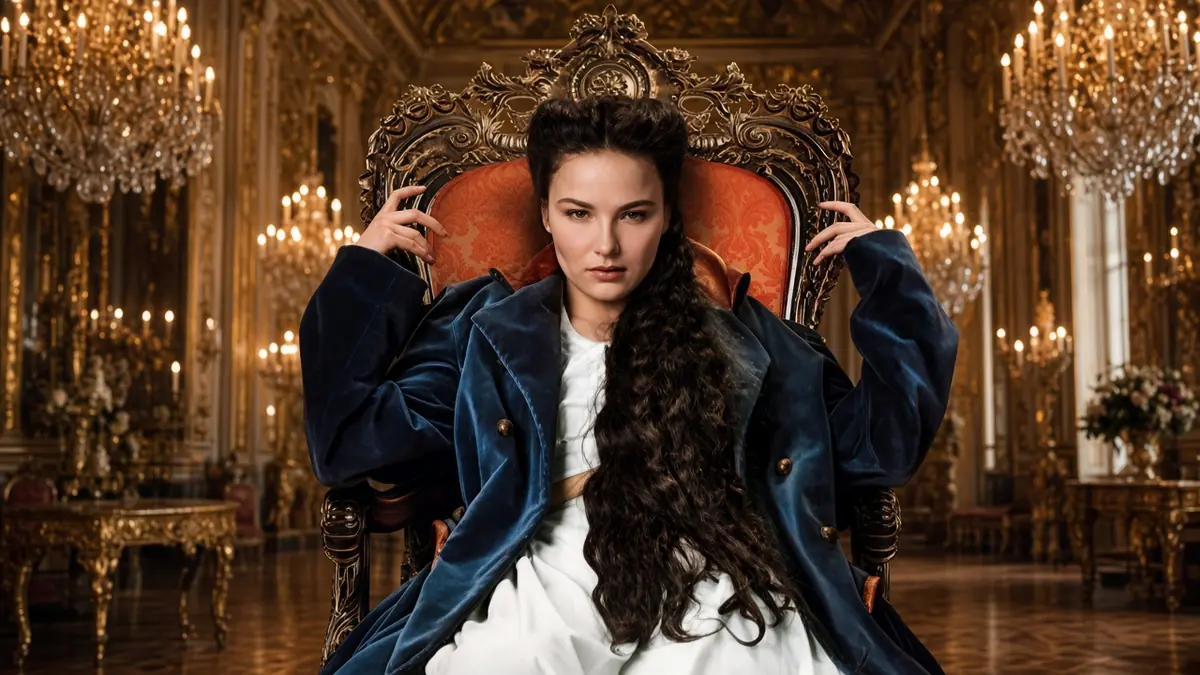
Netflix’s The Empress has reached its final chapter, bringing Elisabeth of Austria’s turbulent royal story towards its conclusion. Season 3 premiered worldwide on November 12, 2026, with Devrim Lingnau returning as Elisabeth and Philip Froissant as Emperor Franz. This time, their marriage faces another crisis following the devastating Sardinian War, Franz’s infidelity and Elisabeth’s worsening health. Her journey away from Vienna also introduces Count Andrássy, creating another complicated relationship that could change the fate of the Habsburg Empire.
One of the biggest attractions of The Empress is how it combines royal romance with political rivalries, family betrayals and the suffocating rules of palace life. Fortunately, television has produced plenty of other historical dramas that explore similar territory. Some focus on famous monarchs, others examine the women who challenged royal expectations, and a few turn history into deliciously entertaining political warfare. We have ranked 10 historical drama series worth watching after finishing The Empress.
10. The White Queen (2013)
Based on Philippa Gregory’s historical novels, The White Queen takes viewers into 15th-century England during the Wars of the Roses. The story follows Elizabeth Woodville, a young widow who unexpectedly marries King Edward IV. Her marriage places her inside a dangerous political environment where rival noble families compete for control of the English throne.
Rebecca Ferguson plays Elizabeth, while Max Irons portrays Edward IV. Their relationship provides the emotional centre of the series, but the larger story belongs to several powerful women whose ambitions influence the future of the kingdom. Margaret Beaufort and Anne Neville become important players in the struggle, each pursuing her own vision of power and survival.
The series shares The Empress’s interest in women navigating royal institutions that were largely controlled by men. Elizabeth’s position as queen does not guarantee security, particularly when powerful aristocratic families view her marriage as a threat to their influence. Every personal decision can become a political problem, making the royal court a dangerous place even when the king appears firmly in control.
The White Queen is particularly appealing to viewers who enjoy dynastic rivalries, royal marriages and complicated female characters. Its single-season story also makes it an accessible weekend watch.
9. Poldark (2015–2019)
Not every historical drama needs an emperor or a royal palace to create compelling television. Poldark follows Ross Poldark, a British Army officer who returns to Cornwall after the American Revolutionary War and discovers that his life has changed dramatically during his absence. His family estate is struggling, his former romantic interest is engaged to another man, and the local community is facing serious economic difficulties.
Aidan Turner leads the series as Ross, with Eleanor Tomlinson playing Demelza, the woman who eventually becomes his wife. Their relationship is one of the show’s strongest elements, although it is frequently tested by social expectations, financial pressures and Ross’s complicated personal decisions. The story also introduces George Warleggan, a wealthy businessman whose rivalry with Ross creates some of the series’ most entertaining confrontations.
Where The Empress explores the restrictions of imperial life, Poldark examines class divisions and the struggles of ordinary people in historical Britain. Its romantic conflicts are equally complicated, with characters frequently caught between personal happiness and social obligations. The Cornish coastline also gives the series a distinctive visual identity that separates it from the usual palace-centred period drama.
With five seasons and a completed storyline, Poldark is a particularly good choice for viewers who want a lengthy historical romance with political and family drama.
8. Marie Antoinette (2022–present)
If the palace politics and romantic complications of The Empress are what attracted you, Marie Antoinette should be near the top of your watchlist. This historical drama follows the young Austrian archduchess who becomes Queen of France after marrying Louis-Auguste, the future Louis XVI. Emilia Schüle plays Marie Antoinette, while Louis Cunningham portrays the French king.
The series explores Marie’s difficult transition from an Austrian teenager into a woman expected to fulfil the responsibilities of the French monarchy. She arrives at Versailles surrounded by traditions, strict etiquette and powerful people who are suspicious of her foreign background. Her marriage also becomes a political arrangement in which personal affection is far less important than producing an heir and protecting royal interests.
Much like Elisabeth in The Empress, Marie struggles against a royal institution that expects her to behave according to rules she never chose. Her growing influence attracts enemies, while her personal relationships become subjects of political speculation. The lavish costumes and elaborate palace interiors also make this an especially attractive series for viewers who enjoy historical productions with impressive visual detail.
Marie Antoinette is particularly interesting because it explores the growing distance between the French monarchy and the people it governs. The series combines romance, political manoeuvring and the approaching crisis of the French Revolution. It is an excellent choice for anyone interested in the women who occupied Europe’s most powerful royal positions.
7. The Tudors (2007–2010)
Henry VIII remains one of the most fascinating monarchs in British history, and The Tudors turns his reign into an addictive mixture of romance, ambition, betrayal and political violence. Jonathan Rhys Meyers plays the English king, whose desire for a male heir and complicated marriages transform the country’s religious and political future.
The series explores his relationships with Catherine of Aragon, Anne Boleyn and Jane Seymour, among others. Natalie Dormer delivers a memorable performance as Anne Boleyn, a woman whose intelligence and determination help her rise to extraordinary influence at court. However, becoming Henry’s queen does not protect her from the dangers of royal politics.
The similarities with The Empress are particularly noticeable in the treatment of royal marriages. Both shows demonstrate how relationships between monarchs can influence international alliances, succession plans and the stability of entire kingdoms. A queen’s position may appear privileged, but her security frequently depends on circumstances she cannot control.
The Tudors also has a more aggressive approach to historical storytelling. Its characters are ambitious, relationships are frequently volatile and political decisions carry devastating consequences. Viewers should remember that the series takes considerable historical liberties, particularly with chronology and the ages of certain characters. Nevertheless, it remains one of the most entertaining royal dramas of its generation.
6. The Great (2020–2023)
What happens when a young woman arrives in Russia expecting a romantic royal marriage and discovers that her husband is an unpredictable ruler? The Great answers that question with an outrageous combination of historical satire, dark comedy and political scheming. Elle Fanning stars as Catherine the Great, while Nicholas Hoult plays her husband, Emperor Peter III.
Unlike The Empress, which approaches royal life through emotional historical drama, The Great deliberately bends history for entertainment. Catherine initially struggles to adapt to the Russian court, where Peter’s behaviour and the aristocracy’s extravagant lifestyle quickly destroy her romantic expectations. She eventually begins plotting to take control of the empire and create a different kind of Russia.
Hoult is particularly entertaining as Peter, whose absurd behaviour makes him simultaneously frustrating, unpredictable and strangely fascinating. Fanning provides an effective contrast, portraying Catherine as an ambitious woman who gradually discovers how to manipulate the political system around her. Their relationship becomes increasingly complicated as romance, resentment and the struggle for power collide.
The series is not a conventional historical reconstruction, and its creators make no attempt to follow every historical detail. However, anyone who enjoys the palace intrigue and power struggles in The Empress should appreciate its entertaining interpretation of royal life. Its three seasons also provide a complete story rather than leaving viewers waiting for another instalment.
5. Downton Abbey (2010–2015)
Royal families are not the only people whose lives are governed by tradition and social expectations. Downton Abbey follows the aristocratic Crawley family and the servants who maintain their enormous Yorkshire estate during the early 20th century. Created by Julian Fellowes, the series examines how historical events gradually transform British society and challenge the privileges enjoyed by its upper classes.
Hugh Bonneville plays Robert Crawley, the Earl of Grantham, while Elizabeth McGovern portrays his wife, Cora. Their daughters, particularly Lady Mary Crawley, become central to the family’s struggles over inheritance, marriage and the future of the estate. Maggie Smith’s Violet Crawley is another major attraction, delivering some of the series’ sharpest observations about class, tradition and changing social attitudes.
Downton Abbey shares an important quality with The Empress: its characters live in a world where reputation and social position can determine almost every aspect of their existence. Romantic relationships are rarely simple because marriage involves questions of wealth, family expectations and inheritance. Even seemingly private disagreements can become major events within the household.
However, the series’ greatest strength is its decision to give the servants their own compelling stories. Their experiences offer a contrast to the privileged lives of the Crawleys, creating a broader picture of British society. Across six seasons, Downton Abbey develops into an absorbing family drama with plenty of romance, humour and emotional moments.
4. The Borgias (2011–2013)
For viewers who prefer their historical dramas darker and more politically ruthless, The Borgias is an excellent recommendation. Set in Renaissance Italy, the series follows Rodrigo Borgia, who becomes Pope Alexander VI and uses his position to increase his family’s influence. Jeremy Irons leads the cast, delivering a commanding performance as a religious leader whose ambitions frequently conflict with the principles his position represents.
The story focuses on the Borgia family’s attempts to maintain power in a world where rival noble houses, political factions and religious authorities are constantly competing. Rodrigo’s children, including Cesare and Lucrezia, become important figures in his plans. Their relationships are complicated by ambition, jealousy and the expectations placed on them by their father.
The series has plenty in common with The Empress when it comes to family loyalty and the politics of marriage. Powerful families use relationships to strengthen alliances, while personal ambitions frequently threaten the stability of the entire household. However, The Borgias is considerably more ruthless in its portrayal of political manipulation.
Its greatest attraction is the way it explores the relationship between religion and political authority. Rodrigo’s position gives him enormous influence, but it also creates enemies who are determined to undermine his family. The Borgias ran for three seasons before its cancellation, leaving its larger historical story unfinished. Even so, its performances and Renaissance setting make it worth watching.
3. Victoria (2016–2019)
Fans of The Empress who enjoy watching a young woman discover her position in a powerful royal institution should immediately consider Victoria. The ITV historical drama follows Queen Victoria from her accession to the British throne in 1837 through the early years of her reign. Jenna Coleman stars as the young monarch, with Tom Hughes playing Prince Albert, her future husband.
Victoria begins with a teenager suddenly discovering that she has become the most powerful person in Britain. Her mother and other political figures attempt to influence her decisions, while Prime Minister Lord Melbourne becomes an important adviser during her early years. Victoria gradually learns to exercise her authority, although her determination frequently creates tension with the people around her.
The relationship between Victoria and Albert becomes one of the central attractions of the series. Their marriage is built on genuine affection, but it also involves disagreements about political responsibility, family expectations and the boundaries of royal authority. Their different personalities create some particularly engaging scenes as they attempt to balance their private relationship with their public duties.
The resemblance to The Empress is difficult to miss. Both series explore young European women entering royal marriages and discovering that palace life comes with considerable restrictions. Both also examine the tension between personal freedom and the expectations attached to a royal title.
Victoria is an especially strong recommendation because it gives viewers a different perspective on 19th-century European monarchy. While The Empress concentrates on the Austrian Habsburg court, Victoria explores the British monarchy during a period of major industrial, political and social change.
2. Versailles (2015–2018)
Few historical dramas capture the extravagant and dangerous world of royal court politics quite like Versailles. The French historical series follows King Louis XIV, played by George Blagden, as he attempts to consolidate his authority and transform Versailles into the centre of French political life. The magnificent palace becomes a place where aristocrats compete for the king’s attention, influence and favour.
The series examines Louis’s ambition to control the French nobility by bringing powerful aristocratic families into his carefully managed royal environment. Their lives become increasingly dependent on court ceremonies, personal access to the monarch and the ability to navigate complicated social relationships. Behind the elaborate clothing and extravagant celebrations, however, lies a constant struggle for survival and political influence.
Alexander Vlahos plays Philippe, Duke of Orléans, whose relationship with his brother adds another layer to the royal drama. The supporting characters also have their own ambitions, romantic entanglements and dangerous secrets. As the king attempts to build his legacy, the palace becomes a battlefield where even the smallest disagreement can have serious consequences.
What makes Versailles particularly suitable for fans of The Empress is its focus on the machinery of monarchy. Both shows examine how royal families use ceremonies, marriages and personal relationships to protect their positions. The difference is that Versailles places greater emphasis on the king’s determination to centralise power, while The Empress explores Elisabeth’s struggle to find her own voice within the Habsburg court.
Its three seasons deliver plenty of political intrigue, impressive production design and memorable performances. For anyone fascinated by European royal history, Versailles is essential viewing.
1. The Crown (2016–2023)
The Crown takes the top position because it offers one of television’s most ambitious examinations of royal life, personal sacrifice and the responsibilities of monarchy. The Netflix drama follows Queen Elizabeth II from her early years on the throne through several decades of British history. Rather than focusing on a single political crisis, the series examines how the royal family adapts to changing expectations while attempting to preserve an institution built on centuries of tradition.
Claire Foy, Olivia Colman and Imelda Staunton portray Elizabeth II at different stages of her life. Their performances capture the challenges of a monarch whose personal relationships are frequently affected by her public responsibilities. Matt Smith, Tobias Menzies and Jonathan Pryce also portray Prince Philip across different periods, while Vanessa Kirby and Helena Bonham Carter bring Princess Margaret’s complicated story to life.
The Crown shares the central appeal of The Empress: both series explore the emotional cost of becoming part of a royal institution. Their leading women must balance personal relationships, family responsibilities and political expectations while living under constant public scrutiny. Even ordinary decisions can become complicated because the monarchy is expected to maintain a particular image.
The series is also particularly effective at connecting private royal experiences with major historical developments. Political crises, changing social attitudes and international events all influence the royal family’s decisions. Although The Crown takes dramatic liberties and should not be treated as a documentary, it offers a fascinating introduction to the modern British monarchy.
Across six seasons, the show explores Elizabeth’s reign from her marriage to Philip through the early 21st century. Its enormous cast, detailed production design and carefully developed character relationships make it one of the strongest historical dramas available on streaming television. For viewers finishing The Empress, it is arguably the most natural next choice.
More royal history worth exploring after The Empress
The appeal of historical dramas comes from the tension between the people who lived through history and the institutions that shaped their lives. The Empress gives viewers an intimate look at Elisabeth’s struggle within the Austrian imperial court, but the experiences of Victoria, Catherine the Great, Marie Antoinette and Queen Elizabeth II demonstrate that royal life could be equally complicated across different centuries and countries.
The Crown and Victoria are excellent starting points for viewers interested in royal women, while Versailles and The Borgias offer more aggressive political storytelling. Downton Abbey and Poldark provide a different perspective on historical society, and The Great delivers a more humorous interpretation of imperial ambition. Which historical drama would you recommend to someone who has just finished The Empress, and which royal figure deserves a television series of their own?